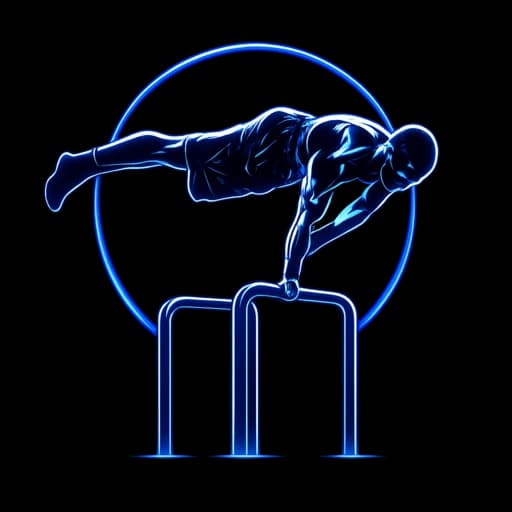
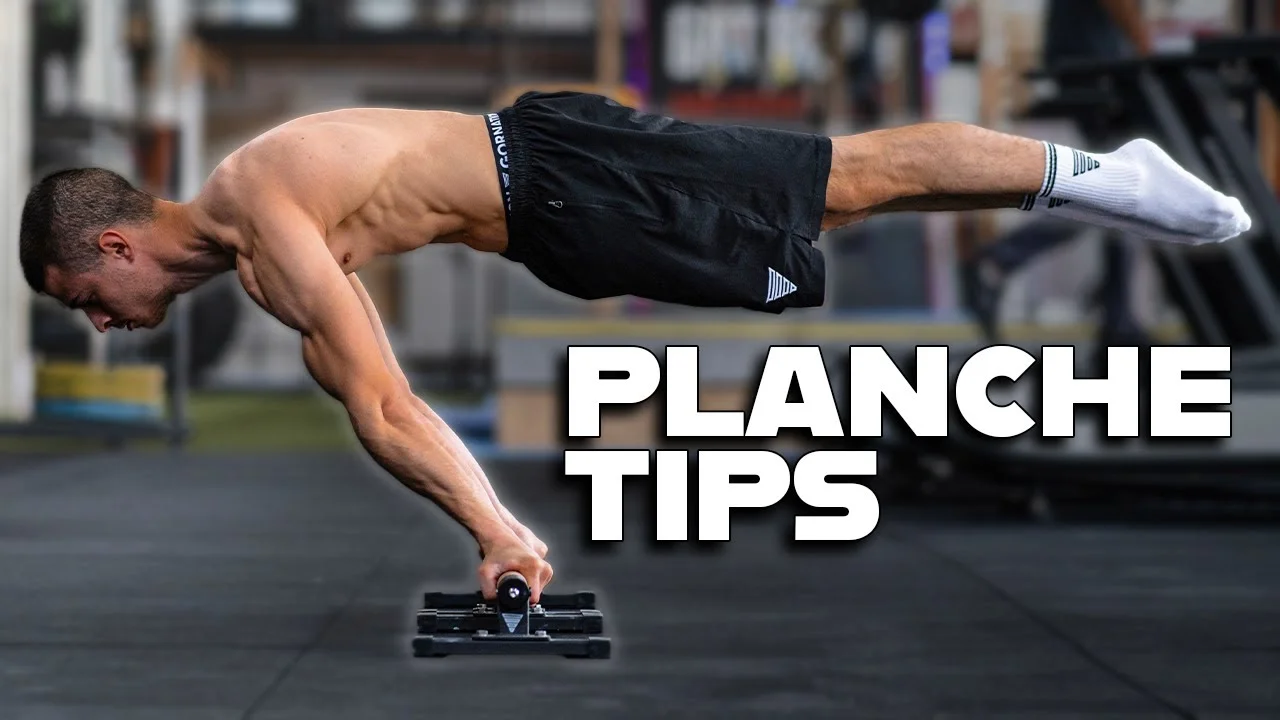
The planche is one of the clearest tests of full-body tension in calisthenics: hands on the ground, body parallel to the floor, nothing else touching. It looks like a pure strength move, but most people who plateau on it are not weak, they are misaligned at the grip, elbow or shoulder. It sits downstream of a solid support hold and straight-arm strength, and it rewards precise positioning over brute effort. In this tutorial I cover the grip, elbow, shoulder and core details that make or break a planche lean, plus the common mistakes that quietly cap your progress. By the end you will know how to start training it correctly from the first rep.
Watch the Full Tutorial
What Is the Planche
The planche is a straight-body hold where your entire body is parallel to the ground, supported only by your hands, with no part of you touching the floor. It looks like a static skill, but it is really a full-body tensioning skill: grip, elbows, shoulders, lats, core and glutes all have to work together at the same time.
Most people who struggle with the planche are not missing strength. They are missing positioning. I see the same handful of technical errors over and over, and fixing them changes how fast someone progresses more than adding extra training volume does.
Prerequisites
Before you spend real time drilling planche leans, get these basics in place first. None of this is about raw strength, it is about being able to hold a stable, straight-body position under load.
- Straight elbows in a support hold (locked out, not micro-bent)
- Pain-free wrists under load, since bent elbows often trace back to wrist mobility, not elbow weakness
- Enough shoulder mobility to extend (push down and back) without your shoulder creeping up toward your neck
- Basic core control so you can flex your abs and still breathe normally
- Comfortable holding a plank or a short support hold with your legs fully straight
How to Do the Planche
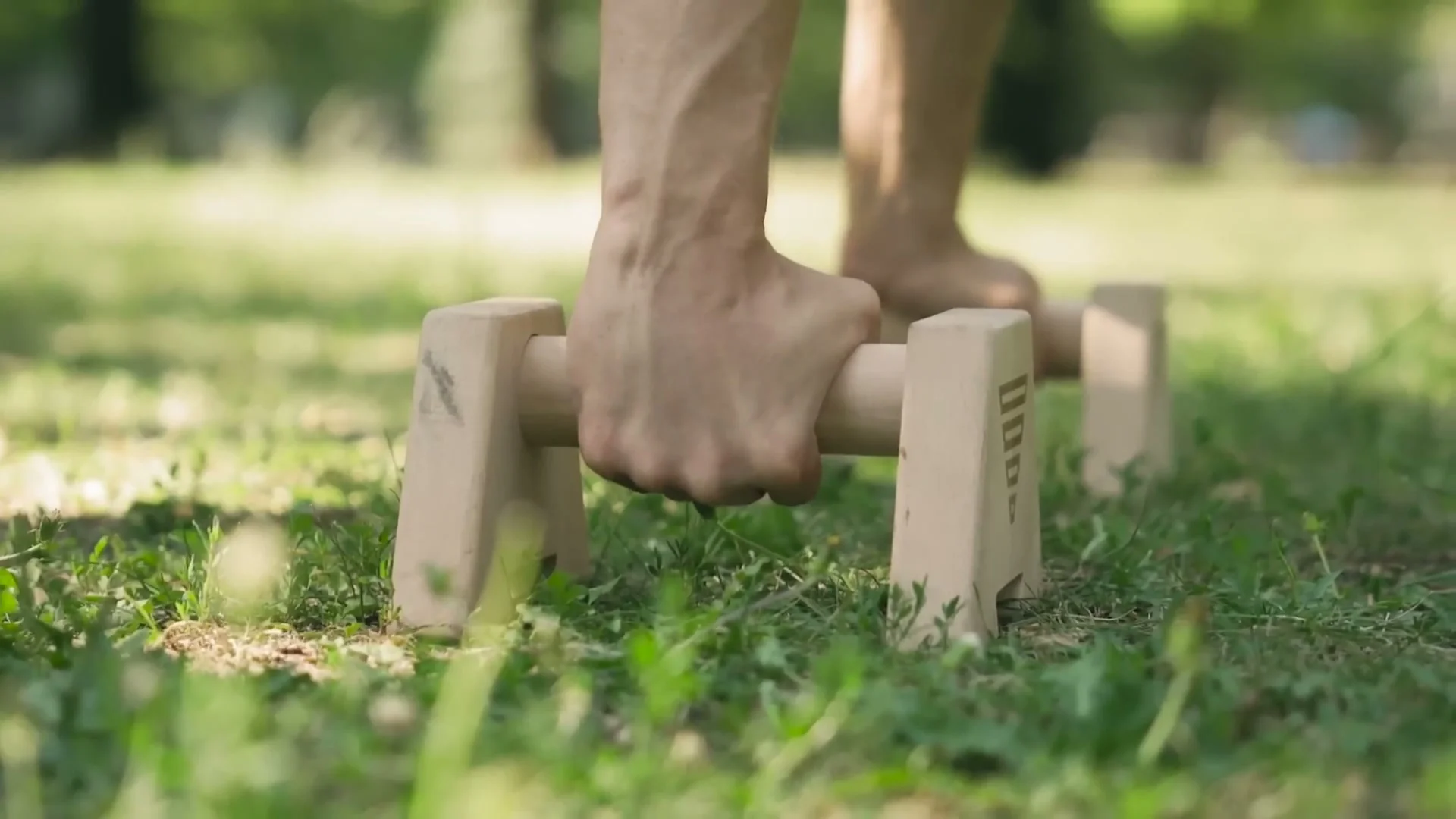
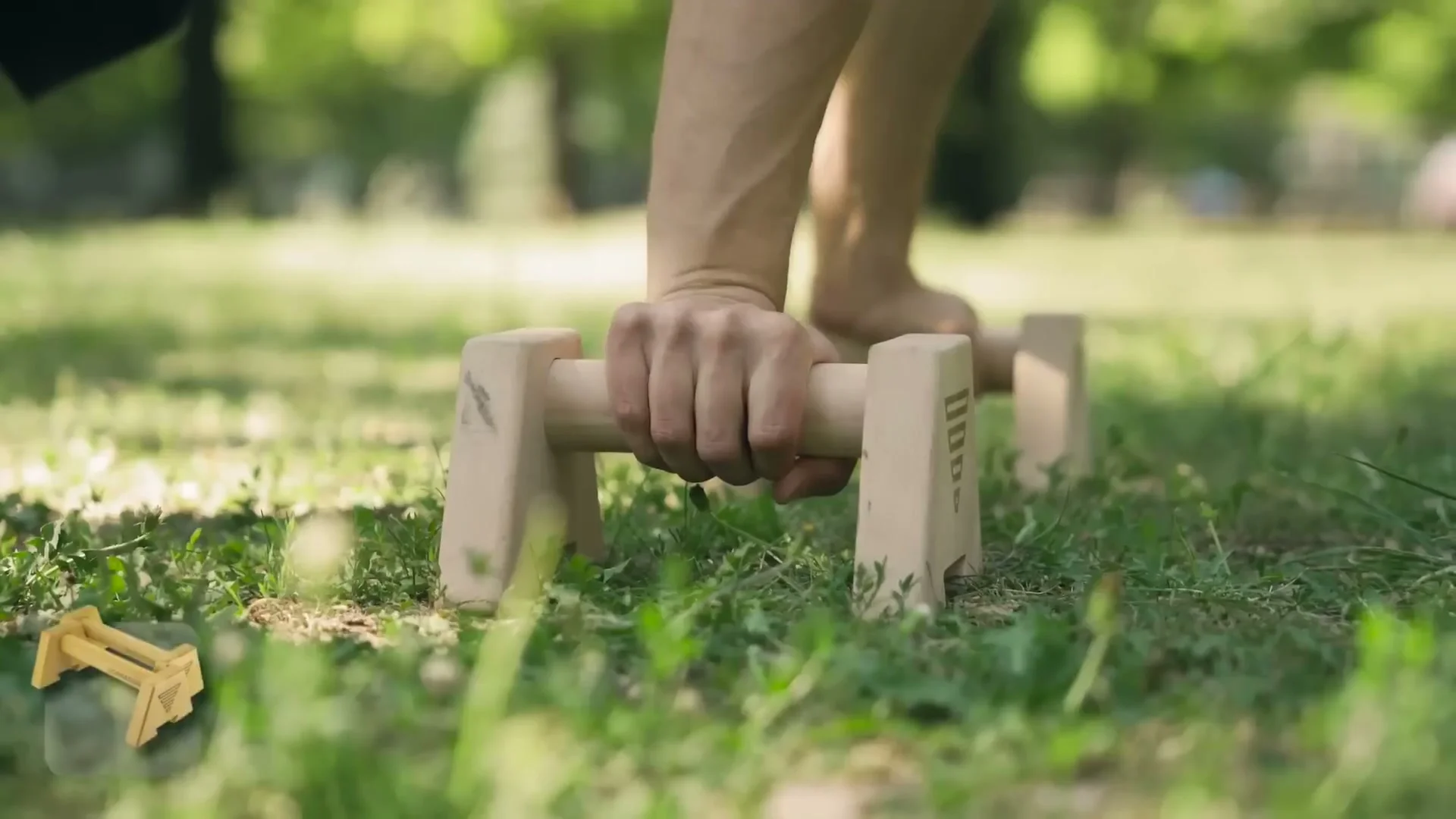
Everything starts with your grip. Use a middle grip on the parallettes, dip bars or bar, not gripping the outside edge and not gripping too far inside. An outside grip limits how far you can lean forward and puts unnecessary stress through your thumb. A grip that is too far inside pushes the load into your elbow instead of your hand, which is one of the most common reasons people feel unstable in push-ups and planche work alike.
Key Takeaway
Fix your grip before you touch anything else. A middle grip on the parallettes lets you lean further with less elbow stress and puts you in the highest, most stable planche position your current strength allows.
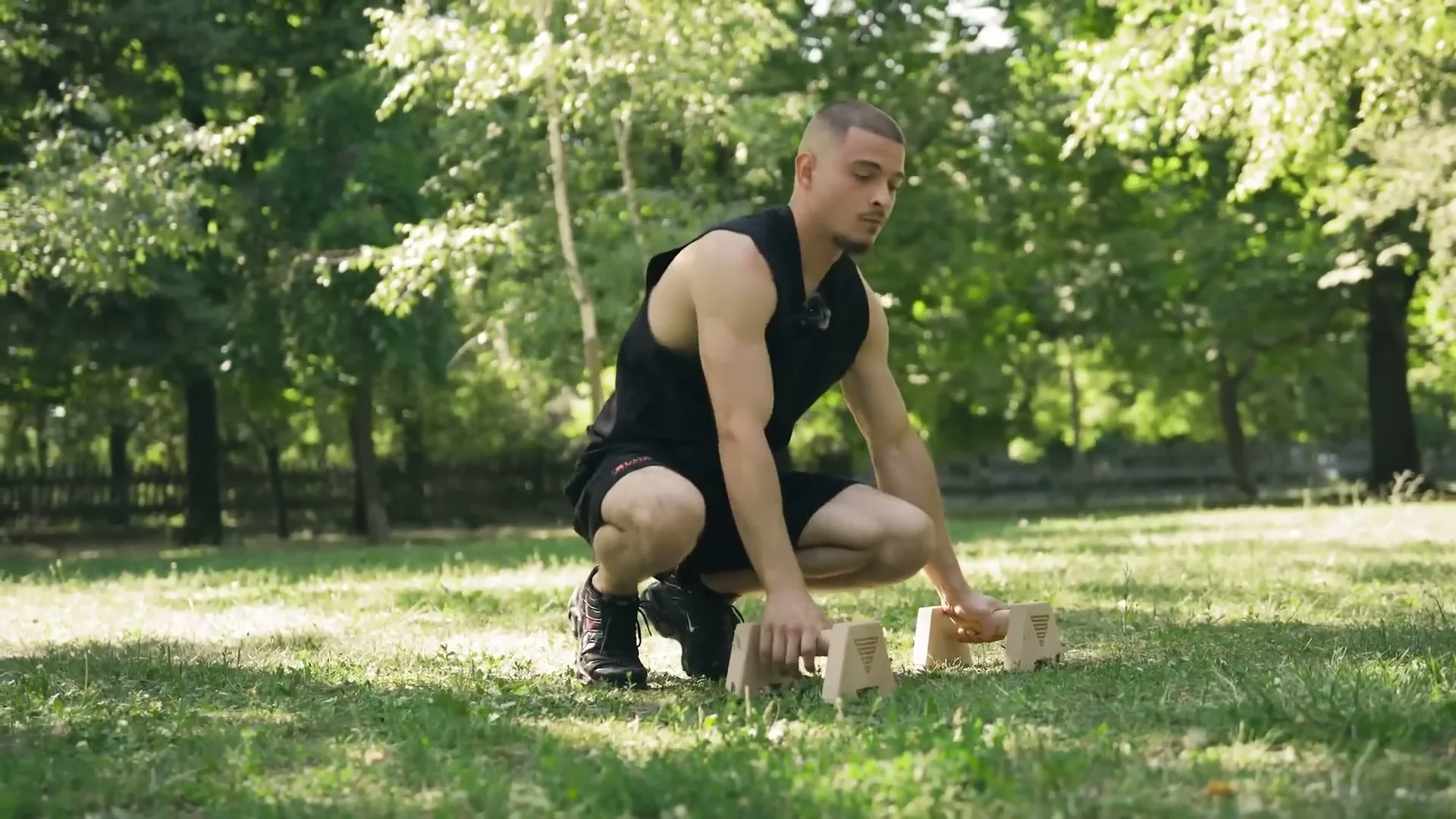
Keep your elbows fully straight. If they will not lock out, check your wrist mobility before you blame your elbow, tight wrists often show up as bent arms further down the chain.
Your biceps should point forward, not straight down and not rotated all the way out. This sets up the correct shoulder line so your lean does not force your elbow or shoulder out of position later.
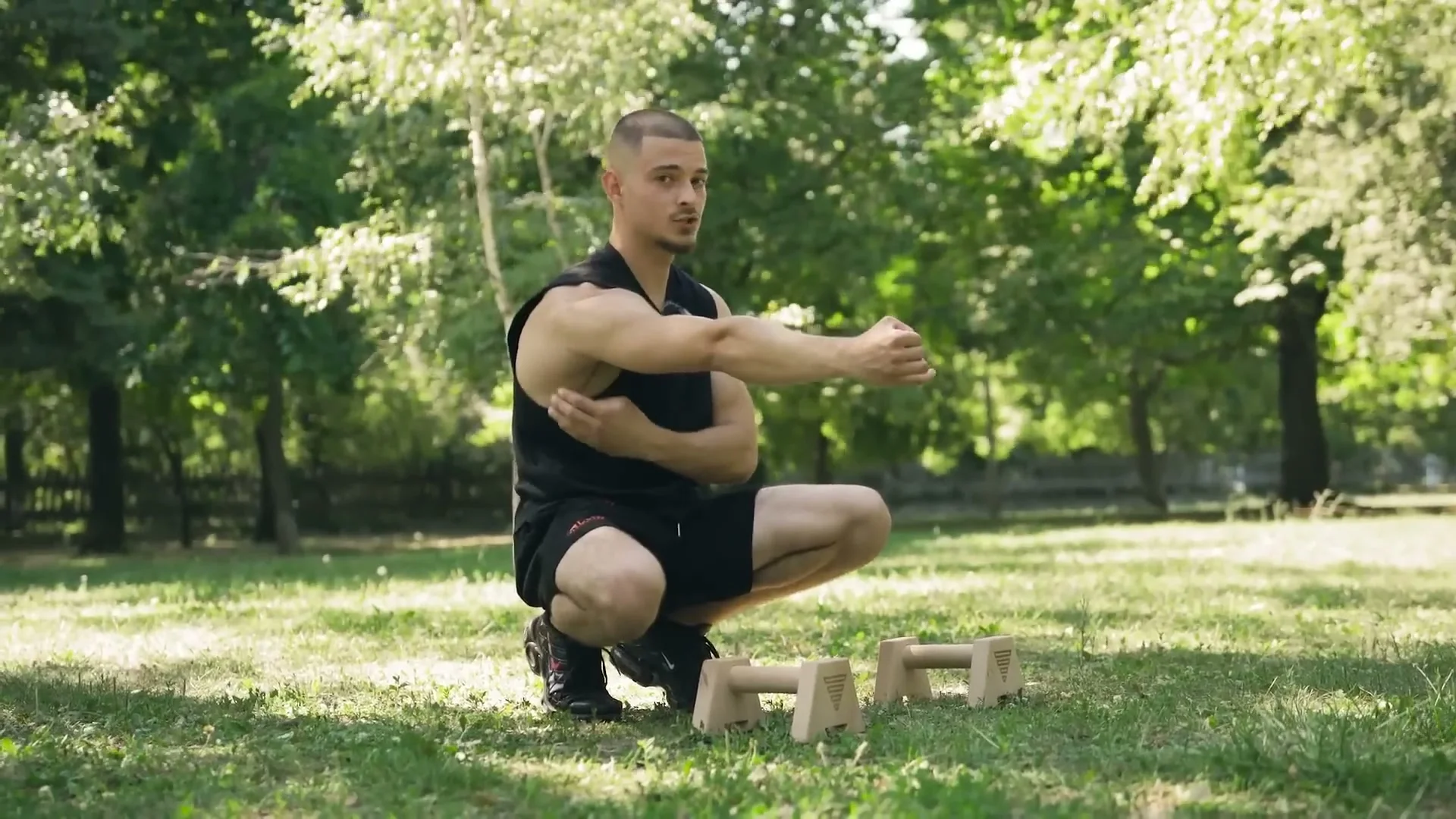
From there, extend your shoulders down. Push down into the bar or parallettes and you get protraction, the rounded upper back position everyone associates with the planche. On its own this only activates your lats partway. To lock the position in, turn your biceps forward into external rotation while you hold that protraction. That rotation switches your lats on properly and stabilizes your whole upper back.
One detail that trips people up: the shoulder movement is down, not backward. If you pull your shoulder back instead of down, you turn protraction into retraction, and you are training the setup for a front lever, not a planche.
Once your upper body is locked in, flex your core hard while breathing normally, and squeeze your glutes with your hips tucked slightly down. This protects your lower back, which otherwise takes the strain of an upper body doing most of the work.
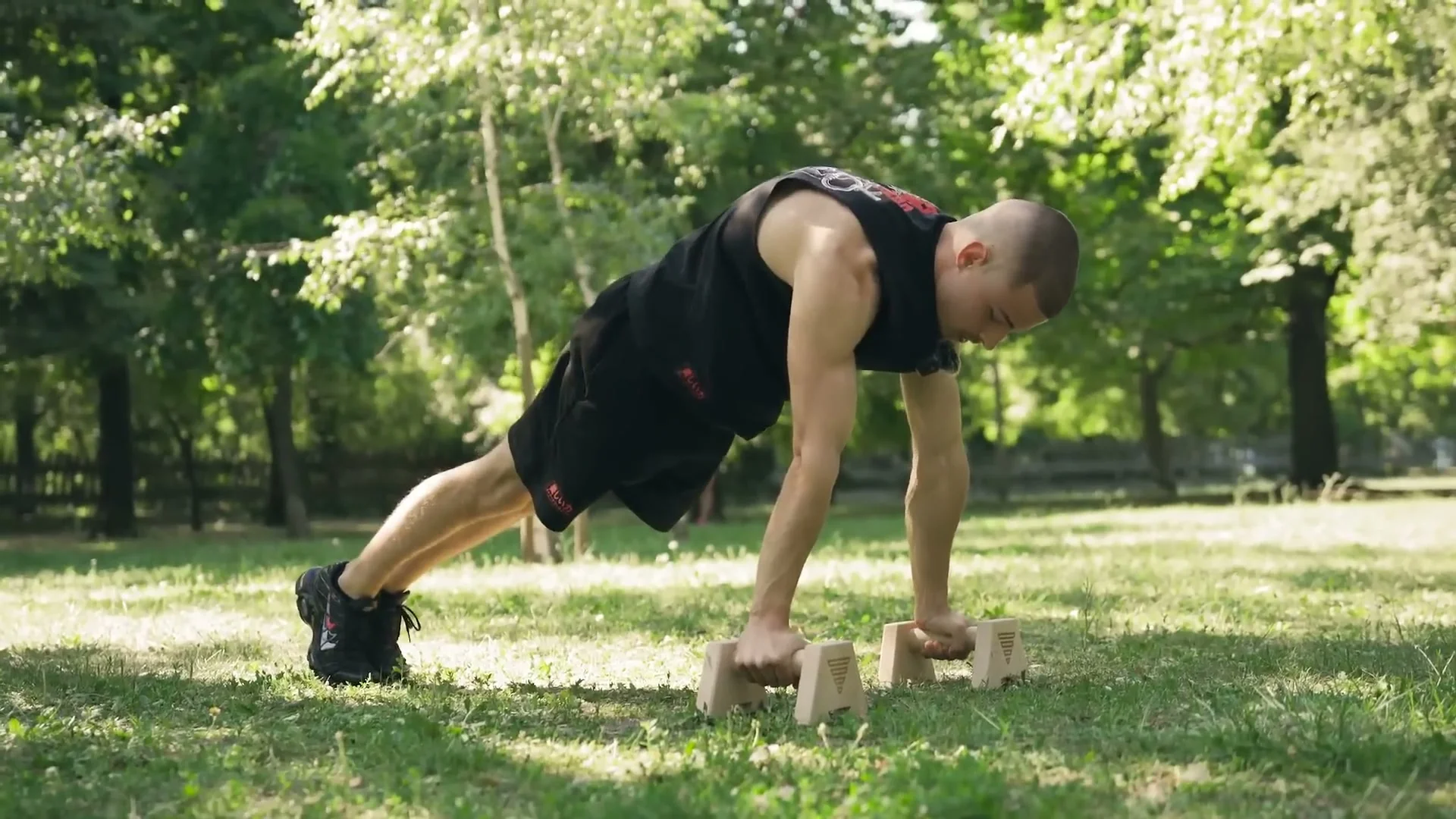
To make a planche lean harder once the position feels solid, lean further forward, or raise your feet 20 to 30 centimeters higher than your hands. Both increase the load without changing your technique, so you keep reinforcing the same correct positioning under more difficulty.
Progression: From Zero to Planche
Stage 1: Planche Lean
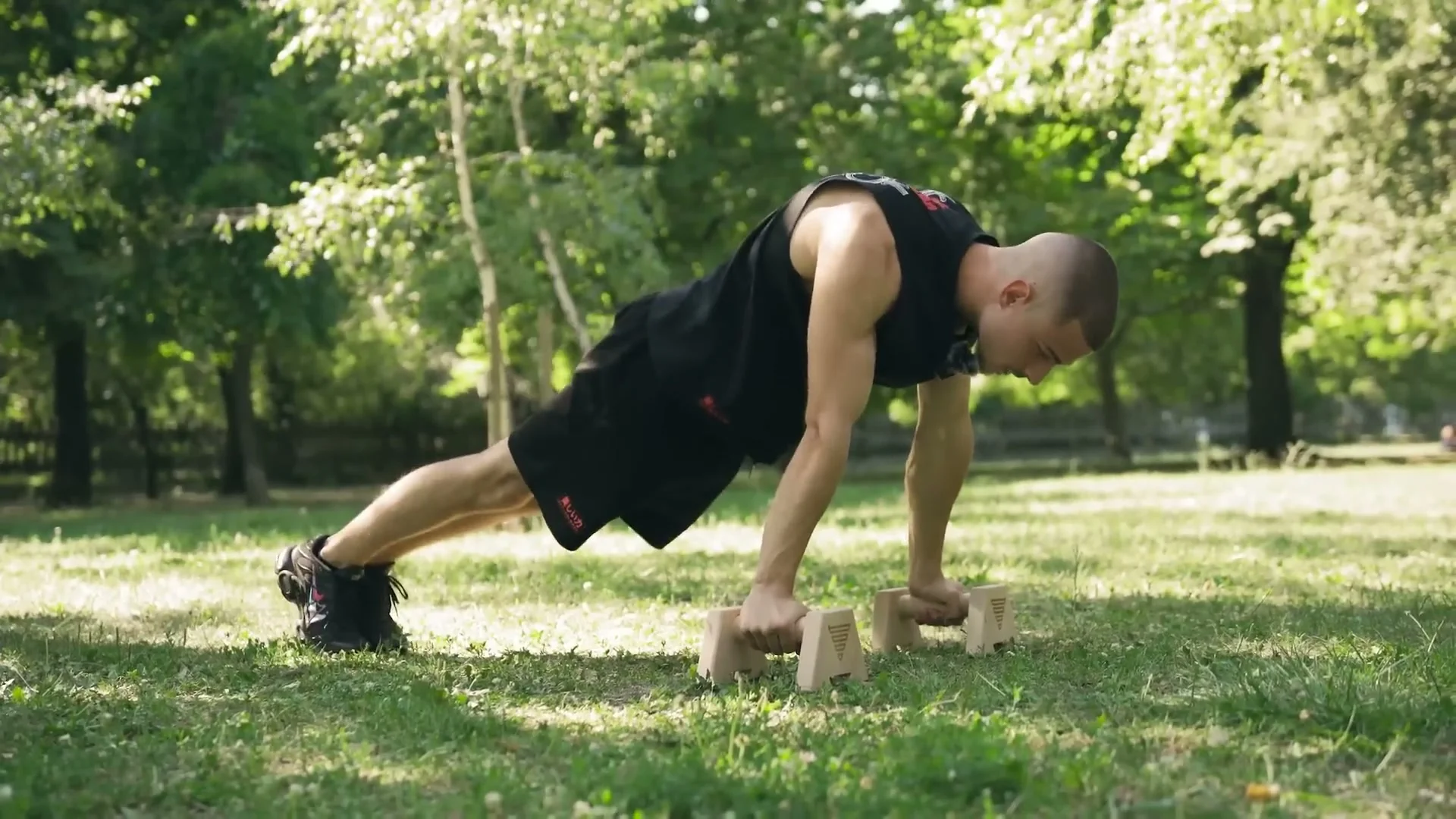
Build the lean itself first. Middle grip, straight elbows, biceps forward, shoulders extended and depressed, core flexed, glutes squeezed, legs straight. Hold this position with good breathing before chasing anything harder.
Stage 2: Tuck Planche
Once your lean holds correct form under load, bring your knees toward your chest and lift off. The tuck lets you rehearse the same shoulder and core sequence with your legs out of the equation.
Stage 3: Straddle Planche
Open your legs wide and extend them out. This is a big jump in difficulty. If a straddle planche is still too heavy, use a resistance band to offload some bodyweight while you keep training the same breathing and activation pattern.
Stage 4: Full Planche
Close your legs together and hold the full straight-body line. Every detail from the lean, grip, elbows, biceps, shoulder depression, core and glutes, needs to hold up here under the most demanding leg position.
Common Mistakes
Mistake: Gripping outside or inside instead of the middle
An outside grip limits your lean angle and stresses your thumb. An inside grip shifts load into your elbow and leaves you feeling unstable even in basic push-ups. Fix your grip first, before anything else.
Mistake: Bent elbows you assume are a strength problem
Bent elbows in a planche lean are frequently a wrist mobility issue, not a lack of tricep strength. Check your wrist range before adding more planche volume.
Mistake: Shoulders creeping up toward your neck
If you extend your shoulders but they ride up near your neck, you are missing depression. Without depression your lats only activate partway, and the whole position feels weaker than it should.
Mistake: Pulling the shoulder back instead of down
This turns your protraction into retraction, which is the setup for a front lever, not a planche. The correction is always down, not backward.
Training Tips
Train your planche lean at the start of a session, not at the end when your shoulders and core are already fatigued. Position work needs a fresh nervous system to actually stick.
Separate your detail work from your hardest sets. On a dedicated day, or at the end of your workout, hold a strict lean with absolutely straight elbows even if that means going backward in difficulty. The more time your body spends in the correct position, the faster it adapts when you move to tuck, straddle or full planche.
Do not chase the hardest variation you can barely hold. If your form breaks down in a straddle or full planche, step back to a lean or tuck and rebuild the position properly. A correct easier hold carries over faster than a sloppy harder one.
Use a resistance band on the straddle or full planche if the position is too heavy to hold with good form. The goal at that stage is still breathing normally and holding every detail from the lean, not just surviving the hold.
Frequently Asked Questions About the Planche
What grip should I use for a planche?
Use a middle grip on parallettes, dip bars or a bar. Gripping the outside edge limits your lean and stresses your thumb, while gripping too far inside shifts load into your elbow and makes the position feel unstable.
Why do my elbows bend during a planche lean?
Bent elbows often come from limited wrist mobility rather than weak triceps. Check your wrist range under load first, then work on holding a fully locked-out lean to let your body adapt to the straight-arm position.
How do I get real protraction in my planche?
Extend your shoulders down to create protraction, then turn your biceps forward into external rotation. That rotation activates your lats and locks the protracted position in, rather than leaving your shoulders unsupported.
Do I need a straddle planche before a full planche?
Yes, straddle is a standard step between tuck and full planche. If straddle feels too heavy, a resistance band can offload some of your bodyweight while you keep training the same shoulder, core and glute activation.
How do I make a planche lean harder without changing my form?
Lean further forward, or raise your feet 20 to 30 centimeters above your hands. Both increase the demand on the same correct position instead of forcing you to change your technique.
How long does it take to build a planche?
It depends heavily on your starting strength, wrist and shoulder mobility, and how consistently you train the lean with correct form. There is no fixed timeline, but fixing your positioning early speeds up every stage that follows. If you want feedback on your own form, online coaching is the fastest way to get it corrected early.

Daniel Hristov is a four-time calisthenics world champion and coach. He shares the exact methods he uses to train his own athletes.
More about Daniel →