The pushup is the exercise everyone thinks they already know, but it is also the base for almost every pressing skill in calisthenics. Not everyone can do one cleanly off the floor, and that is fine, the progression exists for exactly that reason. It sits at the very start of pressing strength, before dips, planche work, or any single-arm variation makes sense. In this tutorial I cover the full range from beginner to advanced pushups, the standards to check before moving up a level, and the mistakes that quietly stall most people's progress. By the end you will know how to start training it at your actual level, not the level you wish you were at.
Watch the Full Tutorial
What Is the Pushup Progression
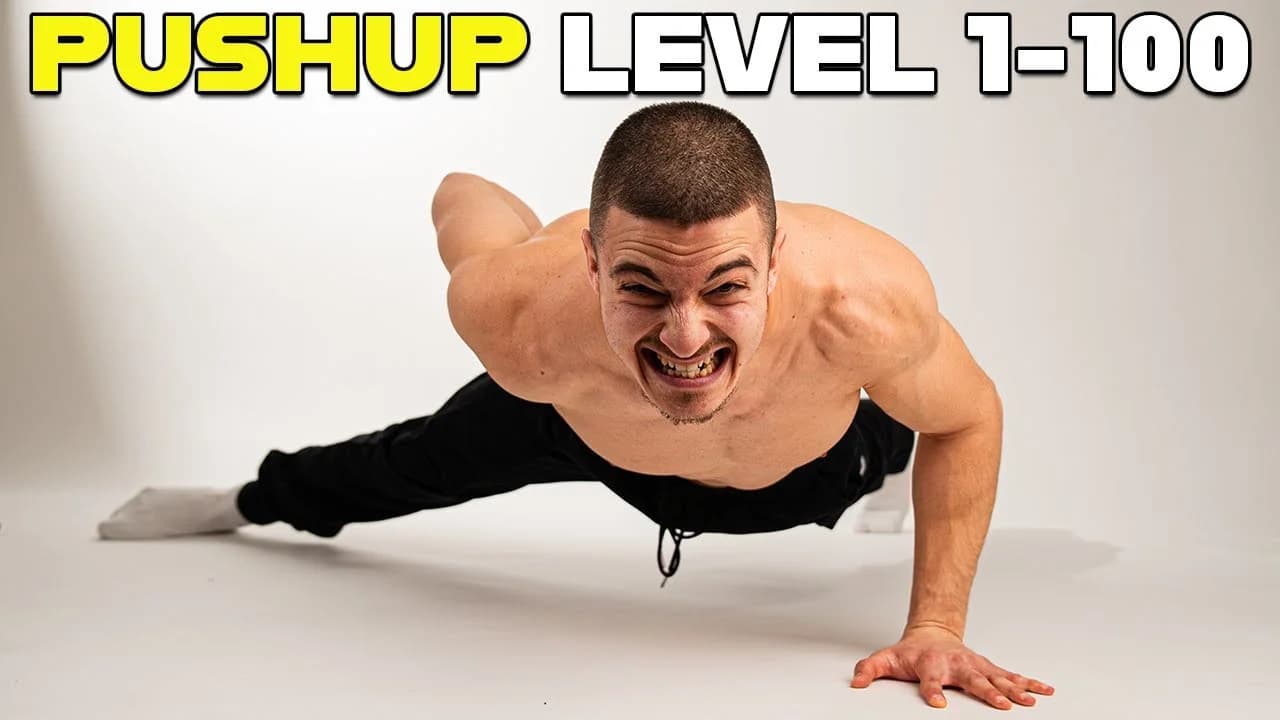
The pushup is the most basic pressing exercise in calisthenics, and it is also the base of almost everything harder that comes after it, including dips, planche work, and one-arm pushups. In my video "Pushups: LVL 1 To LVL 100" I wanted to show the full range, from someone who cannot do a single rep off the floor to someone training advanced single-arm variations.
A progression like this is not about rushing to the hardest version. It is about building strength in order, so each level actually prepares you for the next one. Skipping levels is where most people get stuck or hurt.
I still program pushup variations for myself and for the athletes I coach, because pressing strength never stops mattering, no matter how advanced your static holds get.
Prerequisites
You do not need any equipment to start the pushup progression, which is part of why I like it as a teaching tool. What you do need is control over your own bodyweight in a straight line from shoulders to ankles, and enough shoulder and wrist tolerance to support that position.
Rough standards before you move through the levels:
- You can hold a straight plank on your hands for 20 to 30 seconds without your hips sagging or piking up.
- Your wrists do not hurt when loaded in a straight-arm position. If they do, build up slowly and consider wrist mobility work first.
- You can do at least a few knee pushups with a straight line from knees to shoulders before attempting full pushups from the toes.
How to Do the Pushup
Set your hands roughly shoulder width apart, fingers pointing forward or very slightly out. Brace your core and squeeze your glutes so your body stays in one straight line, no sagging lower back, no hips piked in the air.
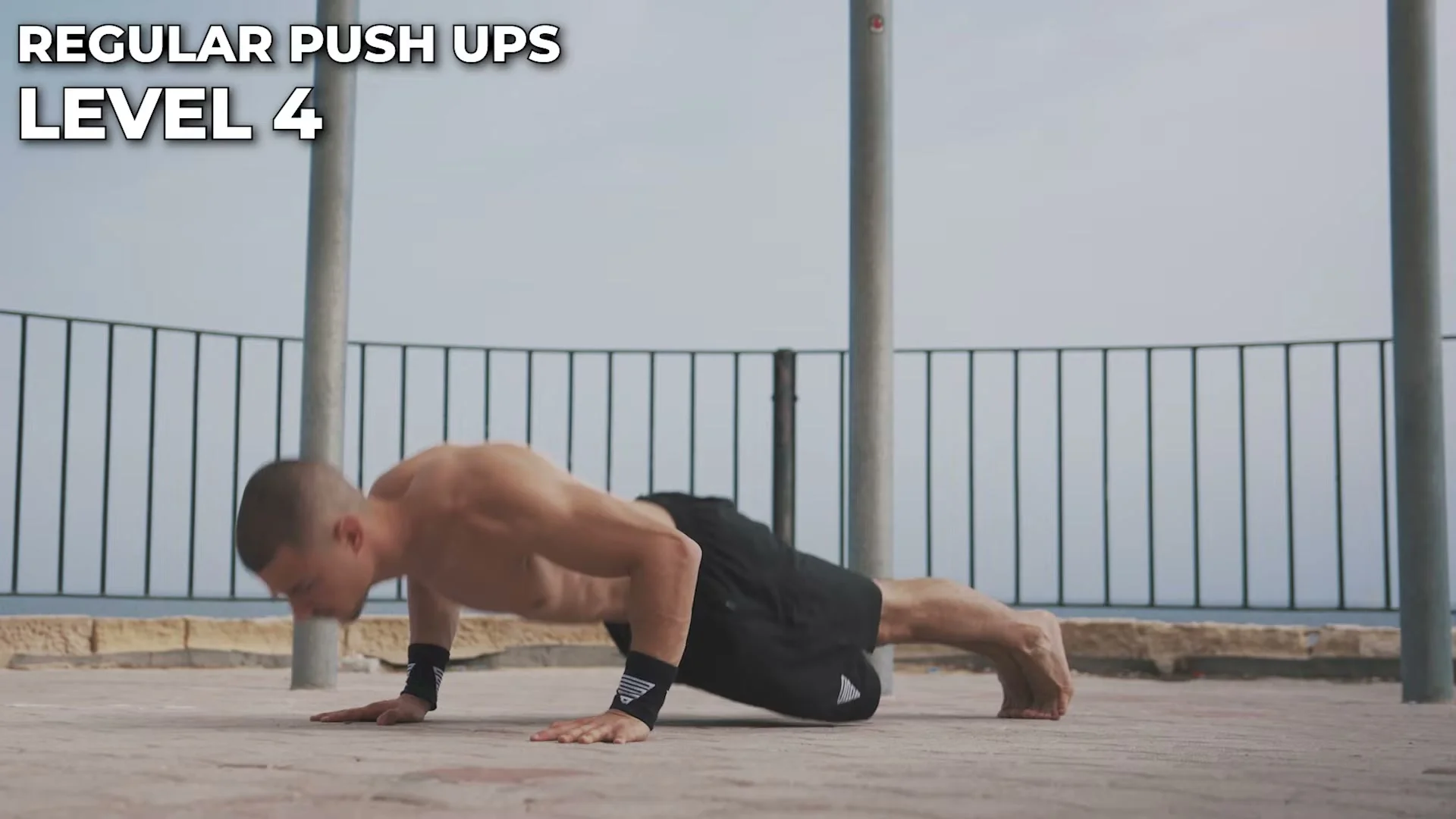
Lower yourself under control until your chest is close to the floor, elbows tracking back at roughly 45 degrees from your torso rather than flared straight out to the sides. Push back up through your palms until your arms are fully extended, without letting your shoulders shrug up toward your ears at the top.
Breathe in on the way down, breathe out as you press up. Keep your neck neutral, looking slightly ahead rather than jamming your chin down or craning it up.
Progression: From Zero to Advanced Pushups
Key Takeaway
No one goes from zero to an advanced pushup variation by rushing the levels. Each stage builds the strength and control the next one needs, and skipping stages is the fastest way to stall out or hurt a wrist or shoulder.
These are the stages I take people through, in order. Do not move to the next one until the current stage feels solid for several clean reps.
Stage 1: Incline Pushups
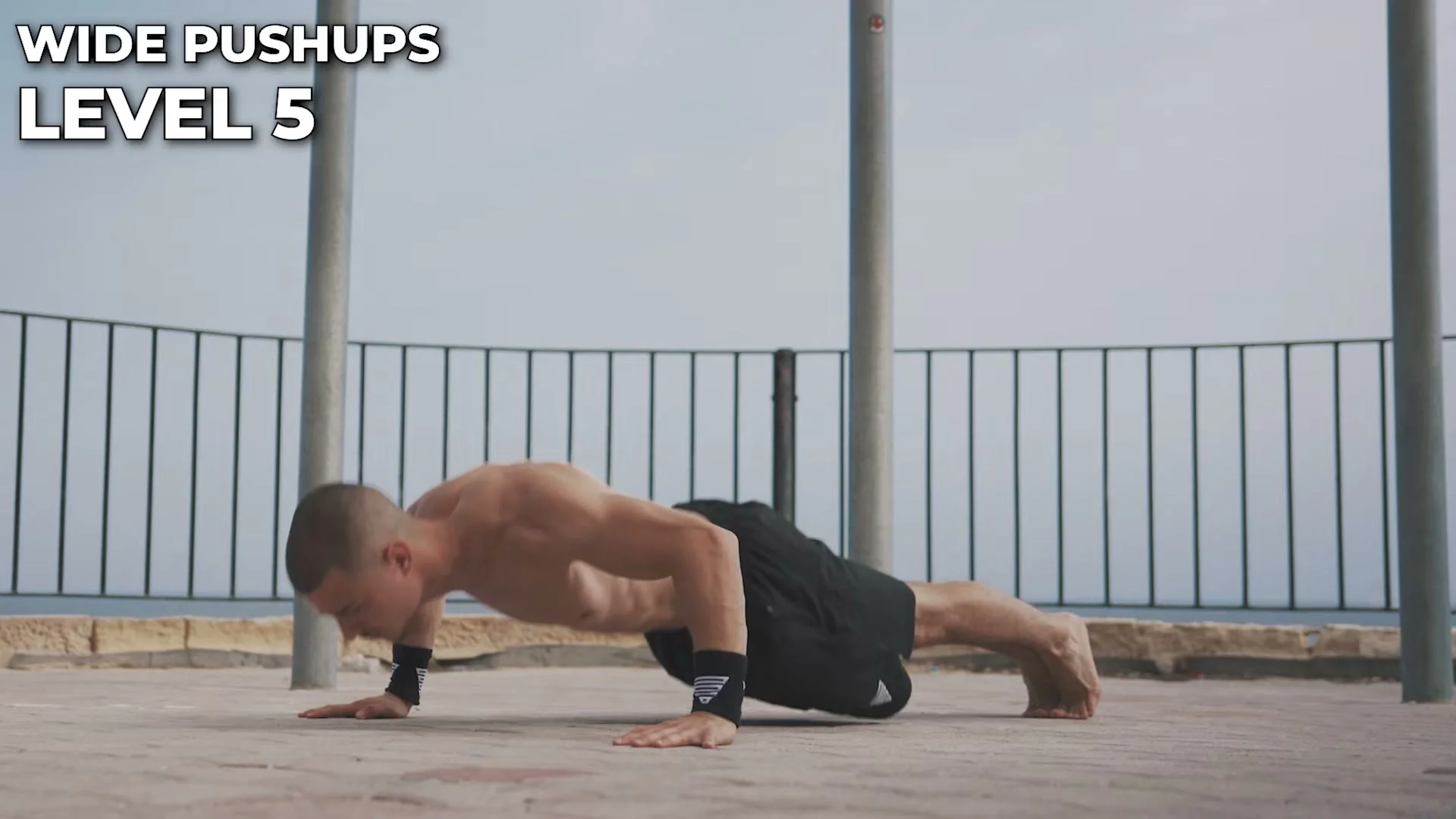
Place your hands on a bench, step, or wall, higher than your feet. The higher the surface, the easier the rep. This lets you learn the pressing pattern and the straight body line before you load your full bodyweight. Widening your hand placement, like a wide-hand pushup, is another simple way to reduce the load while you are still building toward standard reps.
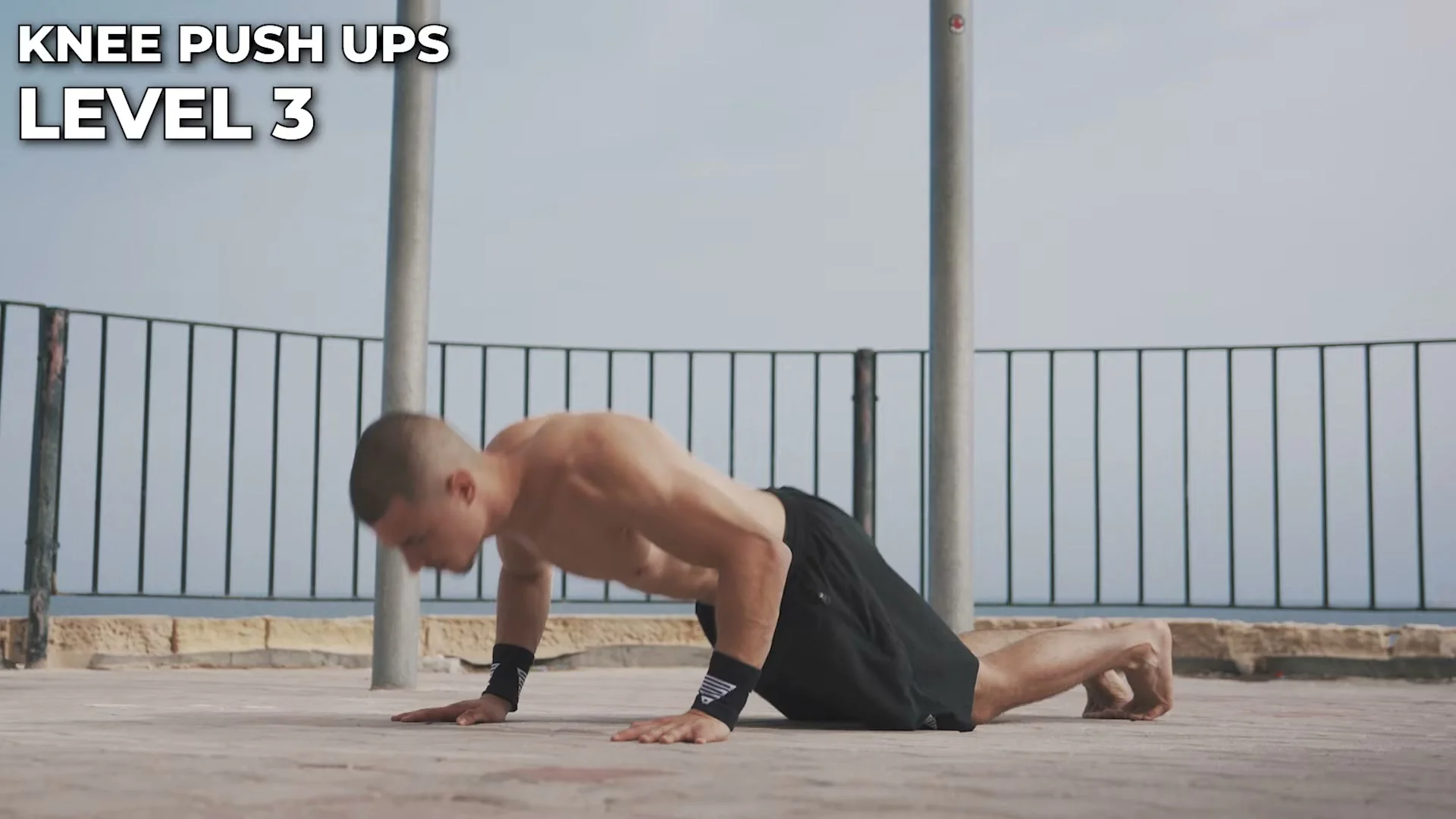
Stage 2: Knee Pushups
Drop to your knees instead of your toes, keeping the same straight line from knees to shoulders. This is a genuine strength step, not a shortcut, and it is where a lot of beginners should honestly spend more time than their ego wants.
Stage 3: Standard Pushups
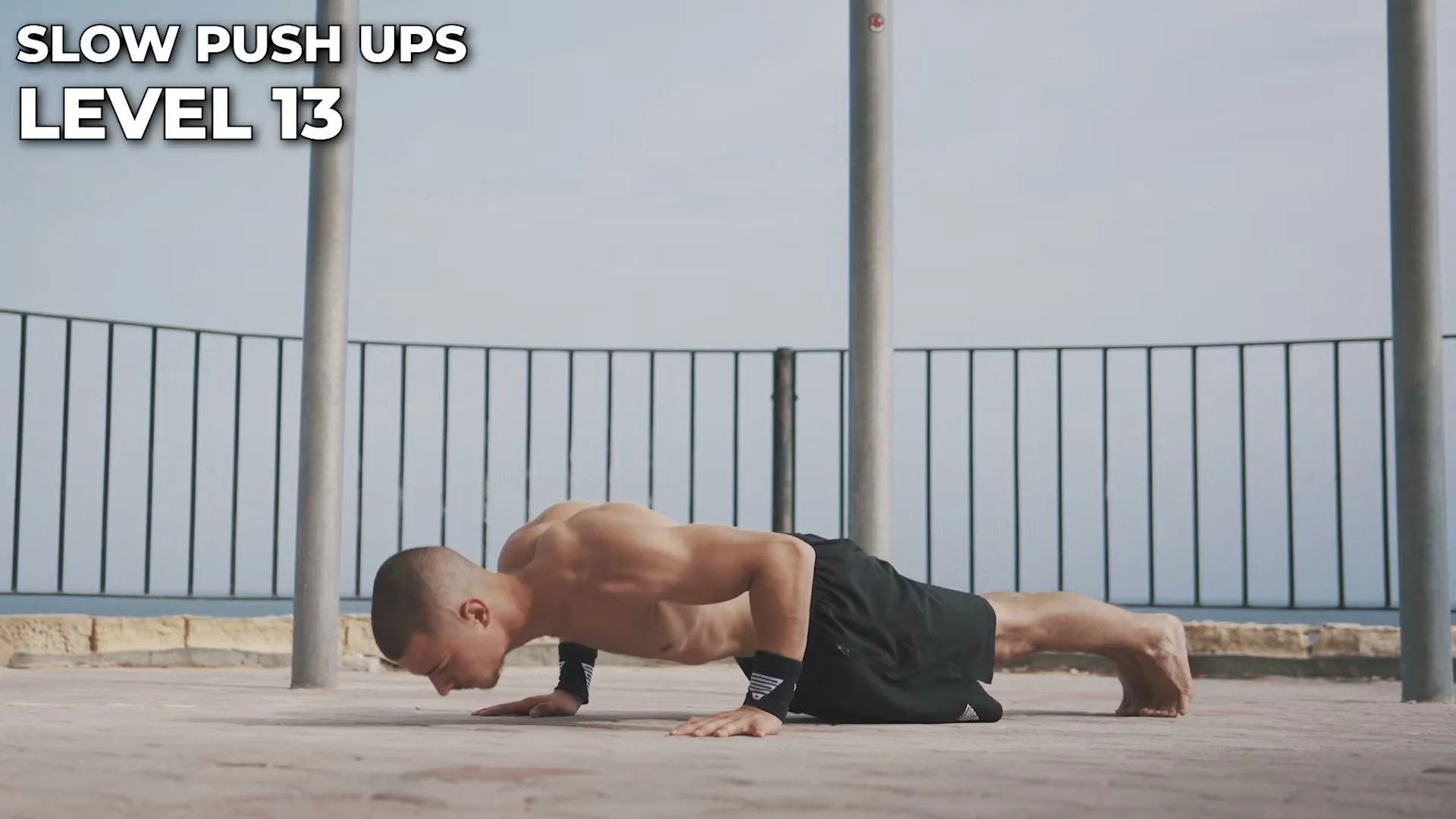
Full pushups from the toes, using the technique above. This is level one of the "real" version, and it should be solid, several clean reps, before you chase anything harder. Slowing the tempo down on the way down is a good way to check your form is actually holding under control, not just moving fast enough to hide the cracks.
Stage 4: Diamond and Decline Pushups
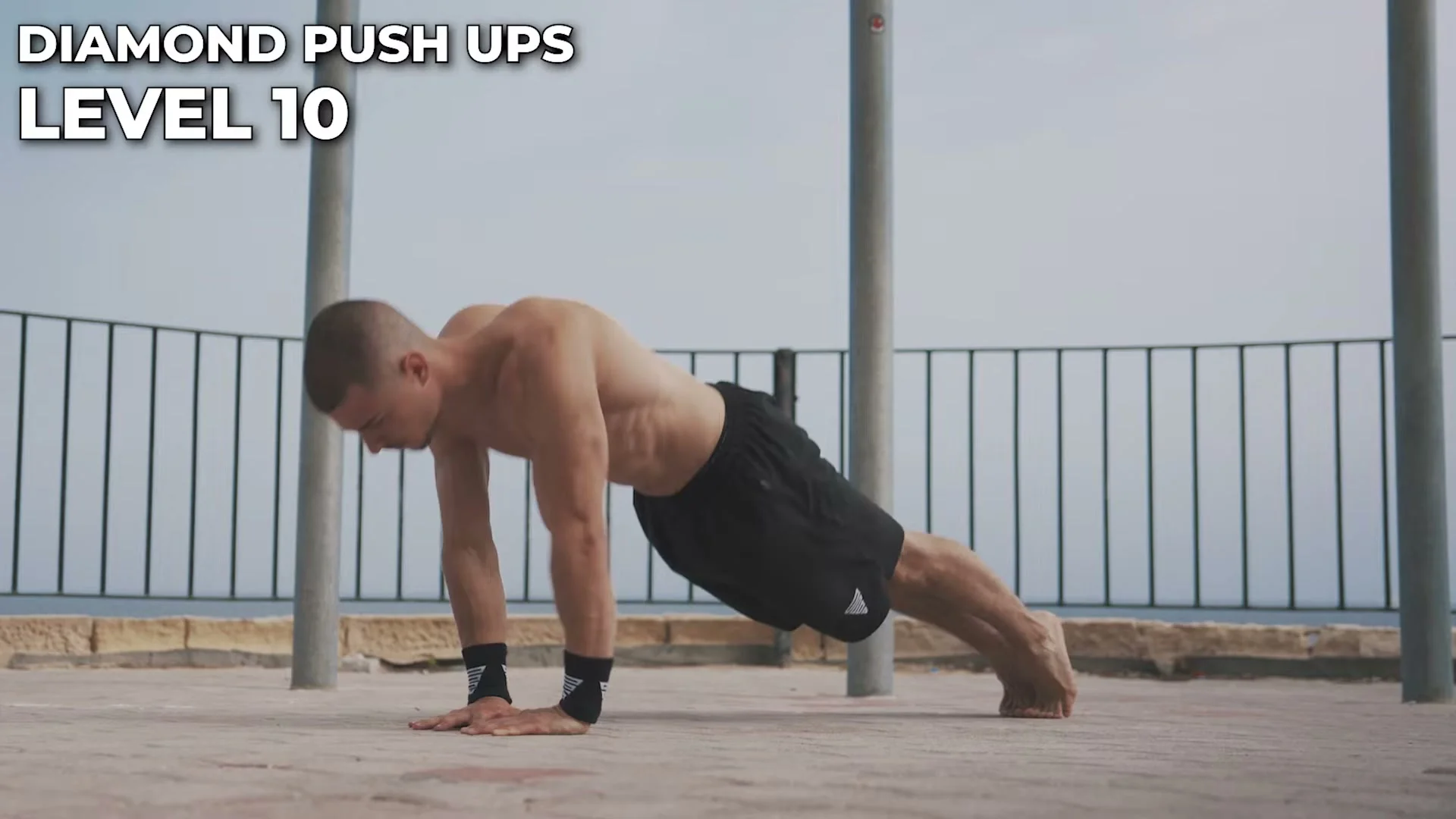
Diamond pushups (hands close together under your chest) shift more work onto the triceps. Decline pushups (feet elevated) shift more load onto the shoulders and upper chest. Both make the same movement harder without changing the pattern.
Stage 5: Archer Pushups
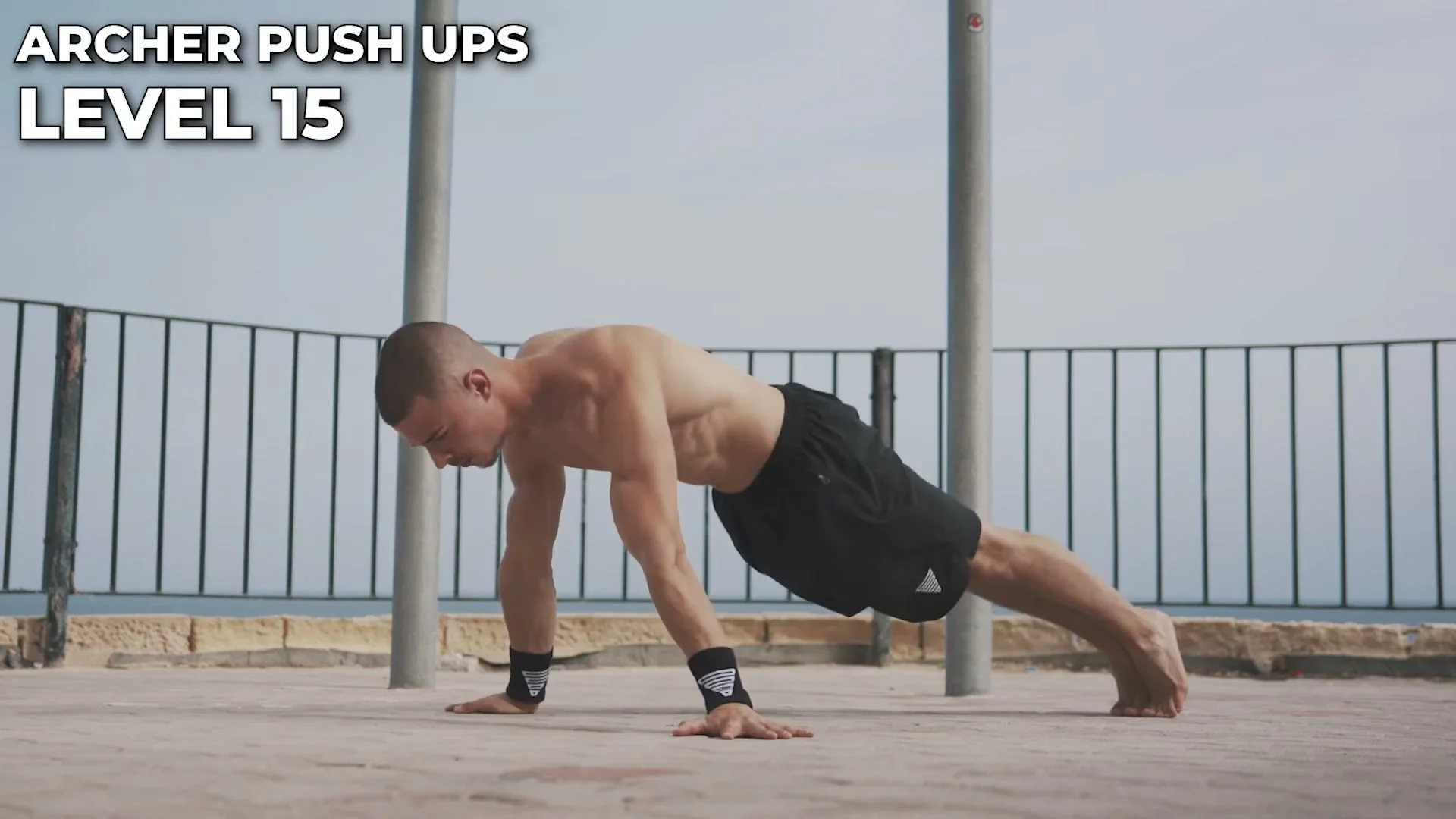
One arm stays extended out to the side while the other arm does most of the pressing work. This is a direct bridge toward single-arm strength, and it exposes weaknesses fast if your form breaks down under load.
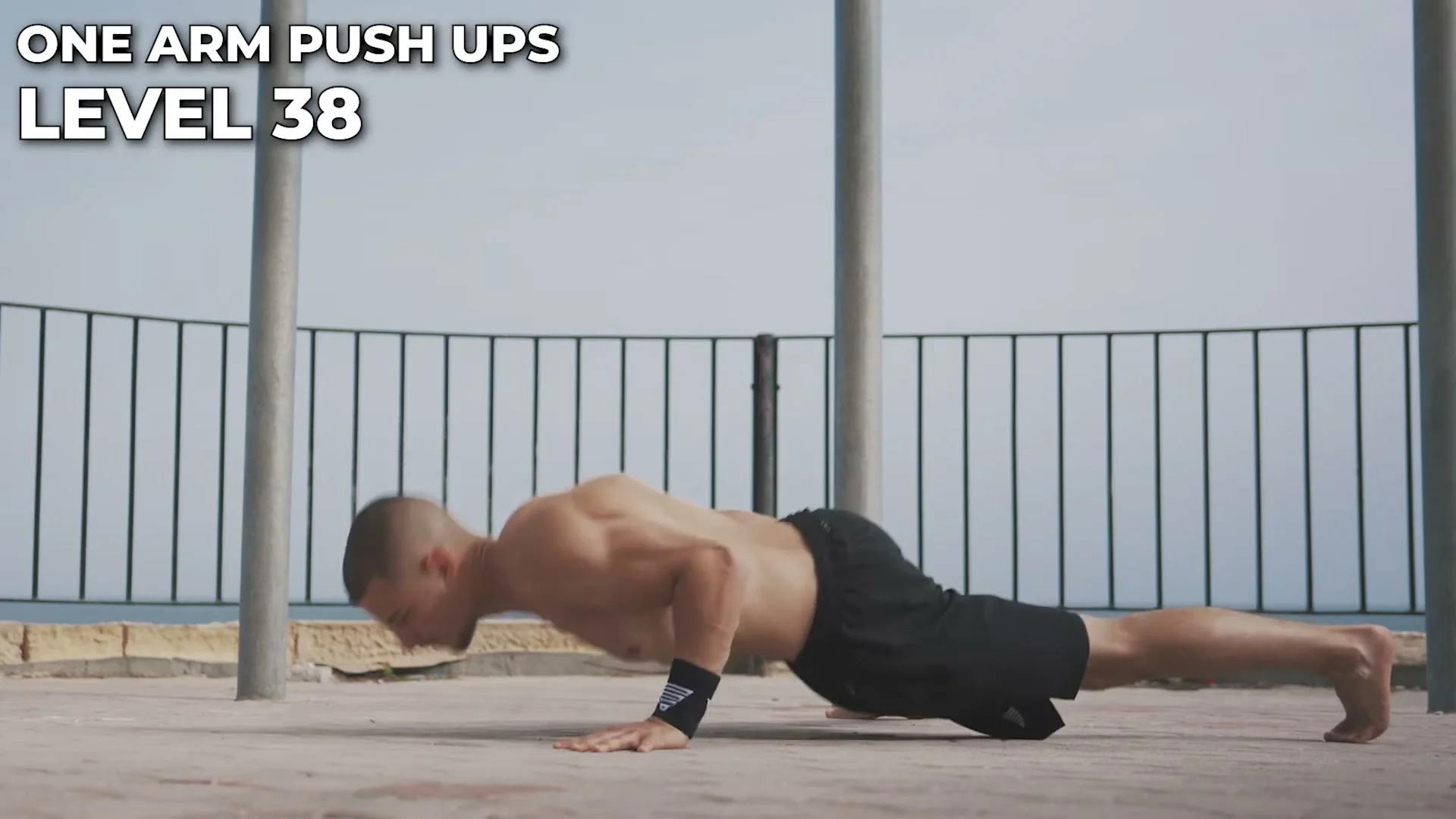
Stage 6: One-Arm Pushup Progression
The top of the pyramid. Getting here takes real pressing strength, core stability, and patience, and most people are better served spending months on archer and decline work first rather than forcing single-arm reps too early.
Common Mistakes
Sagging Hips
Letting your lower back dip toward the floor turns a pushing exercise into a lower back exercise. Keep the glutes and core braced through the whole rep.
Flaring Elbows
Elbows straight out to the sides put unnecessary stress on the shoulder joint. Aim for roughly a 45 degree angle from your torso instead.
Skipping Levels
Jumping from knee pushups straight to archer or one-arm work is the fastest way to stall. Earn clean reps at one stage before adding difficulty at the next.
Rushing the Tempo
Fast, bouncy reps hide exactly the form breakdown you need to see and fix. Slow down, especially when you are testing whether you are actually ready for the next stage.
Training Tips
Train pushups fresh, or early in a session, if you are working on a harder variation like archer or one-arm progressions. Pressing strength under fatigue teaches you nothing about whether your form actually holds.
Do not skip the easier stages just because they feel slow. The time you spend on knee pushups and standard pushups with strict form is what lets archer and one-arm work go faster later, not slower.
If your wrists complain at any stage, back off the range or the variation rather than pushing through pain. Wrist mobility work and a gradual build in loaded time under tension solves this far better than grinding through discomfort.
I still keep basic pushup variations in my own training, mixed in with harder pressing work, because the pattern itself never stops being useful, no matter how advanced the rest of your training gets.
Frequently Asked Questions About the Pushup Progression
How many pushups should a beginner be able to do?
There is no single number that applies to everyone. What matters more is quality, a few strict knee or standard pushups with a straight body line beats a higher count with sagging hips.
How long does it take to go from zero pushups to a full pushup?
It depends entirely on your starting strength, but consistent training on incline and knee variations over several weeks is usually enough to build toward your first full rep from the toes.
Are diamond pushups harder than standard pushups?
Yes. Bringing your hands close together shifts more load onto the triceps and reduces your leverage, which is why diamond pushups belong later in the progression, not at the start.
Is the one-arm pushup necessary for calisthenics?
No, it is not required for most goals. It is a strength milestone I include in the progression, but plenty of solid pressing strength can be built without ever chasing a single-arm rep.
Can I train pushups every day?
You can, especially at the easier levels, as long as your joints, particularly the wrists and shoulders, are recovering well. Once you move into harder variations like archer or one-arm work, more recovery between sessions usually pays off.
What should I train after I master the standard pushup?
Diamond and decline variations are the natural next step, followed by archer pushups. If you want a structured plan built around your current level, that is exactly the kind of thing I work through with people in online coaching.

Daniel Hristov is a four-time calisthenics world champion and coach. He shares the exact methods he uses to train his own athletes.
More about Daniel →