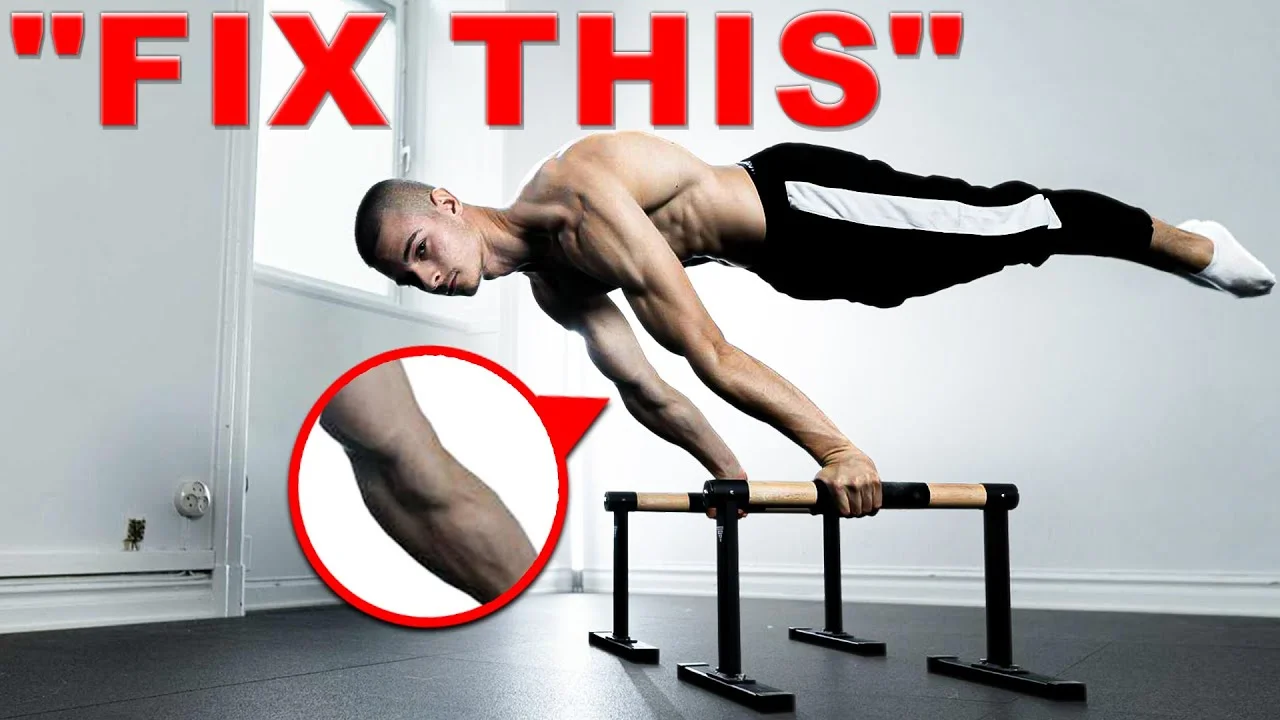
Bent elbows that curve past straight when you lock them out are called hyperextension, and if you train planche it is worth understanding early. I have hyperextended elbows myself, and I pushed straight into planche work without preparing for it, which cost me tendonitis in both elbows. Hyperextension does not have to stop your planche progress, but it does need a plan before you load your arms with static holds. In this tutorial I cover what elbow hyperextension is, how to spot it, and the exact strengthening work I use to train planche with less pain. By the end you will know how to start protecting your elbows.
Watch the Full Tutorial
What Is Elbow Hyperextension in the Planche
Elbow hyperextension is when your arm bends past straight once you lock it out, instead of stopping at a straight line. For some people it is genetic, from naturally loose ligaments or a bone structure that allows extra range. For others it develops over time, usually from pushing into static holds like planche with too much pressure and not enough preparation. That was my situation.
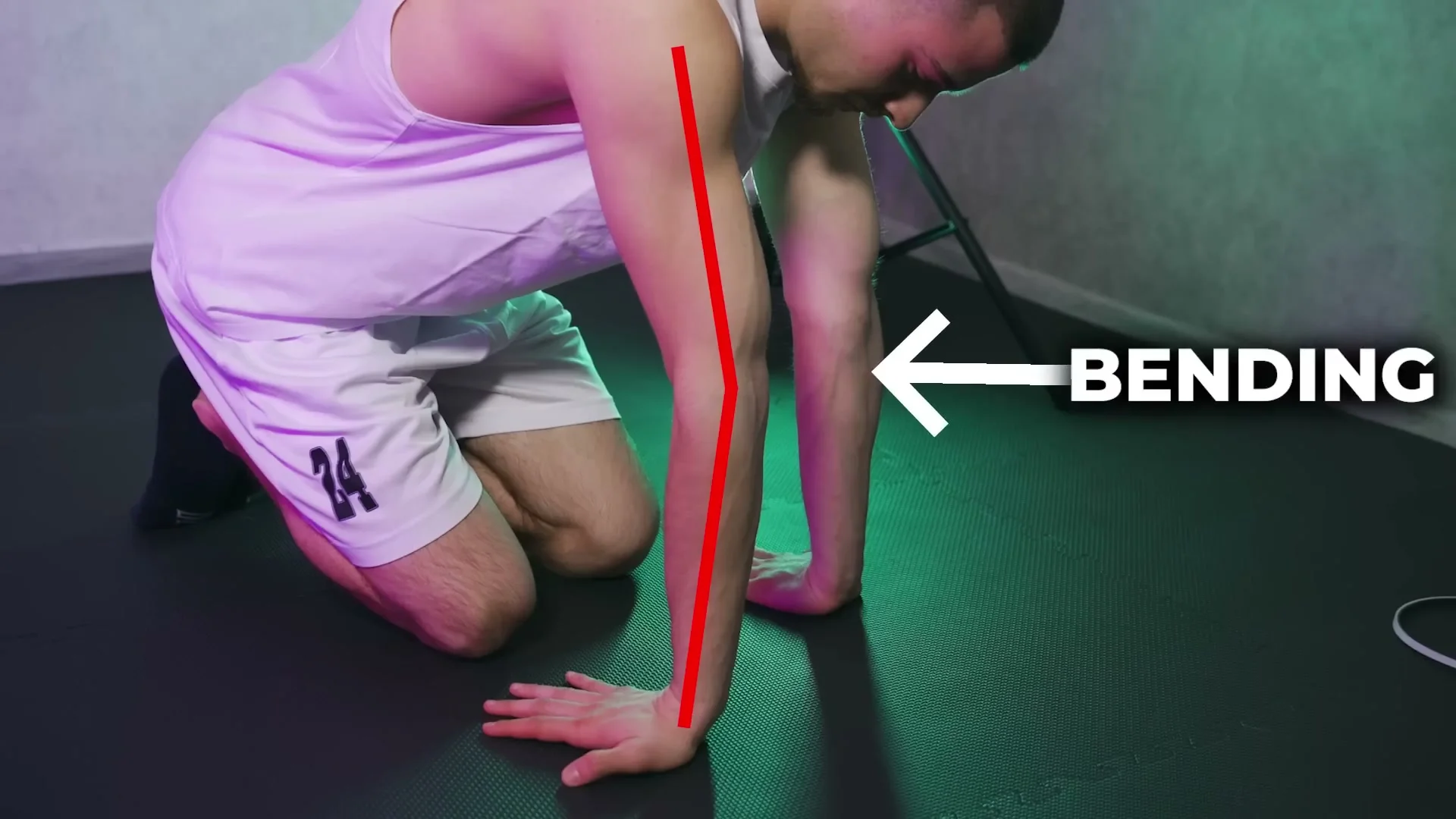
You can check for it yourself. Lock your elbow out fully. If it stays straight, you are fine. If it bends inward and forms an angle instead of a straight line, or if you feel discomfort when you lock it out, you likely have some degree of hyperextension.
This matters for planche specifically because a static hold puts constant load through a locked elbow joint. If that joint is unstable, you get less control over the hold, more strain on the joint itself, and over time a higher risk of tendonitis.
Prerequisites
Before you start any of the work below, get an honest read on where you stand. I have hyperextension myself, medium on my right side, and I still deal with it after years of training. This is not about eliminating hyperextension, it is about controlling it so it does not turn into an injury.
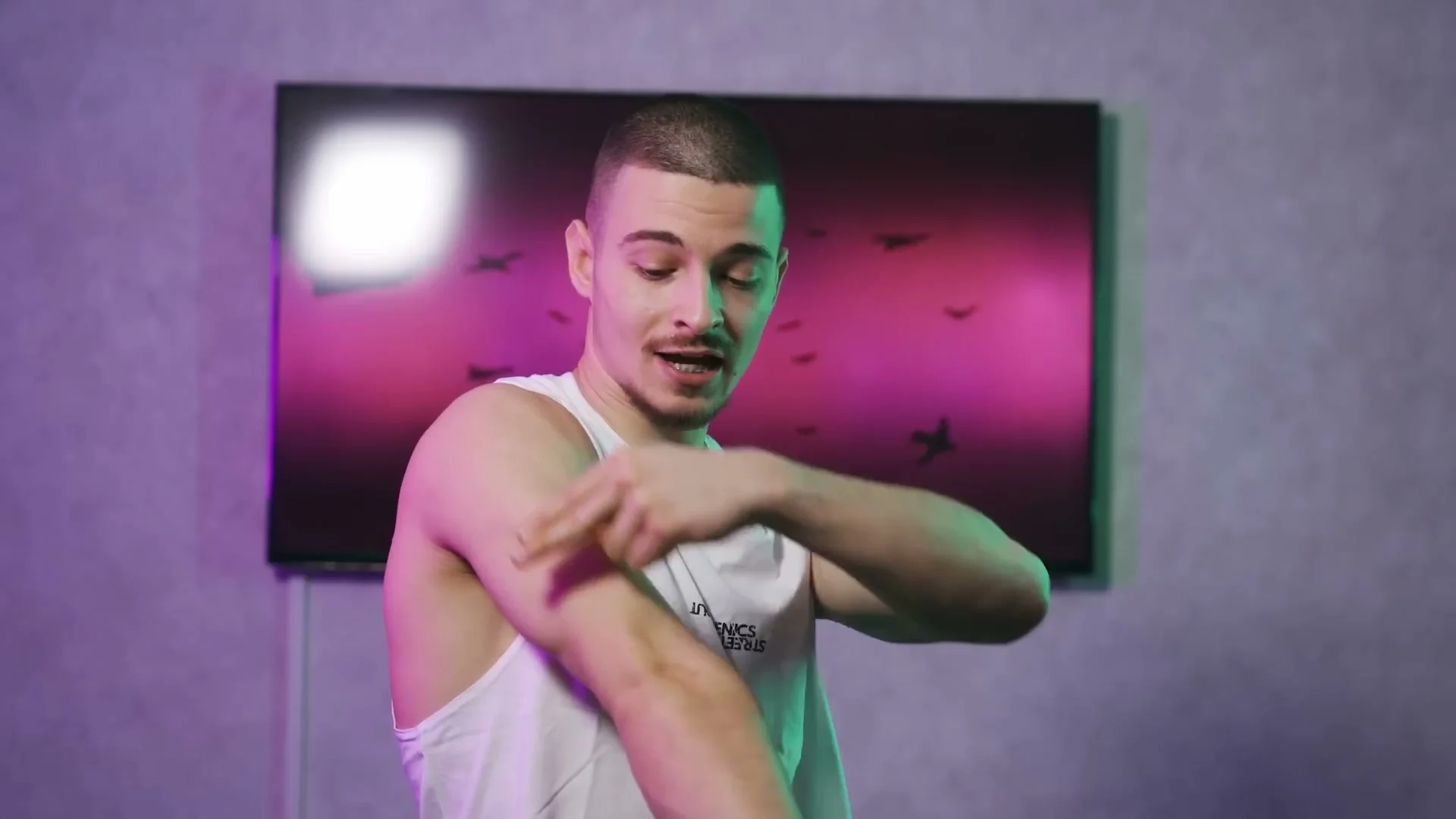
- Check how far your elbow bends inward when you lock it out, so you know if your hyperextension is mild, medium, or more severe.
- Notice whether you get discomfort or pain when locking out or holding static positions, that is a signal to slow down.
- Be ready to train this before every session, not once in a while.
- Have access to light dumbbells (roughly 5 to 10 kg depending on your bodyweight) or a light resistance band.
How to Fix Hyperextended Elbows for Planche
Key Takeaway
Hyperextension is not something you fix once and forget. You control it with strength work done before every session, not a single corrective exercise. Skipping the warm-up work is the main reason people who already know they have hyperextension still end up with elbow pain.
The first exercise I rely on is an isometric hold with light weight. Stand with your back against a wall, hold a light dumbbell, and hold the position for 20 to 30 seconds across 5 sets. I do 2 to 3 of those sets before training so my elbows, forearms, and tendons are both stronger over time and activated for that session.
The second variation is done on the ground. Lie on your back similar to a hollow body position, lift your feet and shoulders slightly off the floor, and lean into the position rather than locking it out completely. You should feel tension building through your biceps, elbows, and forearms. That tension is what builds tendon strength.
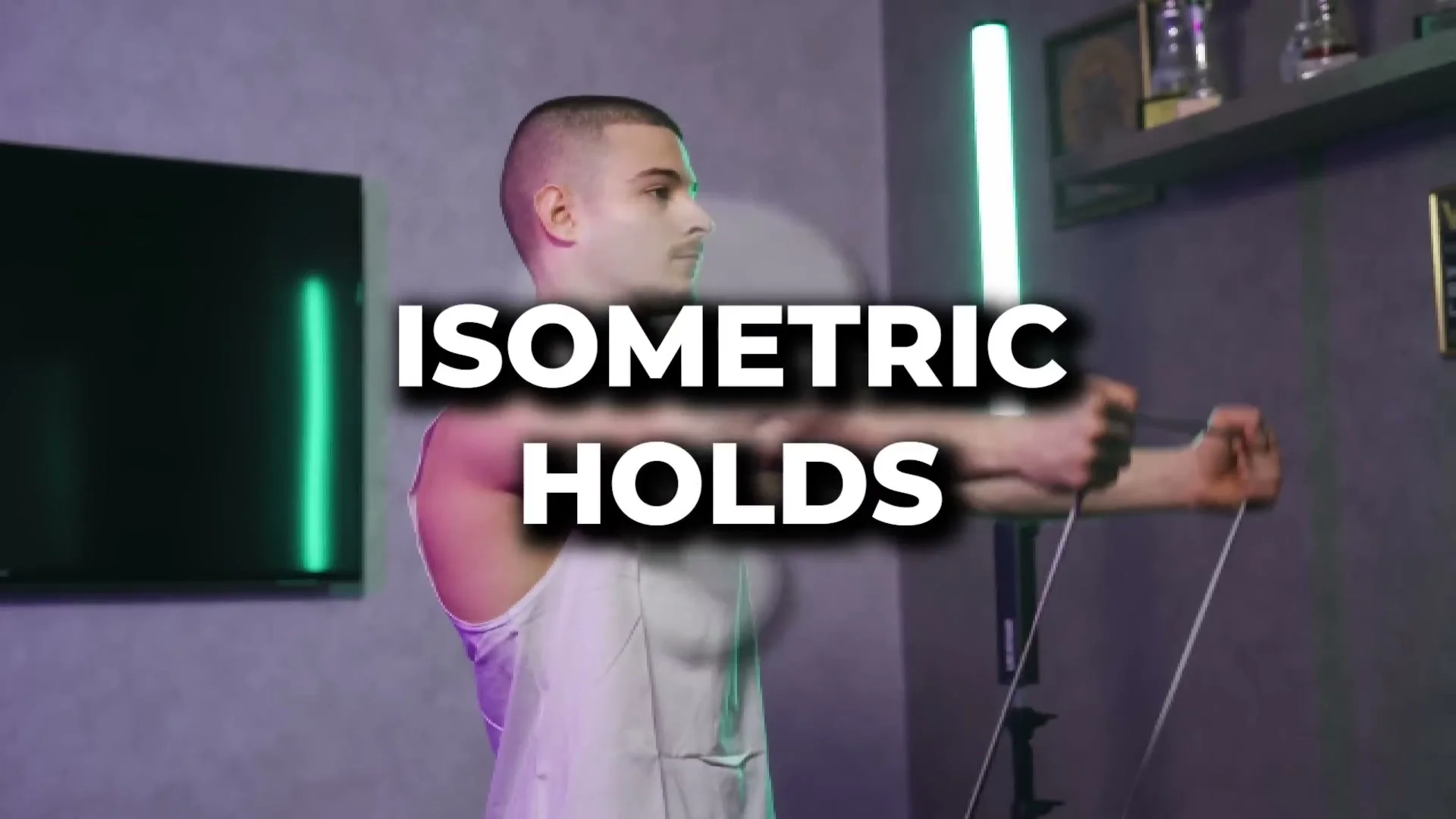
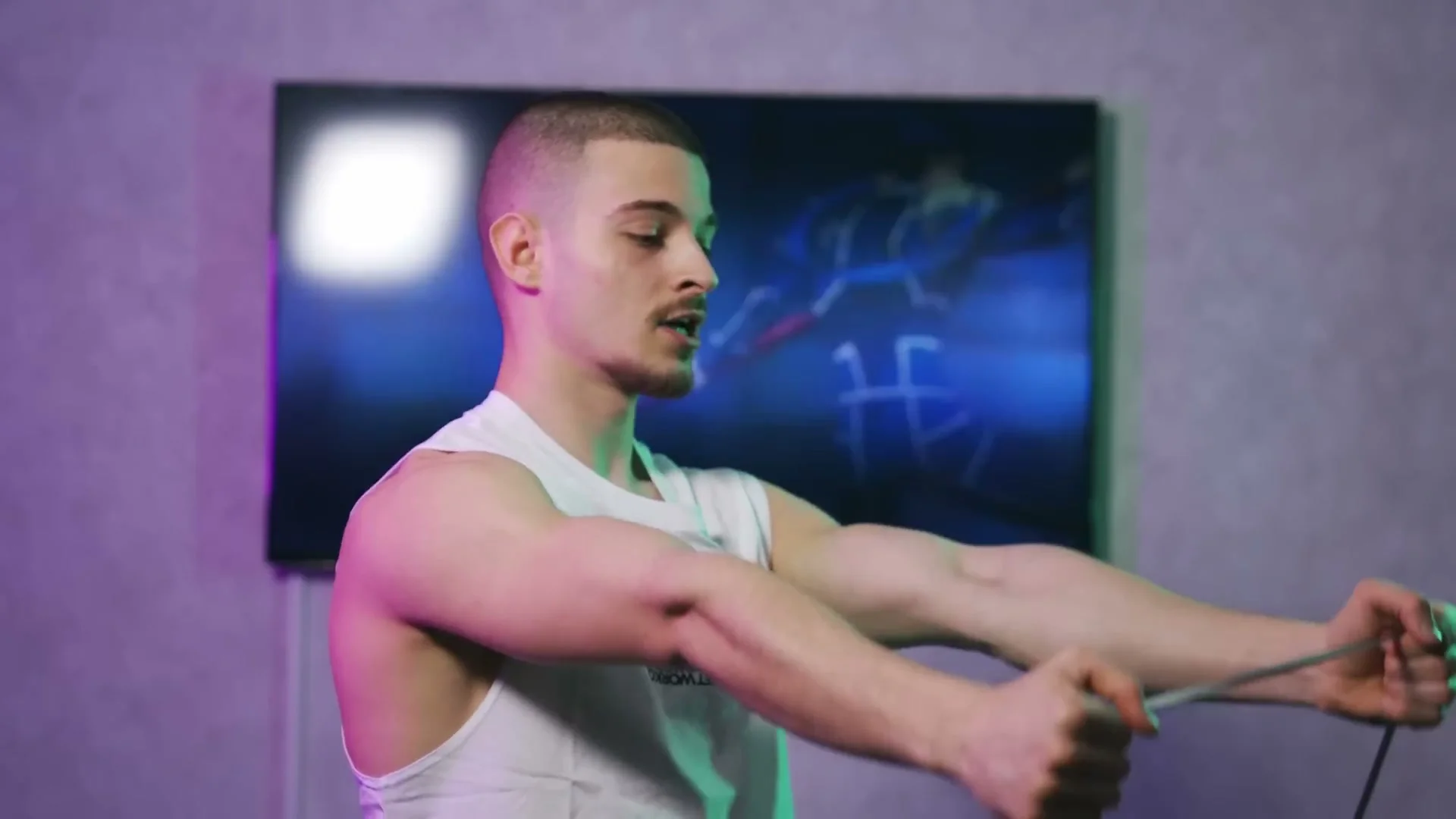
The third option is a resistance band version, which I prefer as a warm up because it stresses the elbow less than weights do. Use a light band, around 5 to 10 kg of resistance, and set your arms into the same shoulder extension you use in planche, with roughly 90 degrees at the elbow. Hold isometrically first, then follow with 3 sets of 10 reps.
Alongside all of that, train the muscle groups around the elbow directly: shoulders, biceps, triceps, forearms, and grip. The stronger and better prepared those five areas are, the less stress lands directly on your elbow joint during planche work. If you want this built into a plan around your own hyperextension level, that is exactly what I help with through online coaching.
Progression: From Protecting Your Elbows to Training Planche Pain Free
These are the stages I work through, in order. Do not move to the next one until the current stage feels controlled and pain free.
Stage 1: Isometric Wall Holds
Start here. Back against the wall, light dumbbell in hand, 20 to 30 second holds for 5 sets. This is the base strength and activation work for your elbows and forearms.
Stage 2: Ground Lean Holds
Add the floor variation once wall holds feel controlled. Lie on your back in a hollow body position, lift your feet and shoulders slightly off the floor, and lean into the position instead of locking out fully. Focus on feeling the tension move through your biceps and forearms, not just your elbow.
Stage 3: Resistance Band Warm-Up
Use the light band version before every planche session. This activates the same muscles with less joint stress than weights, which is why I use it specifically as a warm up rather than as the main strengthening tool.
Stage 4: Direct Muscle Group Work
Add biceps curls with the band as a warm up, then regular biceps curls with weight, triceps extensions, and forearm or grip work at the end of your session. This builds the surrounding strength that takes pressure off the joint itself.

Stage 5: Combine Strength With Mobility
Do not drop stretching and flexibility work out of fear it will worsen your hyperextension. Keep it on separate days from your heavy strength work. The combination of the two, not one alone, is what gave me the best results.
Common Mistakes
Mistake: Pushing Straight Into Planche Without Preparing Your Elbows
I did this myself when I started calisthenics. I went straight into planche variations, push-ups, and presses without preparing my elbows first. After a few months of pressure without preparation, it led to instability and eventually tendonitis in both elbows.
Mistake: Using Too Much Weight on Isometric Holds
More weight is not the goal here. I use 5 to 7 kg for my own holds. Test how much your elbows can handle and stay light enough that you are strengthening the joint, not stressing it further.
Mistake: Avoiding Mobility Work Entirely
Some people skip stretching and flexibility work because they think it will make hyperextension worse. In my experience the opposite is true. Flexibility combined with strength work, on separate days, prepares your tendons better than strength training alone.
Mistake: Treating This as a One-Time Fix
Hyperextension is not something you correct once and move past. It needs the same warm-up and strength work before every session, indefinitely. Skipping it for a few sessions because your elbows feel fine is how the problem comes back.
Training Tips
Do the isometric and band work before every session, not just on days your elbows feel sore or tight. Consistency, not intensity, is what controls hyperextension over time.
Keep your strength work and your flexibility work on separate days. Combining both in the long run gave me better results than doing either one on its own.
Test your own tolerance instead of copying someone else's numbers. I use 5 to 7 kg dumbbells and a 5 to 10 kg band, but the right amount for you depends on your bodyweight and how your elbows respond.
Apply the same warm-up before front lever and dynamic movements too, not just planche. Any skill that loads a locked elbow benefits from the same preparation.
Frequently Asked Questions About Elbow Hyperextension
Can hyperextended elbows be fixed completely?
It depends on how severe it is. Mine is a medium case and, honestly, it probably cannot be fixed 100 percent. What you can do is control it through strength work until it stops being a limiting factor, which is where I am now after years of training.
Is elbow hyperextension bad for planche?
It can be, if it is not controlled. It causes strain on the joint, reduces your control over the hold, and can develop into tendonitis over time. It is not automatically disqualifying, but it does need a plan.
How do I know if I have hyperextended elbows?
Lock your elbow out fully. If it does not stay straight and instead bends inward at an angle, or if locking out causes discomfort, you likely have some level of hyperextension.
What weight should I use for isometric elbow holds?
Start light. I personally use 5 to 7 kg dumbbells for my holds, and a resistance band in the 5 to 10 kg range for warm ups. Adjust based on your own bodyweight and how your elbows respond.
Can I still train front lever and dynamics with hyperextended elbows?
Yes. I use the same warm up protocol before front lever and dynamic movements, not just planche. The goal is protecting the joint before any static or high load work, regardless of which skill you are training.
How long before I see improvement?
There is no fixed timeline in my experience, it took me around three and a half years to get to where I am close to pain free. What changed things was consistency before every session, not a single fix.
If you want a training plan built around your own hyperextension level, that is exactly the kind of thing I work through with people inside online coaching.

Daniel Hristov is a four-time calisthenics world champion and coach. He shares the exact methods he uses to train his own athletes.
More about Daniel →