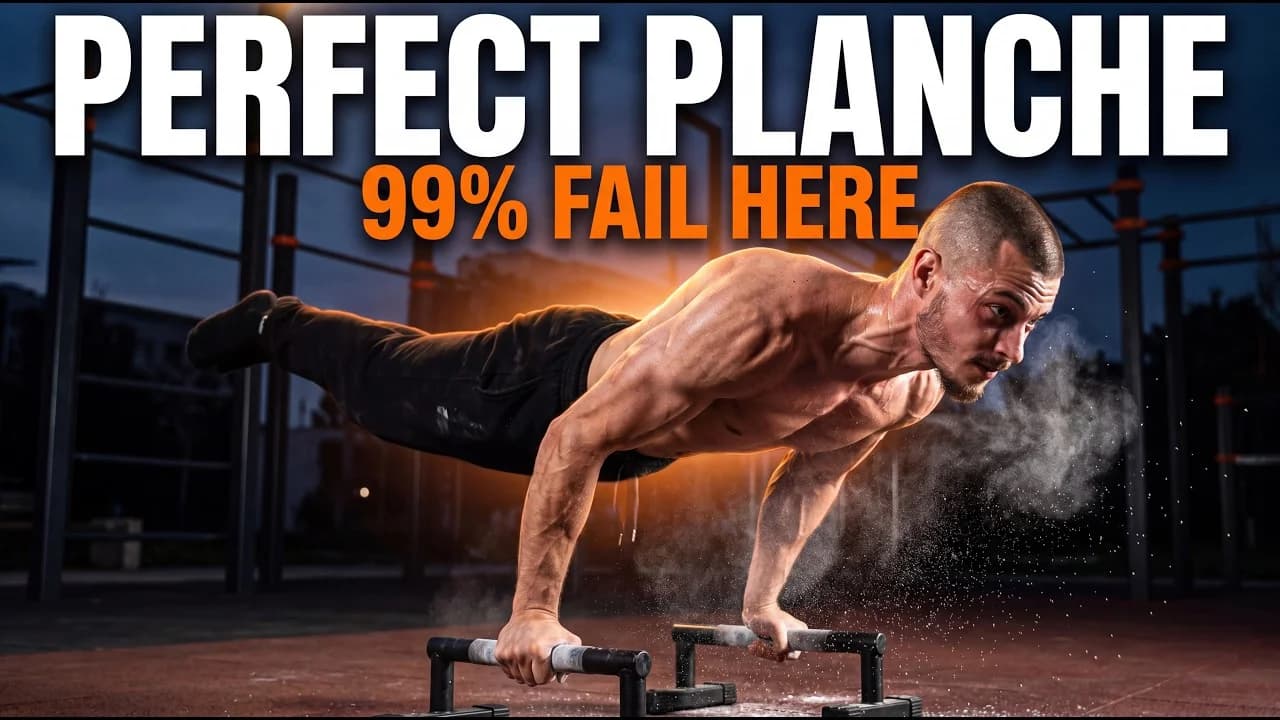
The planche is one of the hardest static holds in calisthenics, and most people who can already do one still can't do it clean. I see the same broken shapes over and over: bent elbows, rounded shoulders, sagging hips. This isn't a beginner skill, you need real straddle or full planche strength before form work makes sense. In this tutorial I cover the exact wrist, elbow, shoulder, core, and hip cues that separate a shaky planche from a clean one, plus three drills to fix bad form once it's already built. By the end you'll know how to start training it correctly instead of just holding it longer.
Watch the Full Tutorial
What Is the Planche
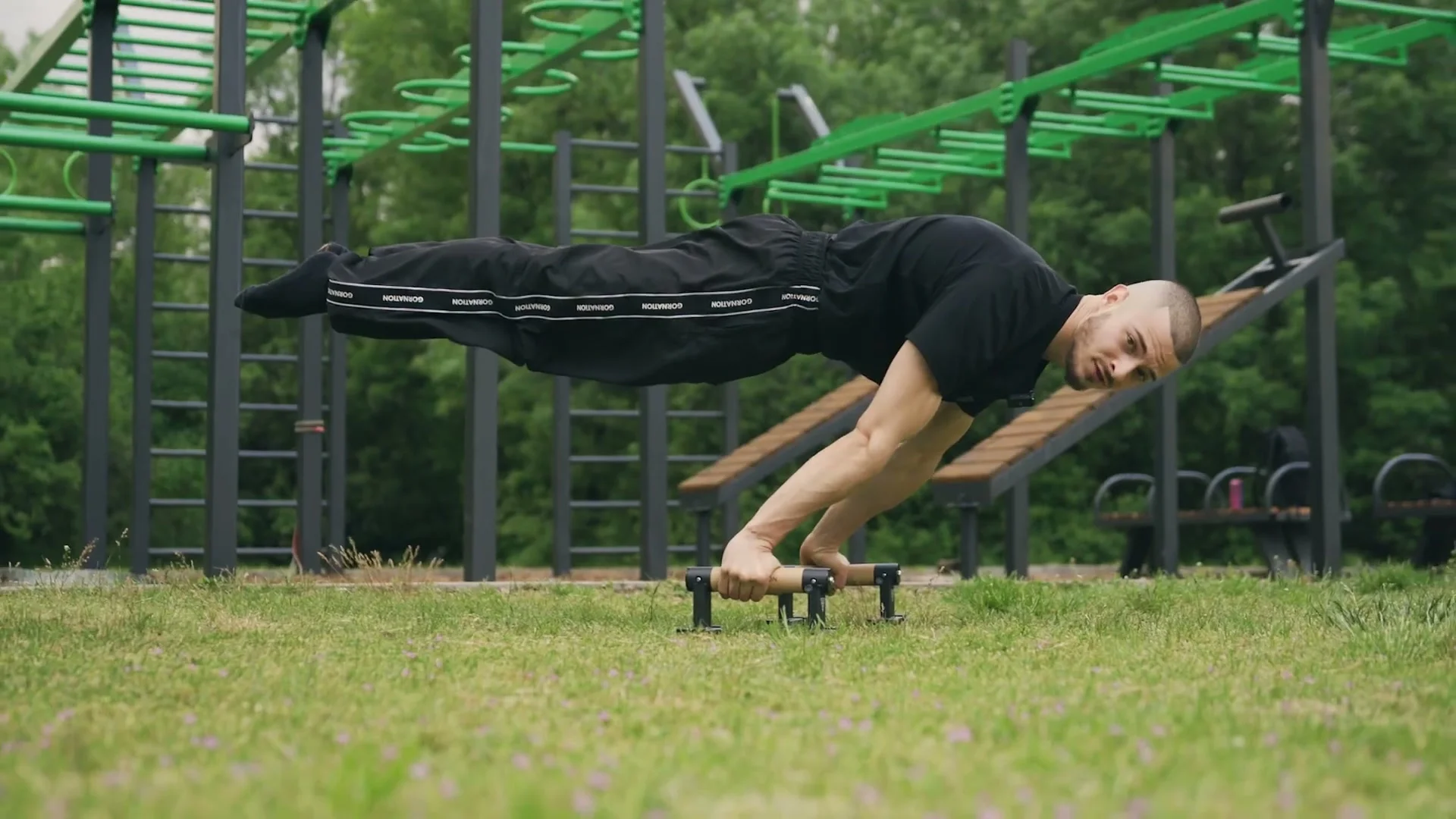
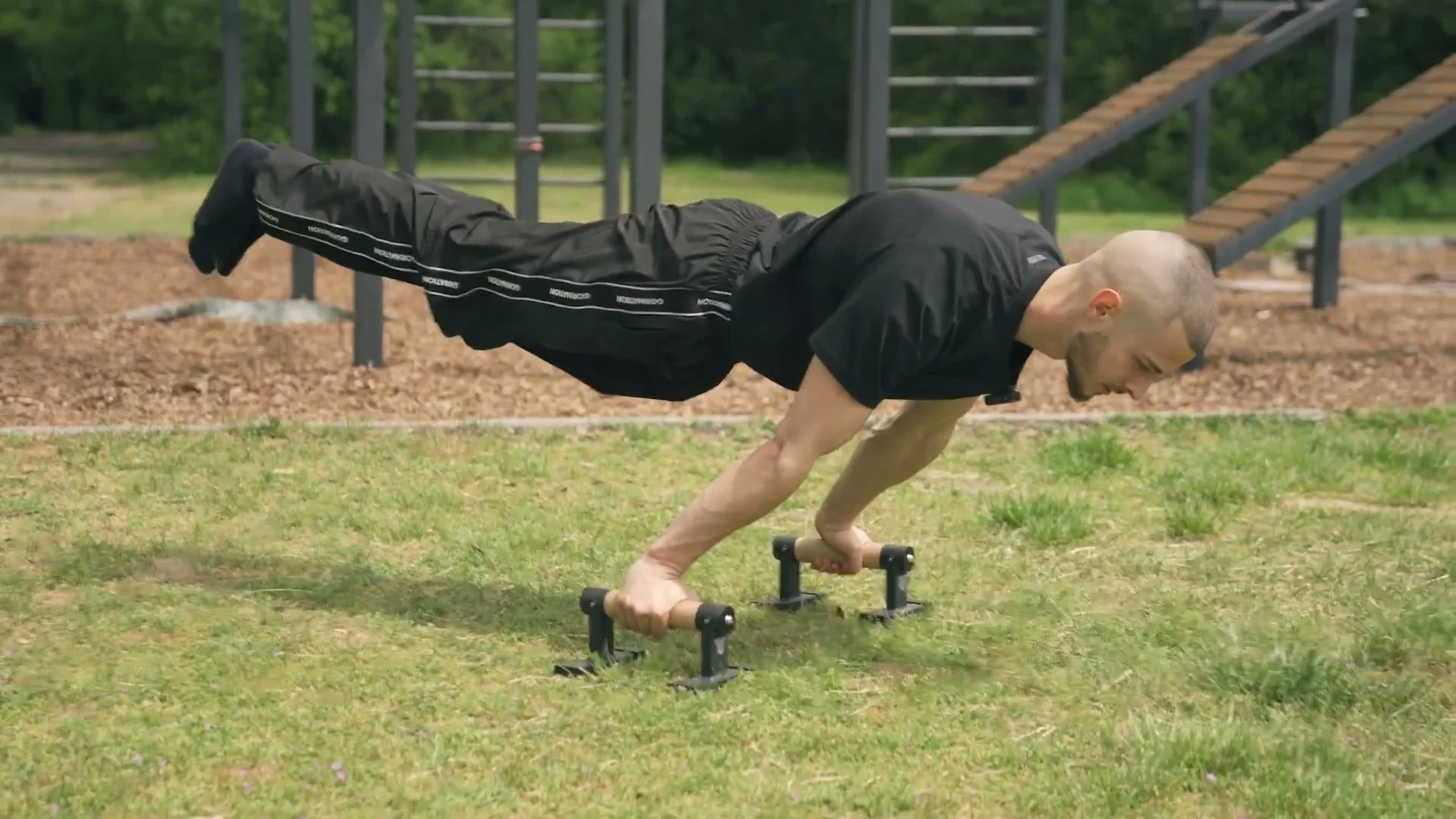
The planche is a horizontal hold where your whole bodyweight sits on your hands, arms locked straight, feet off the ground, with no support from your legs. Your shoulders sit fully protracted, and your body forms a straight line from head to toes, parallel to the floor.
Most people chase the hold before the shape. They get their feet up and call it a planche, even with bent elbows or sagging hips, and that gets you seconds, not a real planche. The clean version has locked elbows, full scapula protraction, and a straight hollow line from shoulders to toes.
Prerequisites
This is not a first-skill tutorial. The cues below assume you already hold some version of the planche, tuck, advanced tuck, straddle, or full. If you can't hold any planche position yet, build straddle or tuck strength first.
- You can hold a tuck, advanced tuck, straddle, or full planche lean for a few seconds
- Your wrists have enough mobility to sit flat and centered under load
- Your shoulders can protract (round forward) under load without pain
- You've trained planche long enough to have picked up habits worth fixing
Planche Technique: Arms, Core, and Hips
Start at your arms, not your body. The connection between you and the ground or the parallettes is what everything else gets built on.
Wrist: grab the bar or floor however feels comfortable, forward or back doesn't matter much, but keep the wrist centered. Rolled too far in loads the elbow and destabilizes the hold. Rolled too far out puts pressure on the thumb and stops you leaning forward far enough.
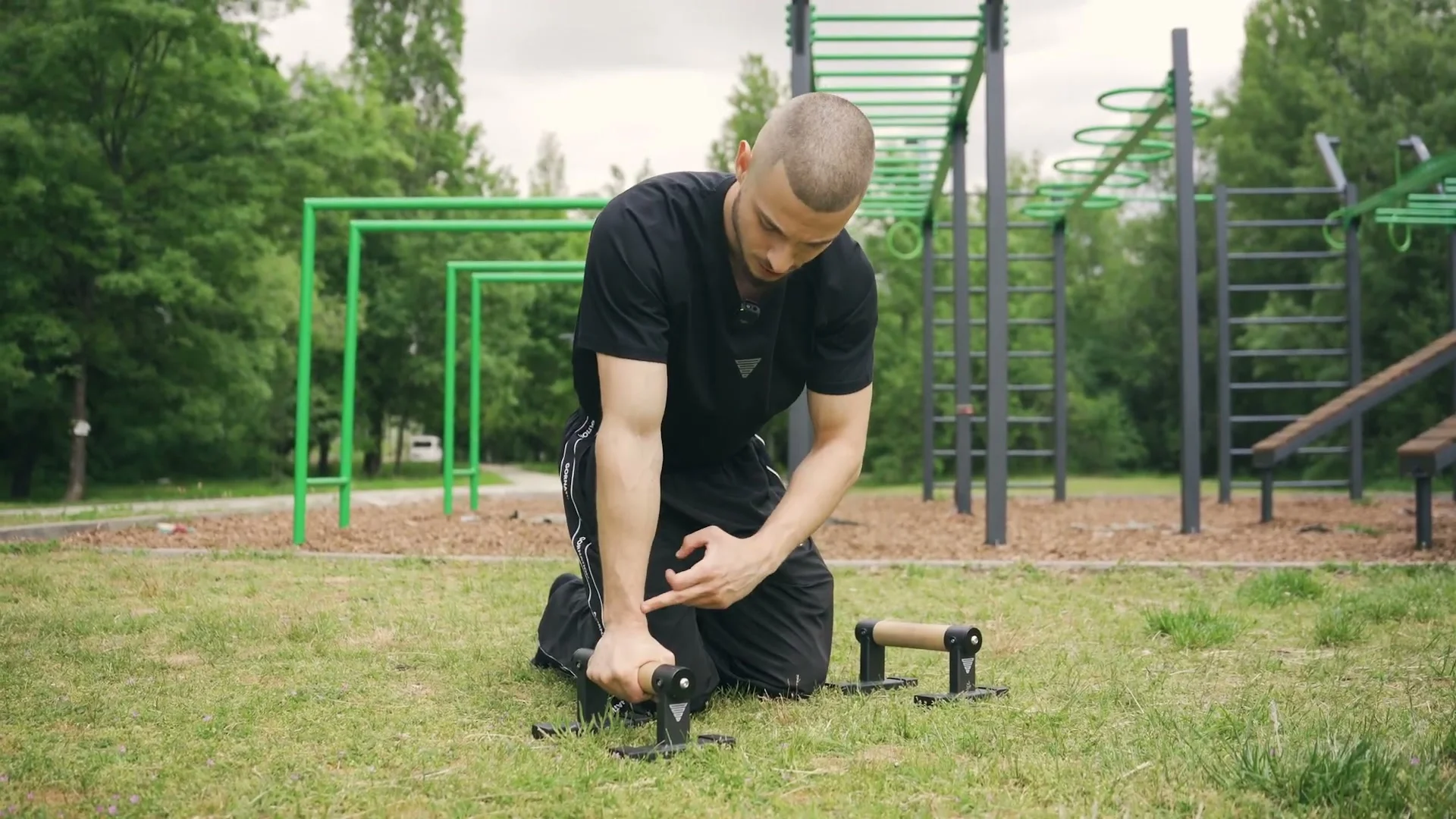
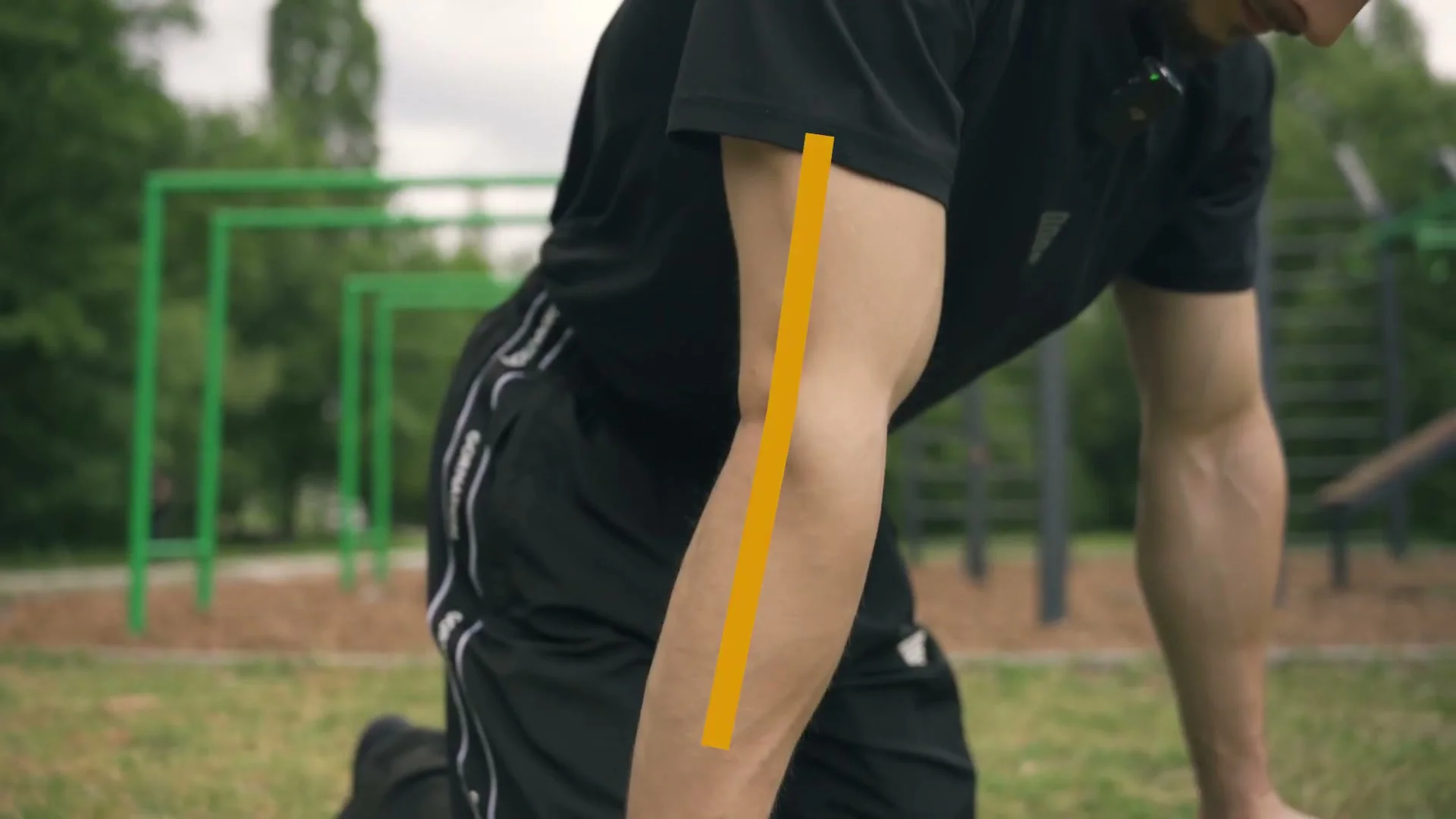
Elbow: keep it straight, locked fully, for the whole hold. A bent elbow loses stabilization, and you won't get a clean shape no matter how strong you are.
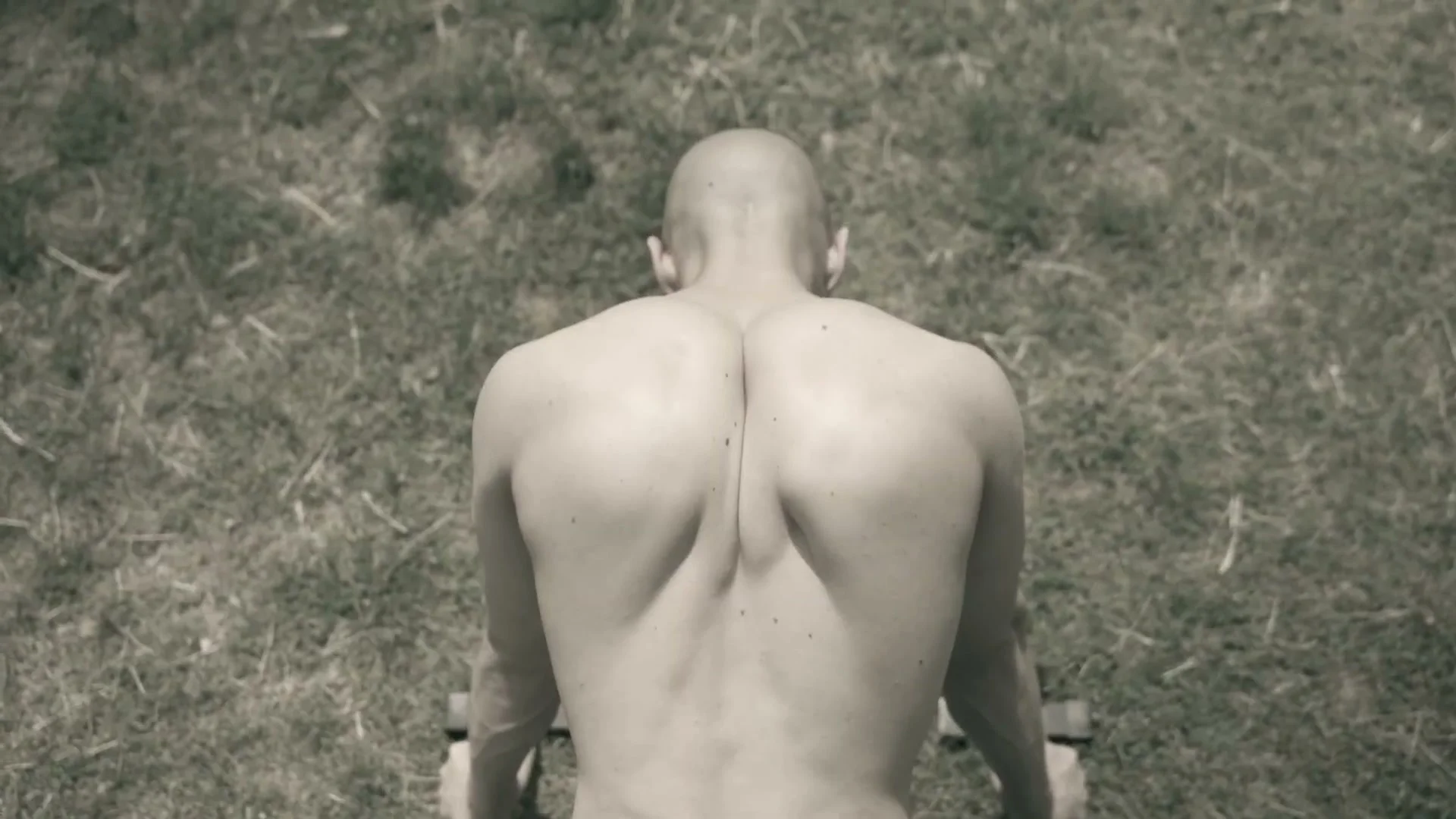
Shoulder and scapula: this is where most people get stuck. You need full scapula protraction, pushing the ground away and letting your shoulder blades spread apart. That builds the hollow back the planche needs.
Core: bend forward slightly and flex your abs like you're trying to show them off. That hard, flexed stomach is the activation you're after, not just tightness.
Hips and glutes: once the core is squeezed, squeeze the glutes and push the hips down and slightly forward. That locks the front and back of your body so the position holds still.
Legs: straight, always. There's no excuse for bent knees in a planche.
Progression: Three Ways to Fix Your Planche Form
Key Takeaway
If you've trained planche with bad form for a while, you can still fix it, but it takes deliberate work. These three drills, done in order, rebuild the correct position without forcing you to abandon your current hold time.
Here are three drills, in the order I'd use them.
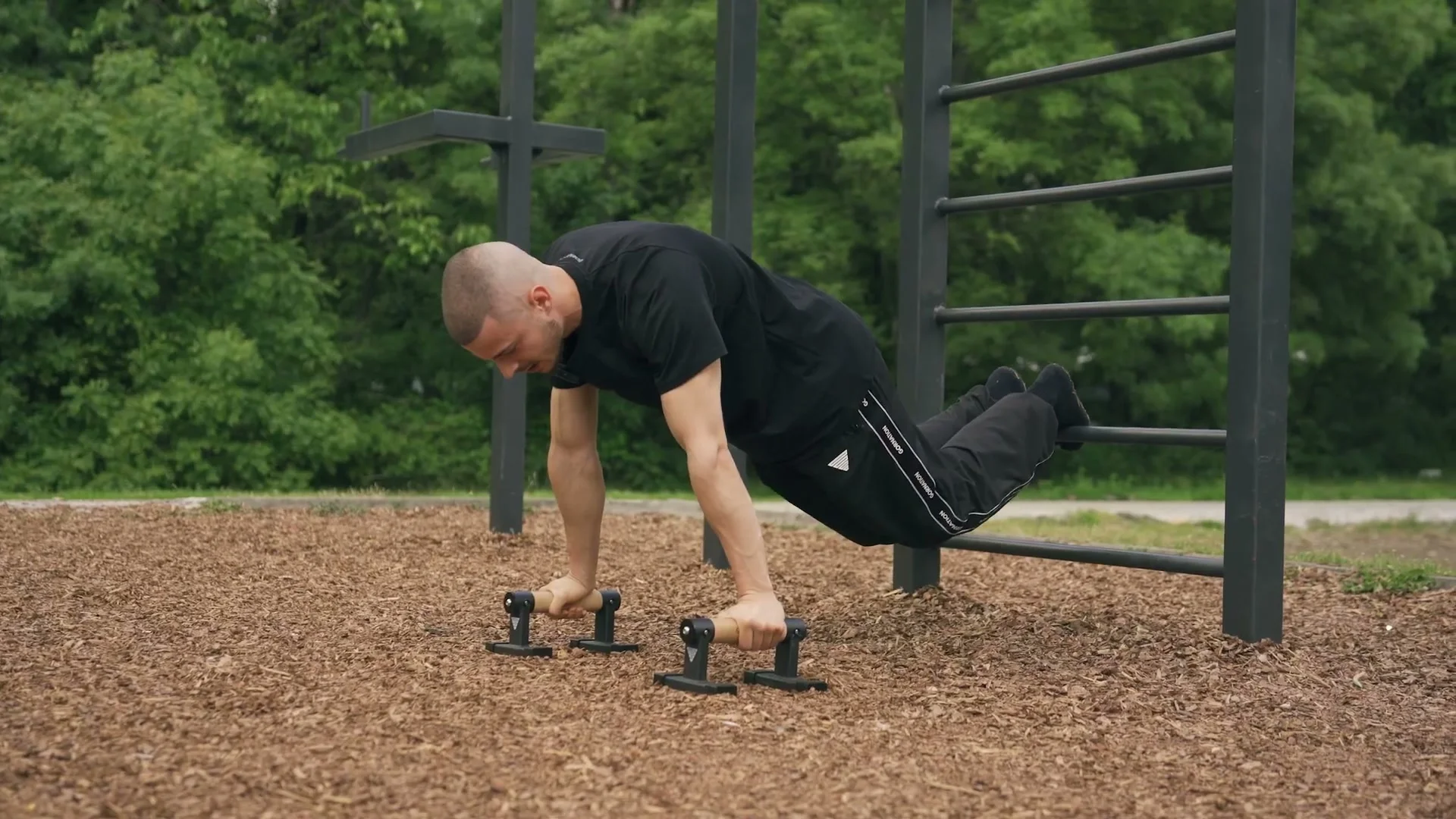
Stage 1: Planche Lean with Elevated Feet
A normal planche lean off the floor doesn't give you enough feeling of the real position. Elevate your feet on a box or bench, high enough that leaning forward puts you close to a full planche angle, not too high and not too low. This lets you hold the correct lean longer and start grooving the position.
Stage 2: Resistance Band Planche
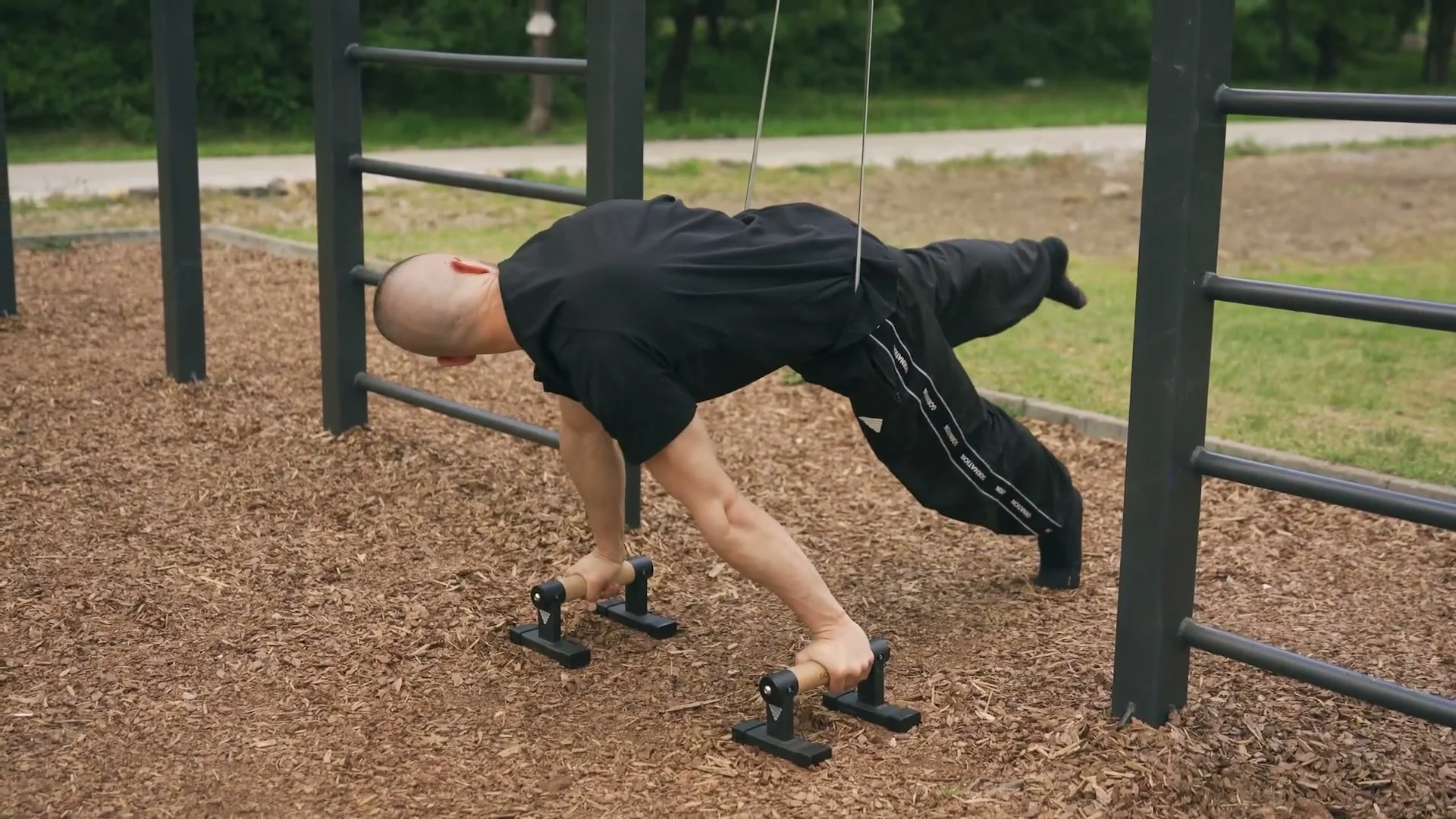
This is the most effective of the three drills. Loop a band around your hips and anchor it behind you. Set the distance so the band stays fully vertical in the planche position, not angled backward, or it takes too much load off and you lose the real feeling. Lean in, find your protraction, and hold.
Stage 3: Go Back to Straddle
If you can hold a full planche for three or four seconds but you're stuck with bad form, the fix is going backward, not forward. Drop back to straddle and rebuild a clean position there. Do one or two full attempts if you want, work the band, then once you fatigue, go back to a clean straddle hold instead of grinding out a bad full planche.
Common Mistakes
Mistake: Wrist Rolled Too Far In or Out
Too far in overloads the elbow and destabilizes the hold. Too far out creates thumb discomfort that stops you leaning forward enough to reach full protraction.
Mistake: Skipping Scapula Protraction
Trying to build a planche without pushing the ground away and spreading your shoulder blades apart is the single biggest reason people get stuck.
Mistake: Bent Elbows Under Load
Letting the elbow soften even slightly kills the stabilization the whole hold depends on. Lock it straight from the first second, not just when you feel fresh.
Mistake: Rushing Straight to Full Planche
If your full planche form breaks down after three or four seconds, more attempts won't fix it. Step back to straddle and rebuild the position first.
Training Tips
Train the form drills before you're fatigued, not as a finisher after your strength sets. You need full attention on wrist, elbow, and scapula position, and a tired nervous system will default straight back to your old habits.
Film your lean from the side. Bad planche form is hard to feel from the inside, especially the scapula protraction and the hip position, but it's obvious on video. Check it against the shape in this tutorial every few sessions.
Don't skip the resistance band drill because it feels like cheating. It's the closest thing to the real planche feeling you can get while still holding the correct form long enough to groove it.
Frequently Asked Questions About the Planche
How long does it take to fix bad planche form?
There's no fixed timeline. It takes patience, but a clean planche is more stable and easier to progress than a bad-form one.
Do I need parallettes to train the planche?
No. You can train wrist position, elbow lock, and scapula protraction on the floor. Grip position doesn't matter much either way.
Why does my planche feel unstable?
Usually it's a bent elbow, an off-center wrist, or missing scapula protraction. Fix the arm and shoulder connection first, then check your core and glutes.
Is straddle planche easier than full planche?
Straddle sits a step below full planche in the standard progression, since spreading your legs out reduces the load compared to a straight-leg hold.
Should beginners work on these form cues?
Not yet. These cues are for people who already hold some version of planche. If you can't hold any planche position yet, build straddle or tuck strength first, and consider online coaching to get your form checked early rather than fixing bad habits later.

Daniel Hristov is a four-time calisthenics world champion and coach. He shares the exact methods he uses to train his own athletes.
More about Daniel →