Every calisthenics athlete gets asked which skill is actually the hardest. I ranked the eight most famous calisthenics skills from easiest to hardest, based on my own training and years of coaching students through every one of them. The most searched skill on Google turned out to be the easiest one on the list, which surprised me. In this tutorial I cover where each skill sits, what you need before attempting it, and how to move through the tiers in order. By the end you will know how to start training toward whichever one you are chasing.
Watch the Full Tutorial
What Are the Most Famous Calisthenics Skills
When people say calisthenics skills, they usually mean the same eight moves: front lever, muscle up, L-sit, handstand hold, full planche, front lever touch, one arm handstand, human flag. I can do all of them, so I ranked them from easiest to hardest in a video, and I am sharing that same ranking here.
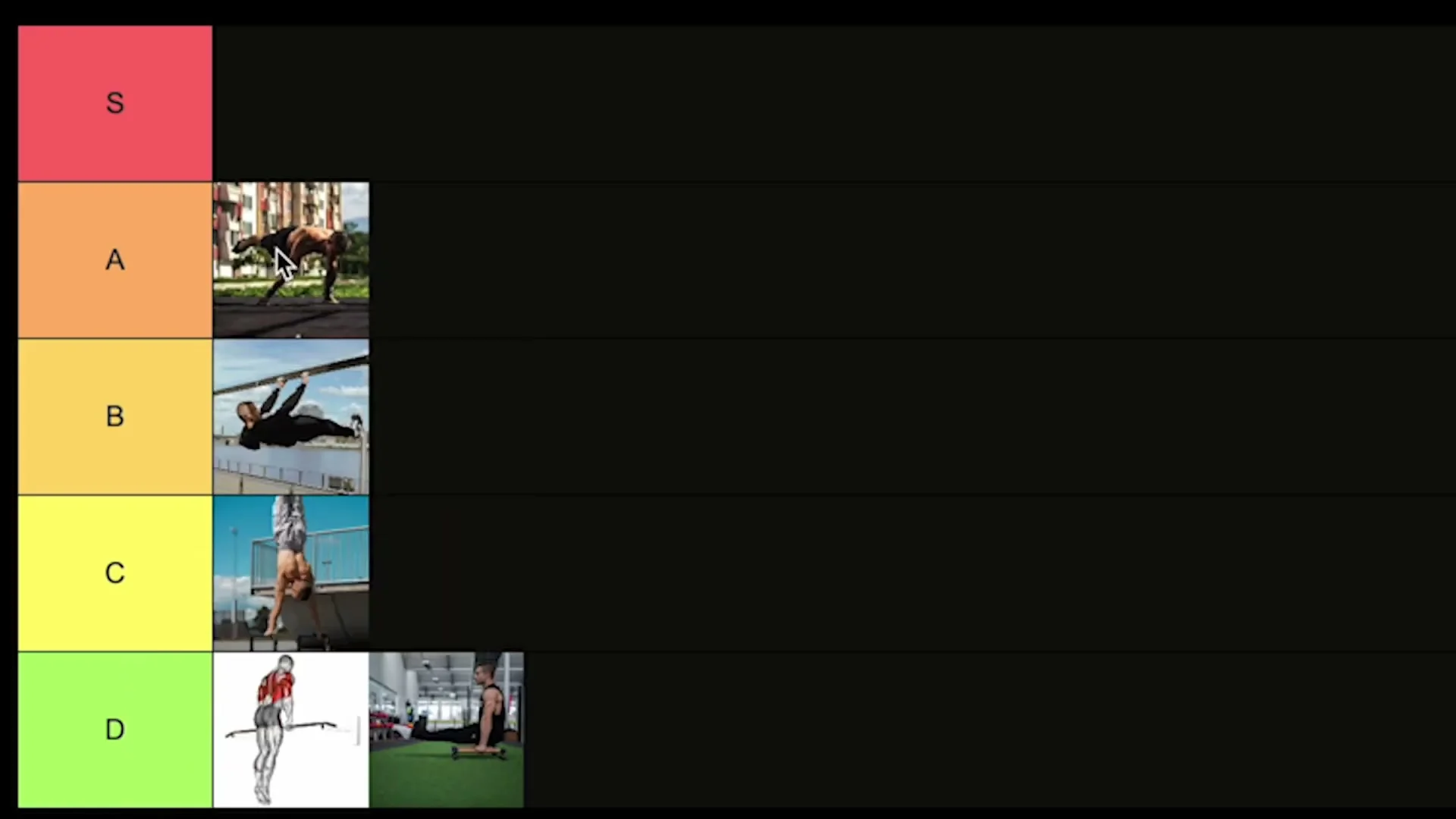
I split them into four tiers, D through A. D is beginner-friendly, C builds your foundation, B holds one skill on its own, and A is where the real work starts. This is my personal opinion, built from my own training and from coaching students through each skill.
A friend and I once checked which of these skills gets searched most on Google and social media. L-sit came out on top by a wide margin, even though it is the easiest skill on this list.
Prerequisites
These are not day-one skills. Every one assumes basic pulling and pushing strength, plus some comfort supporting your bodyweight on your hands. Here is what I can honestly confirm from coaching, without inventing numbers the video did not give:
- A strict pull-up you can control, not just kip through, before muscle up training.
- A hollow body position you can hold with tension before you try L-sit.
- Comfortable weight-bearing on your hands before you load planche or one arm handstand work.
- An existing front lever hold before you attempt front lever touch, since touch work builds directly on it.
How to Approach Each Skill
Treat these as separate skill families, not one ladder. Pulling skills (muscle up, front lever, front lever touch) reward a strong hold before you chase reps. Pushing skills (planche) need shoulder and wrist strength built early. Balance skills (handstand, one arm handstand) improve through small, controlled corrections, not muscling into position. My own ranking is shaped by focus: I trained planche more than front lever for years, so I progressed faster in it, not because it is naturally easier. Watching my students, front lever is usually the faster one to reach when trained directly.
Progression: From Easiest to Hardest Calisthenics Skills
Key Takeaway
This is a tier list built from my own training and from coaching, not a universal law. Focus changes your personal ranking more than raw difficulty does, so use these tiers as a map of what to expect, not a fixed order you must follow.
Stage 1: D-Tier, Muscle Up and L-Sit
Muscle up is usually the first big goal once someone has real pull-up strength. Build strict pull-ups, add reps, then work the explosive transition. I put it in D because most people with any strength base reach it fast.
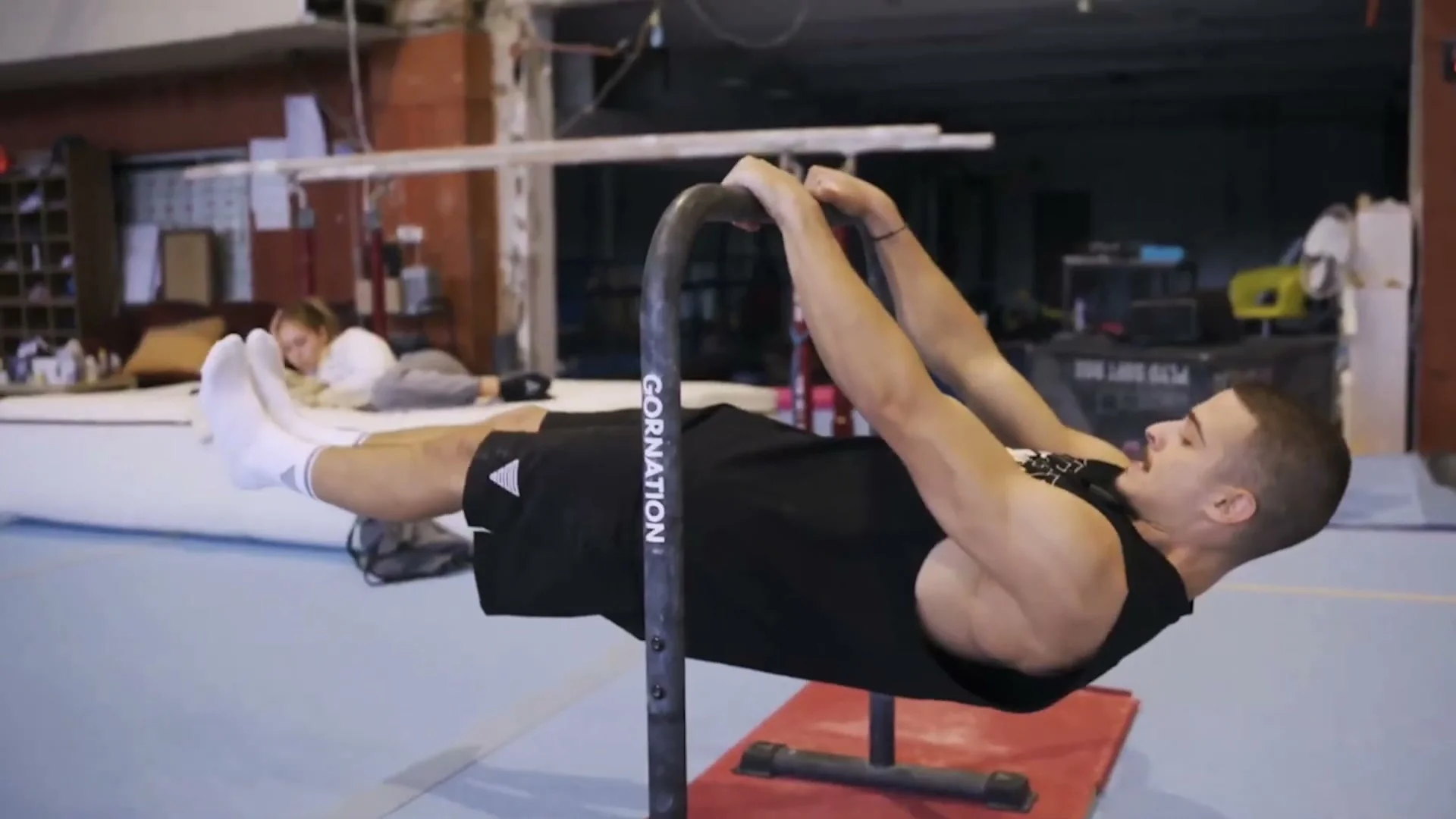
L-sit sits next to it, the most searched skill on this list, and the one I see the most untrained people hold for a few seconds even without straight legs.
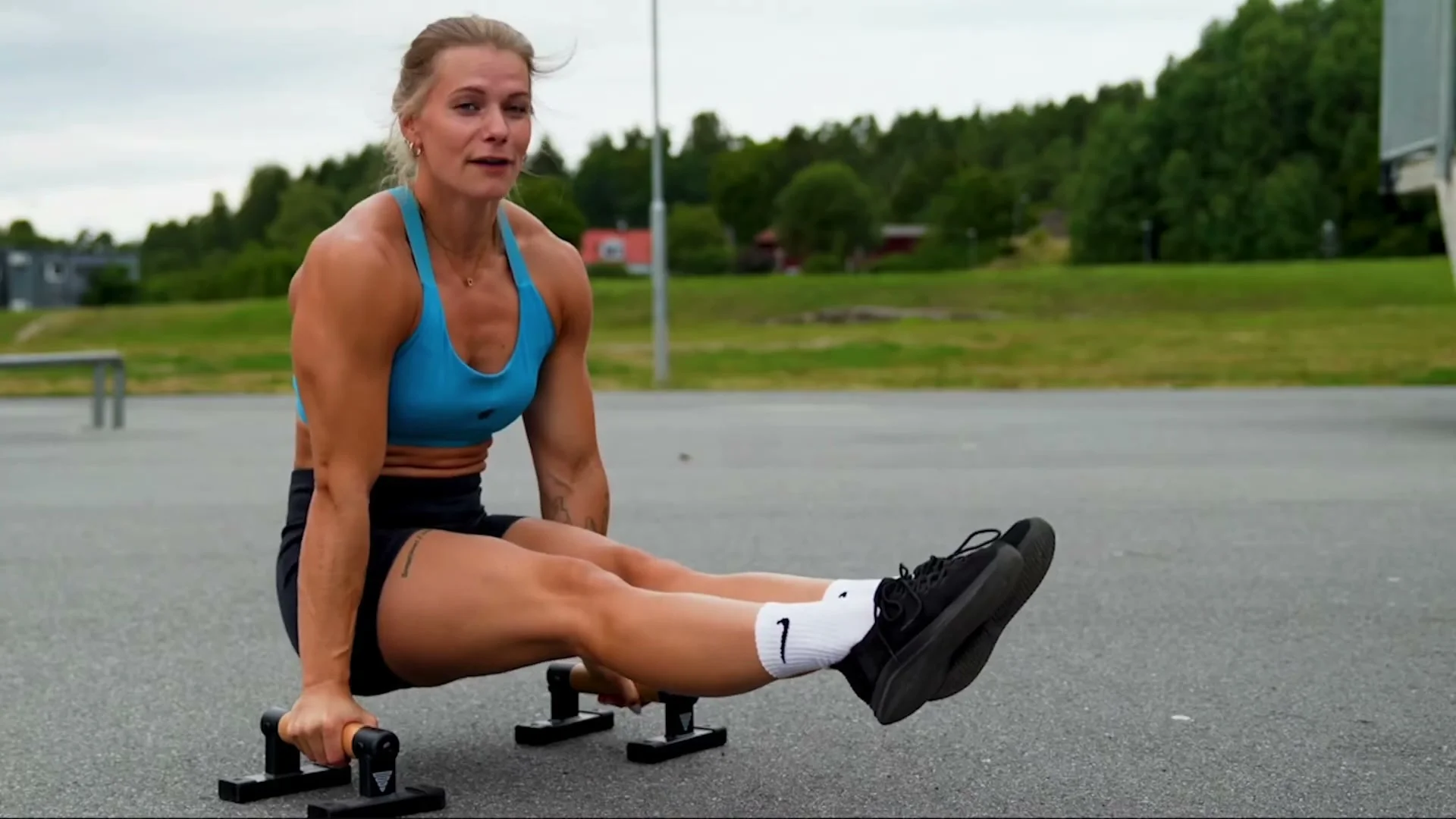
Stage 2: C-Tier, Handstand Hold and Human Flag
The handstand hold is not physically the hardest thing here, but every athlete has to go through it. It teaches body positioning, mobility, and alignment that carries into every advanced skill later. My own shoulder mobility used to be poor, so I never fully extended overhead, and that gap showed up as compensation in my lower back.
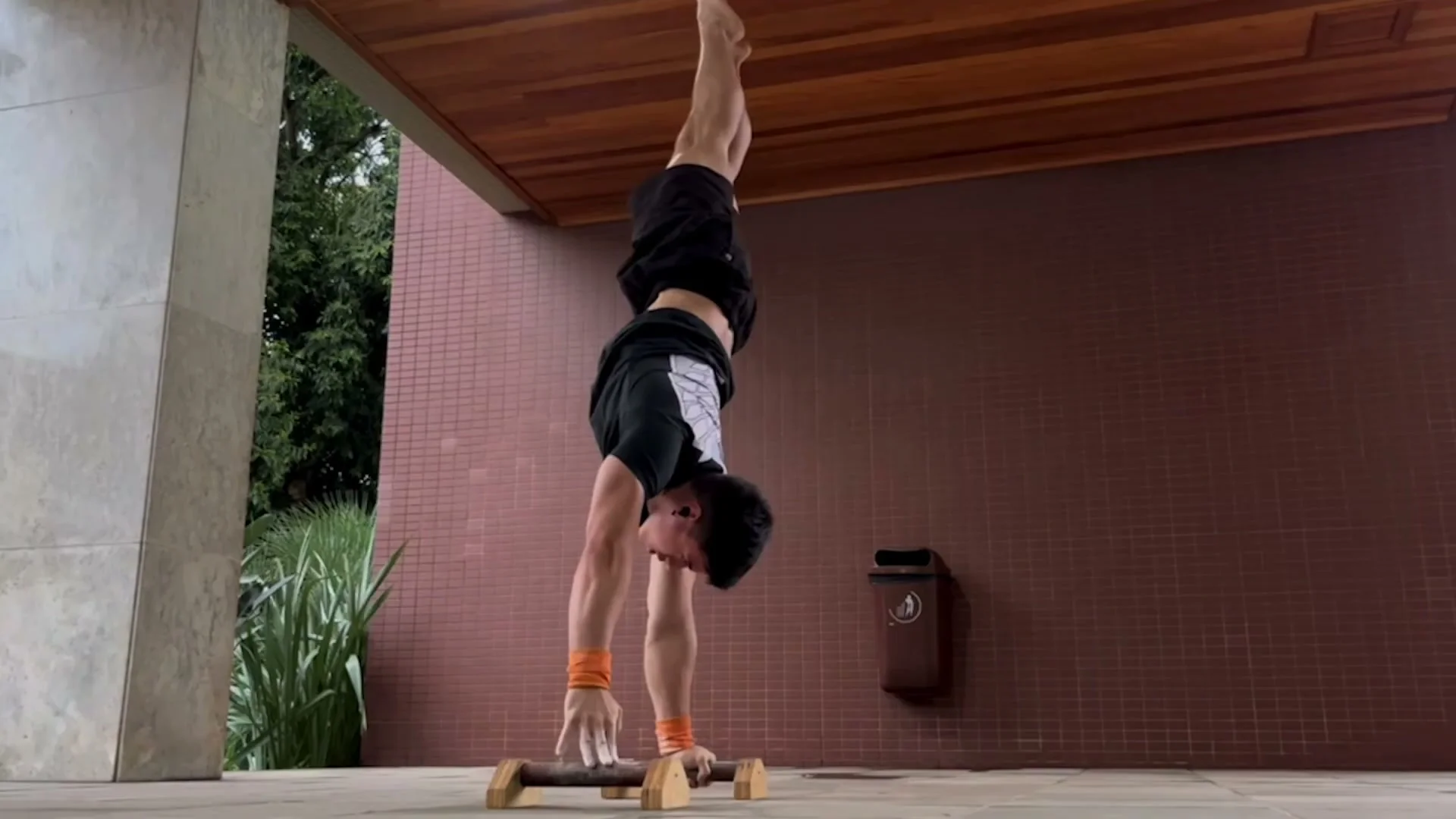
Human flag sits at the same level for me, even though plenty of people find it easier. It felt fine for three seconds, then it turned heavy fast.
Stage 3: B-Tier, Front Lever
Front lever gets its own tier. Not the hardest skill here, but not one of the easy ones either. Focus your training on it directly and it can come quickly, some of my students who train a lot of basics and weighted work get close on their first real attempt.
Stage 4: A-Tier, Front Lever Touch, Full Planche, and One Arm Handstand
Full planche hold is where the level jumps. I progressed in it faster than front lever only because I focused on it more, but front lever is the easier one for most of my students, by a wide margin.
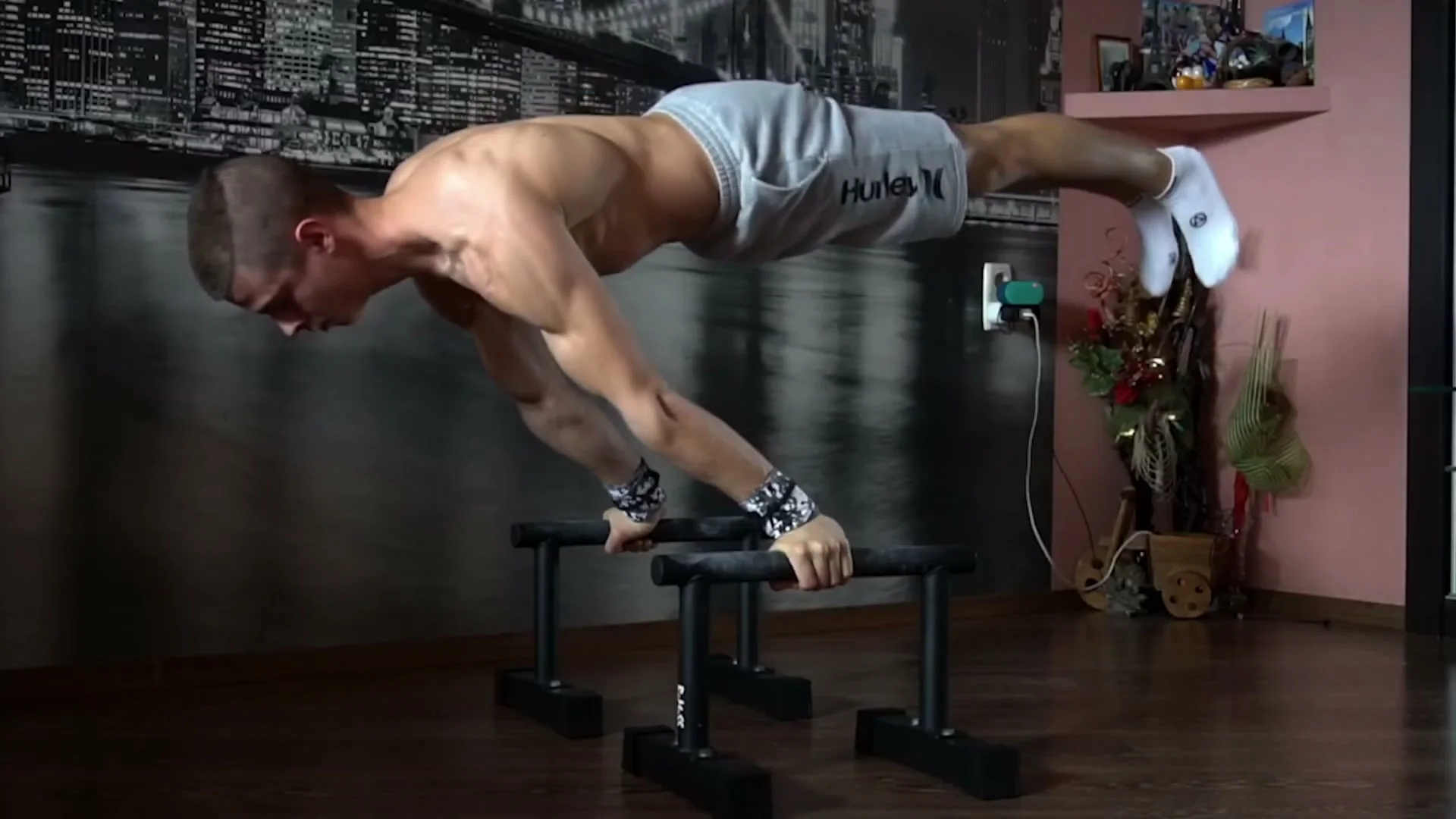
Front lever touch, pulling from a hang up into the front lever position and touching, sits at the same level as planche, as long as you use a false grip and keep a clean, retracted line. Without a false grip it gets noticeably harder.
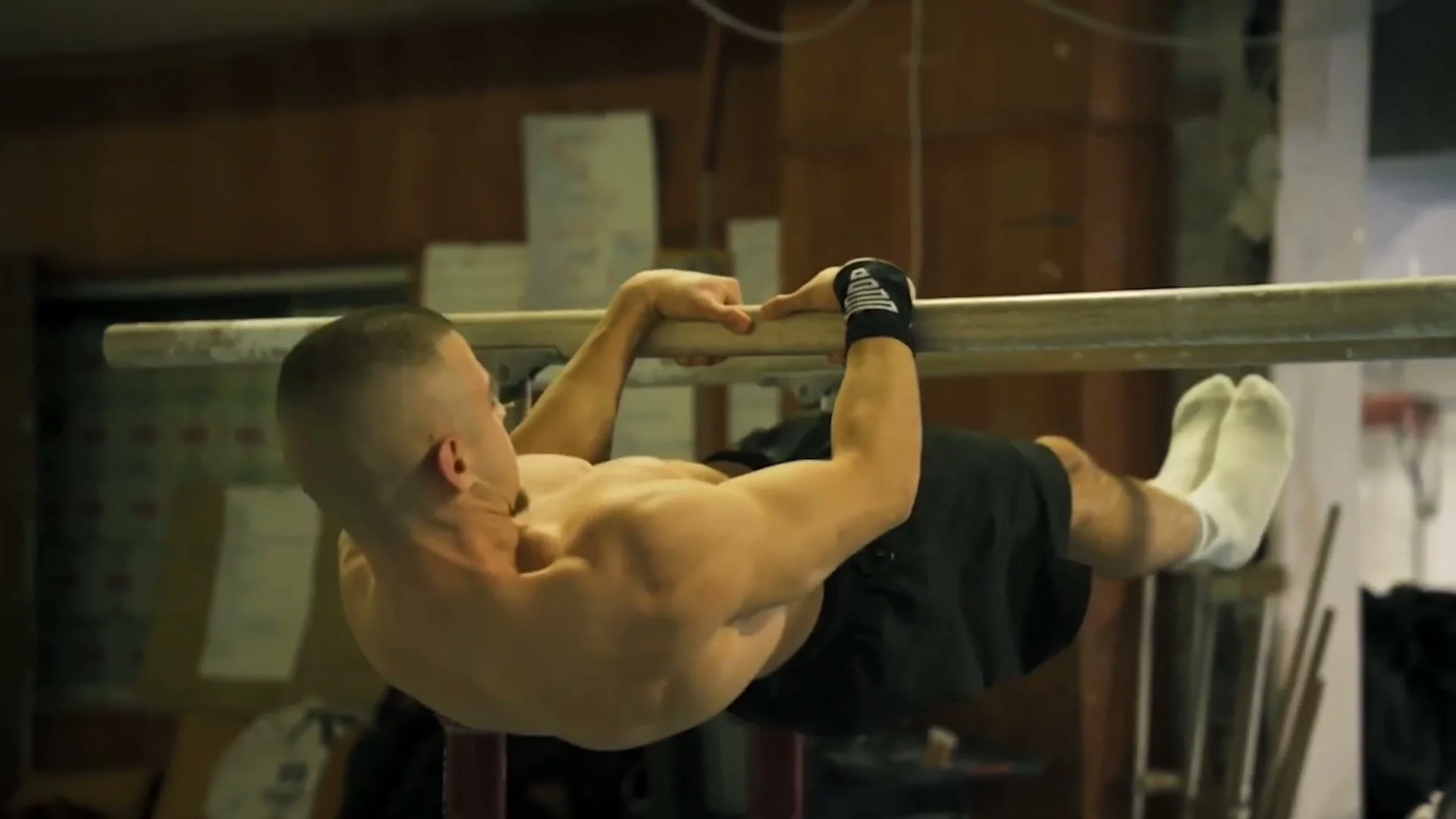
One arm handstand rounds out this tier. Balance skills are the most underrated part of calisthenics. There is no secret drill for balance, you adapt your nervous system to the position through repeated attempts over time.
If you want a coach walking you through this exact order instead of guessing your own tier list, that is what I do inside my online coaching.
Common Mistakes
Mistake: Fixing the wrong end of the chain
When my handstand would not clean up, the real problem was shoulder mobility, not effort. Chasing a straighter line without fixing mobility first just moves the problem around.
Mistake: Expecting a shortcut for balance skills
People look for one exercise that unlocks one arm handstand. It does not exist, balance comes from repeated, patient attempts.
Mistake: Treating a tier list as universal truth
I progressed faster in planche than front lever, but that was about focus, not raw difficulty. Do not assume a skill is objectively harder for you just because a ranking says so.
Mistake: Skipping the false grip on front lever touch
Front lever touch without a false grip, just a straight wrist, is noticeably harder for most people. Learn the false grip first so you are measuring your actual front lever touch progress, not fighting your grip on top of it.
Training Tips
Train balance skills, handstand and one arm handstand, with frequent short sessions rather than one long grind. Balance adapts through repeated attempts over time, not through a single exhausting session.
Do not skip the handstand hold to chase advanced skills faster. It teaches positioning and mobility details, like full shoulder extension, that show up again in front lever, planche, and one arm handstand.
If you love a skill, you will likely progress in it faster, and that is fine. Just do not read your own tier list as the objective difficulty order for everyone. Compare your own attempts over time, not your ranking against mine.
Frequently Asked Questions About the Most Famous Calisthenics Skills
What is the easiest calisthenics skill to learn?
Muscle up and L-sit, reachable fast once you have basic pull-up strength and hollow body tension.
What is the hardest calisthenics skill?
Full planche, front lever touch, and one arm handstand sit at the top tier, with full planche carrying the steepest progression curve.
Is front lever or planche harder?
It depends on what you focus on. I progressed faster in planche myself, but front lever is usually the faster skill for my students to reach.
Why is L-sit the most searched calisthenics skill if it is not the hardest?
Popularity and difficulty are different things. L-sit shows up constantly in search because so many people attempt it, but it does not demand what planche or one arm handstand require.
How long does it take to learn one arm handstand?
There is no fixed timeline, because this is a balance skill, not a pure strength skill. Progress comes from consistent attempts over time.
Should I train handstand before front lever or planche?
Yes. Handstand teaches body positioning and details like shoulder mobility and alignment that carry directly into front lever, planche, and one arm handstand.

Daniel Hristov is a four-time calisthenics world champion and coach. He shares the exact methods he uses to train his own athletes.
More about Daniel →