The planche is one of the calisthenics skills people ask me about the most. Holding your entire bodyweight off the ground on straight arms looks impossible until you break it down into steps. It is not a skill you pick up in a week, and it demands real shoulder, wrist, and core control before you attempt a hold. I filmed this tutorial with my girlfriend Andrea so you can see the wrong technique and the right one side by side, covering the three exercises I use to build the planche from the ground up: the planche lean, the tuck planche, and the straddle planche. By the end you will know how to start training it safely.
Watch the Full Tutorial
What Is the Planche
The planche is a straight-arm support skill. You hold your entire bodyweight off the ground on your hands, with your body roughly parallel to the floor and no part of your legs touching anything. No bar, no rings swinging, just your arms, shoulders, and core holding the line.
There are a few versions of it, and they get harder in a specific order. The tuck planche, where your knees are pulled into your chest, is the easiest entry point. The straddle planche, with your legs spread wide, is next, and in my experience it is the hardest of the three for most people, men and women both, because the wide leg position pulls on your lower back in a way the tuck does not. The full planche, legs straight and together, comes after that.
What all three versions share is the same base position: shoulders pushed forward over your hands, arms locked, and a straight body line. Everything I teach in this tutorial builds toward that same shape.
Prerequisites
You do not need to be advanced to start working on the planche, but you do need a few pieces in place first. Without them you will just reinforce the same mistakes I cover below.
- A straight-arm support hold with your elbows fully locked, so you are not relying on bent arms to hold weight
- Hollow body control, so your hips do not sag or pike when you lean forward
- Enough shoulder and wrist mobility to lean forward over your hands without pain
- Basic wrist conditioning, because the forward lean loads your wrists differently than a normal push-up
If you are working through these on your own and want someone checking your form, that is exactly what I do through online coaching.
How to Do the Planche
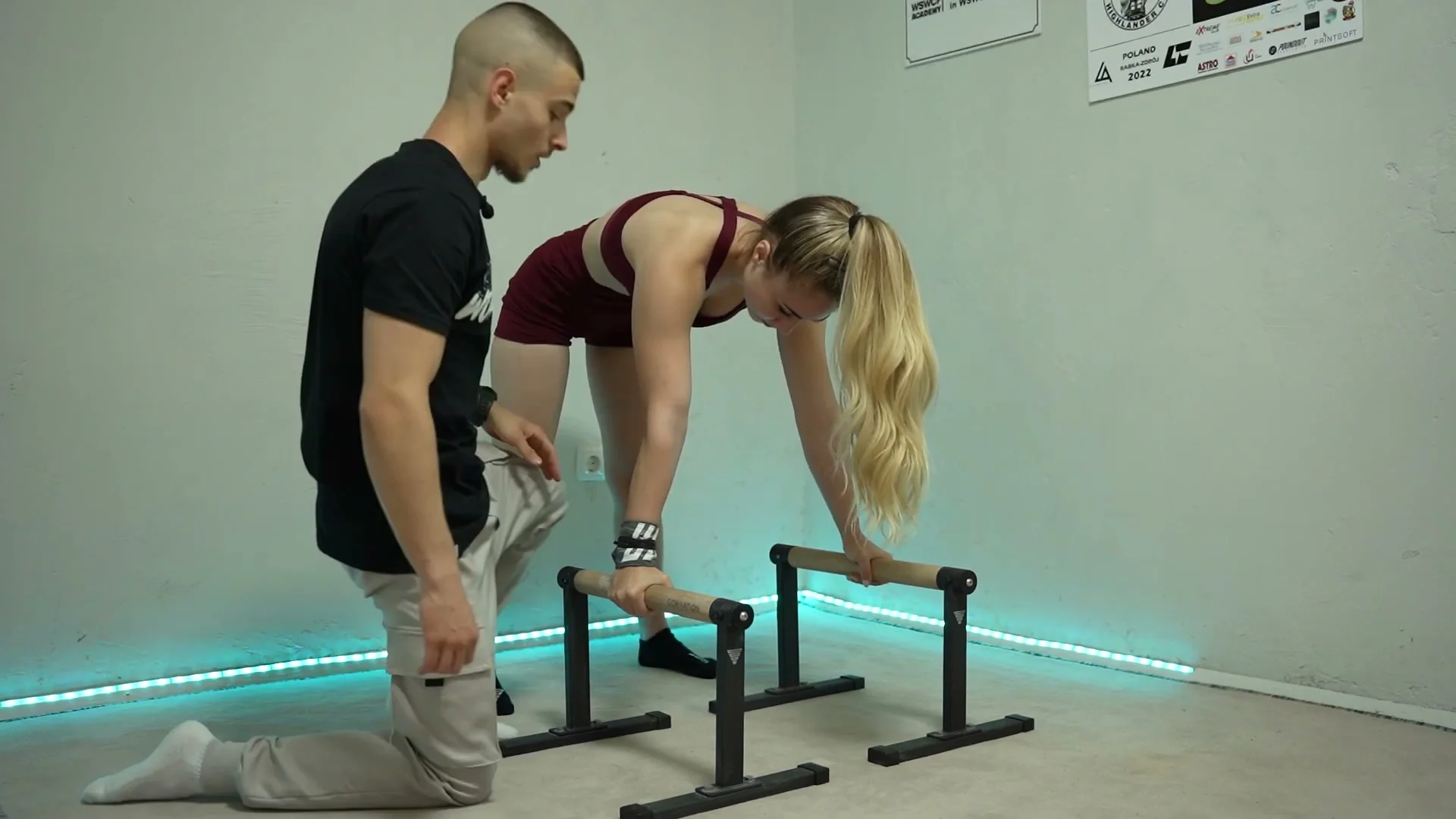
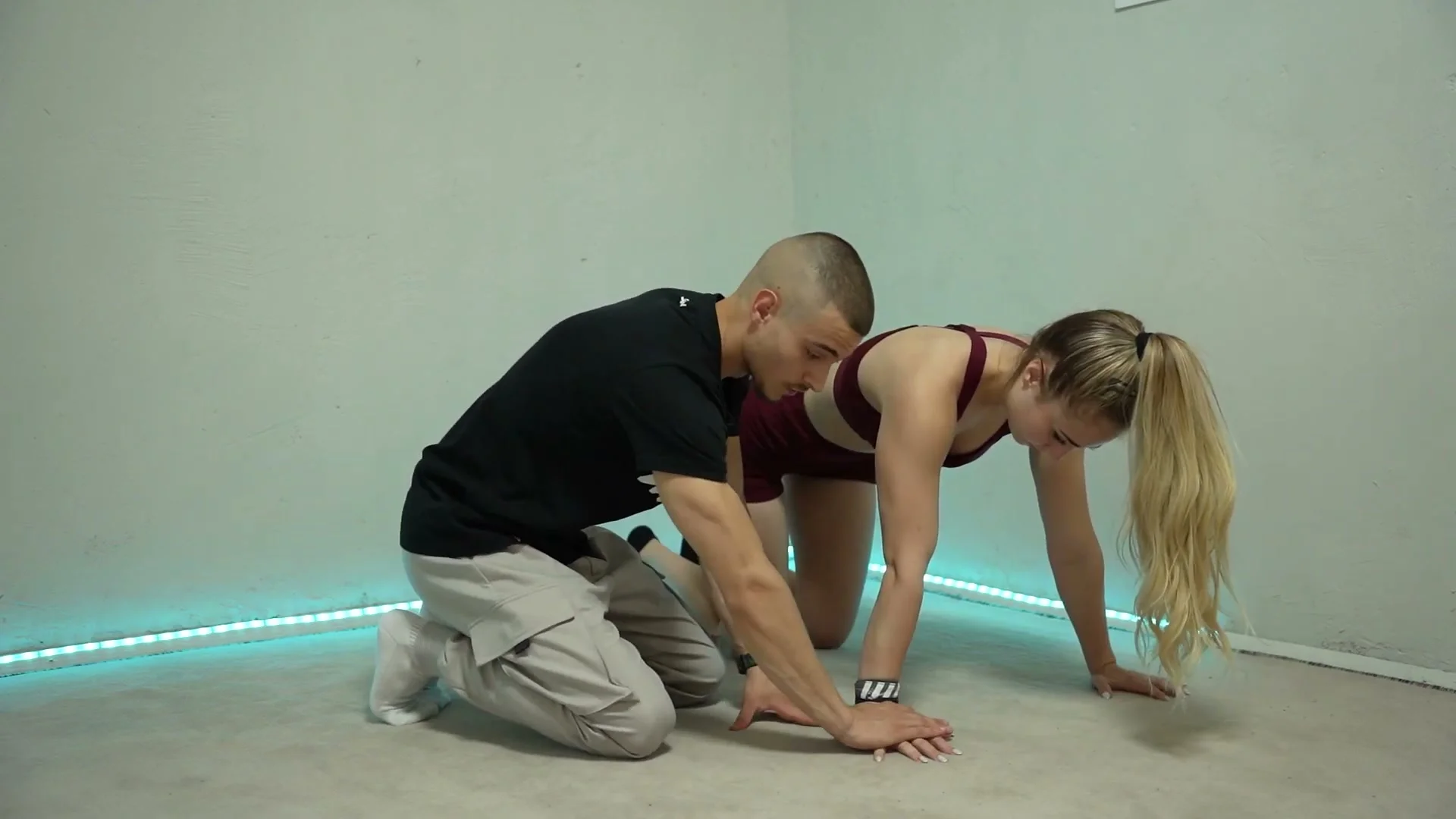
Start with your hands on the ground, fingers pointing forward, not out to the sides. A grip with all your fingers pointing straight forward is uncomfortable on the wrists and turns your biceps inward, which is the wrong direction for the planche.
From there, protract your shoulders. This is the part most people get backward. You are not pulling your shoulder blades together, you are pushing them apart and rounding your upper back forward. If you pull your shoulders back into retraction, you are training the position for a front lever, not a planche.
Keep your hips in a straight line with your shoulders and legs, not lifted too high and not dropped too low. Lock your knees. Then lean your shoulders forward past your wrists until your feet start to lift.
For the tuck and straddle versions, keep your wrist position in the middle, not rolled too far out and not too far in. Too far outward stresses the elbow. Too far inward stresses the wrist. The middle position gives you enough flexibility to lean forward while staying safe.
Progression: From Zero to the Planche
Key Takeaway
Work these three exercises in order and do not rush past one before it feels controlled. The planche lean builds the shoulder and wrist position, the tuck planche adds the first real load off the ground, and the straddle planche is the hardest of the three because it puts the most stress on your lower back.
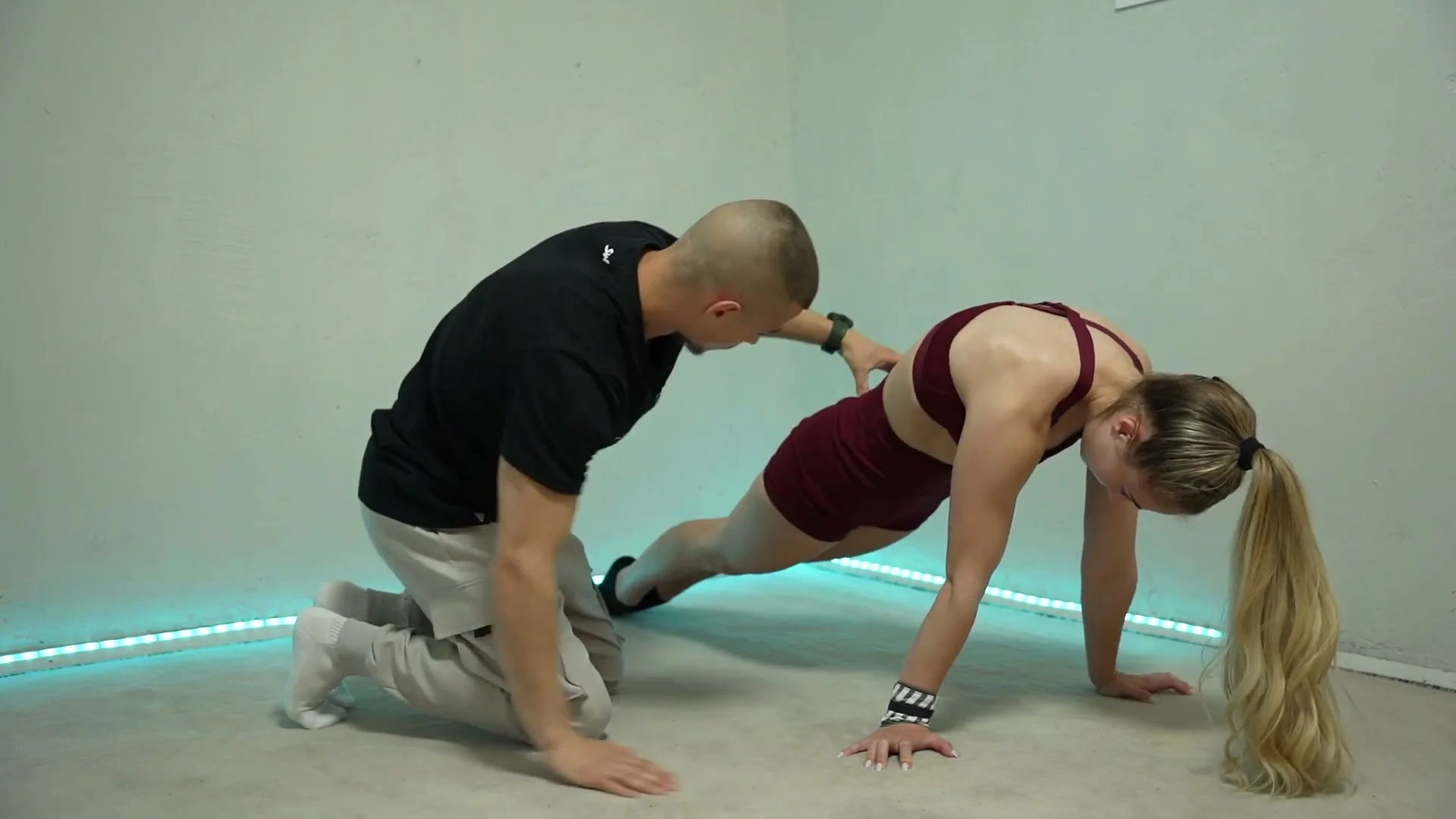
Stage 1: Planche Lean
This is where you start. Hands on the ground, fingers forward, shoulders protracted, hips straight, knees locked. Lean your shoulders forward over your wrists and hold that lean. You are not lifting your feet yet, you are just building the position and getting your shoulders and wrists used to the load.
Stage 2: Tuck Planche
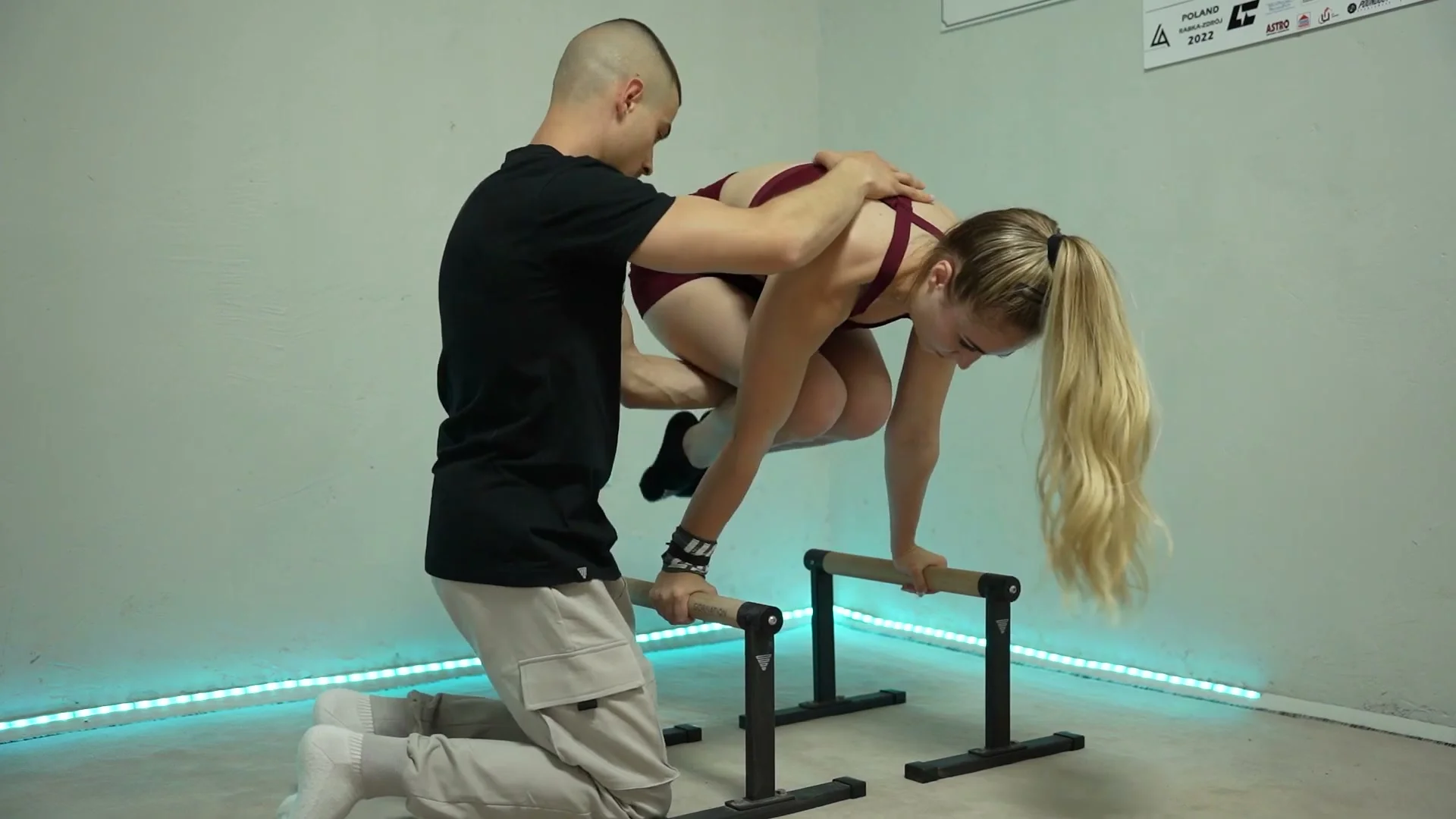
Once your lean feels solid, bring your knees into your chest and try to lift your feet off the ground. Keep the same shoulder protraction and the same forward lean you built in the lean. The tuck position shortens your body, which makes the hold easier to balance while you are still learning.
Stage 3: Straddle Planche
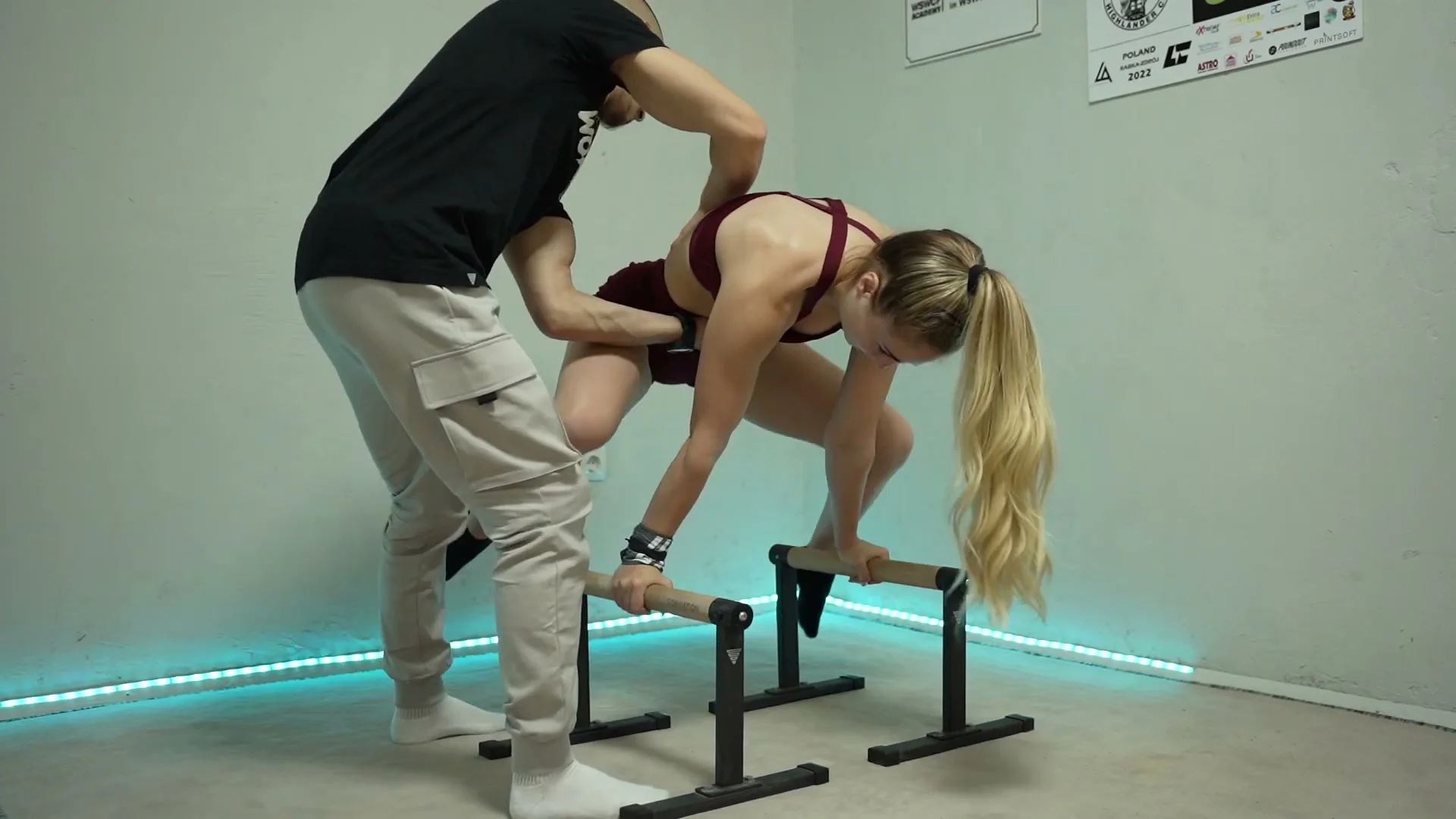
From the tuck, open your legs into a straddle. This is the hardest of the three exercises in this progression. The wide leg position creates a strong pull on your lower back, and if your form breaks down, that is where it shows up first. Keep the same wrist position in the middle, biceps turned forward, and lean forward gradually rather than dropping into the position.
Stage 4: Full Planche
Once you can hold a controlled straddle, closing your legs together into a full planche is the next natural step. The base mechanics do not change, straight arms, protracted shoulders, straight body line, but holding your legs straight together removes the balance help the straddle gives you.
Common Mistakes
Mistake: Wrong Grip and Wrist Position
Fingers pointing straight forward is painful on the wrists and rotates your biceps inward. On the tuck and straddle, gripping too far outward stresses your elbow, and gripping too far inward stresses your wrist. Aim for the middle, with enough give to lean forward comfortably.
Mistake: Retracting Instead of Protracting the Shoulders
This is the mistake I see most. Pulling your shoulder blades back and down is the front lever position, not the planche. For the planche, push your shoulders apart and round forward.
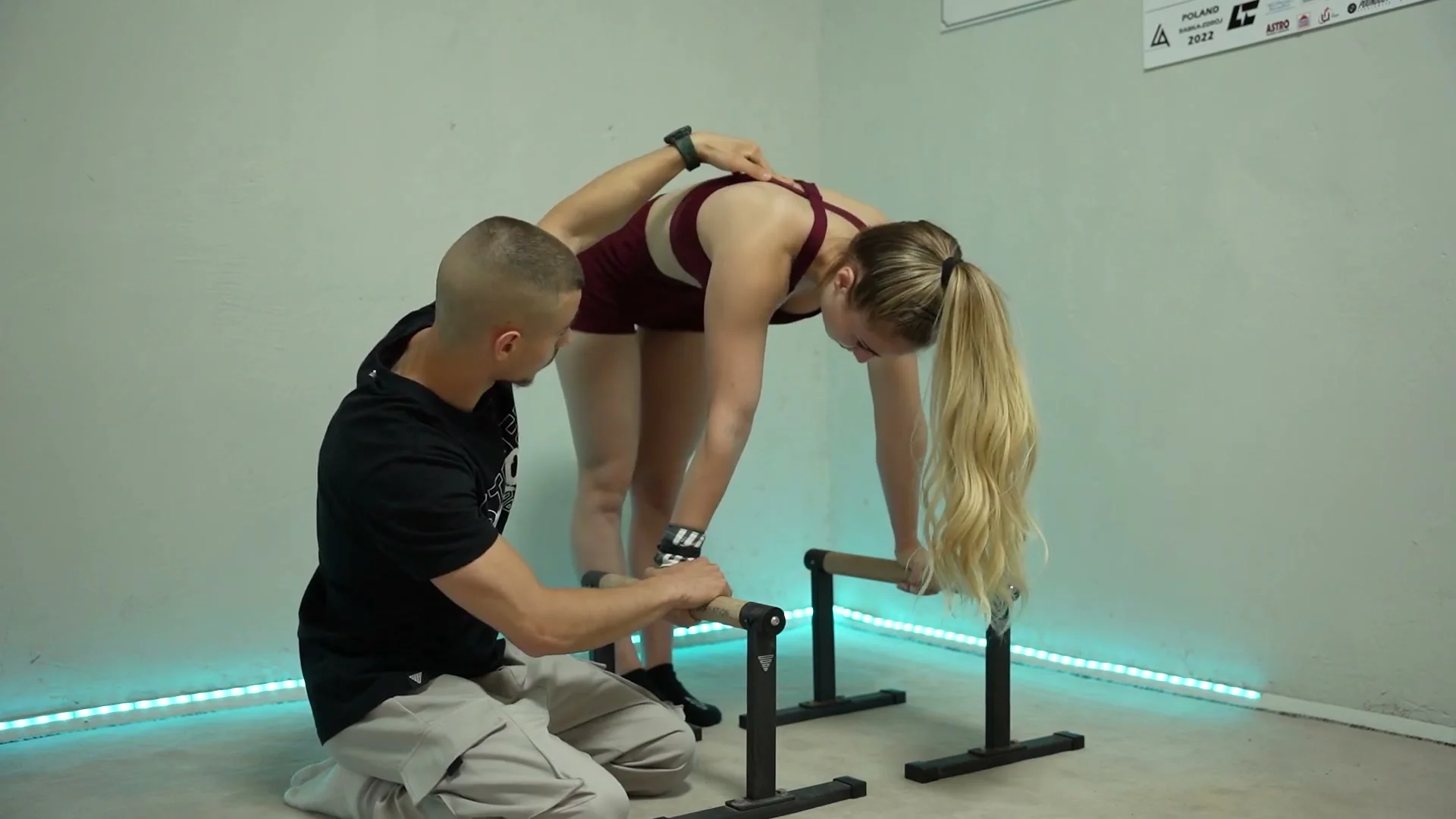
Mistake: Hips Too High or Too Low
If your hips lift too high or sag too low, you lose the straight body line the planche depends on. Keep your hips level with your shoulders and legs, and keep your knees locked.
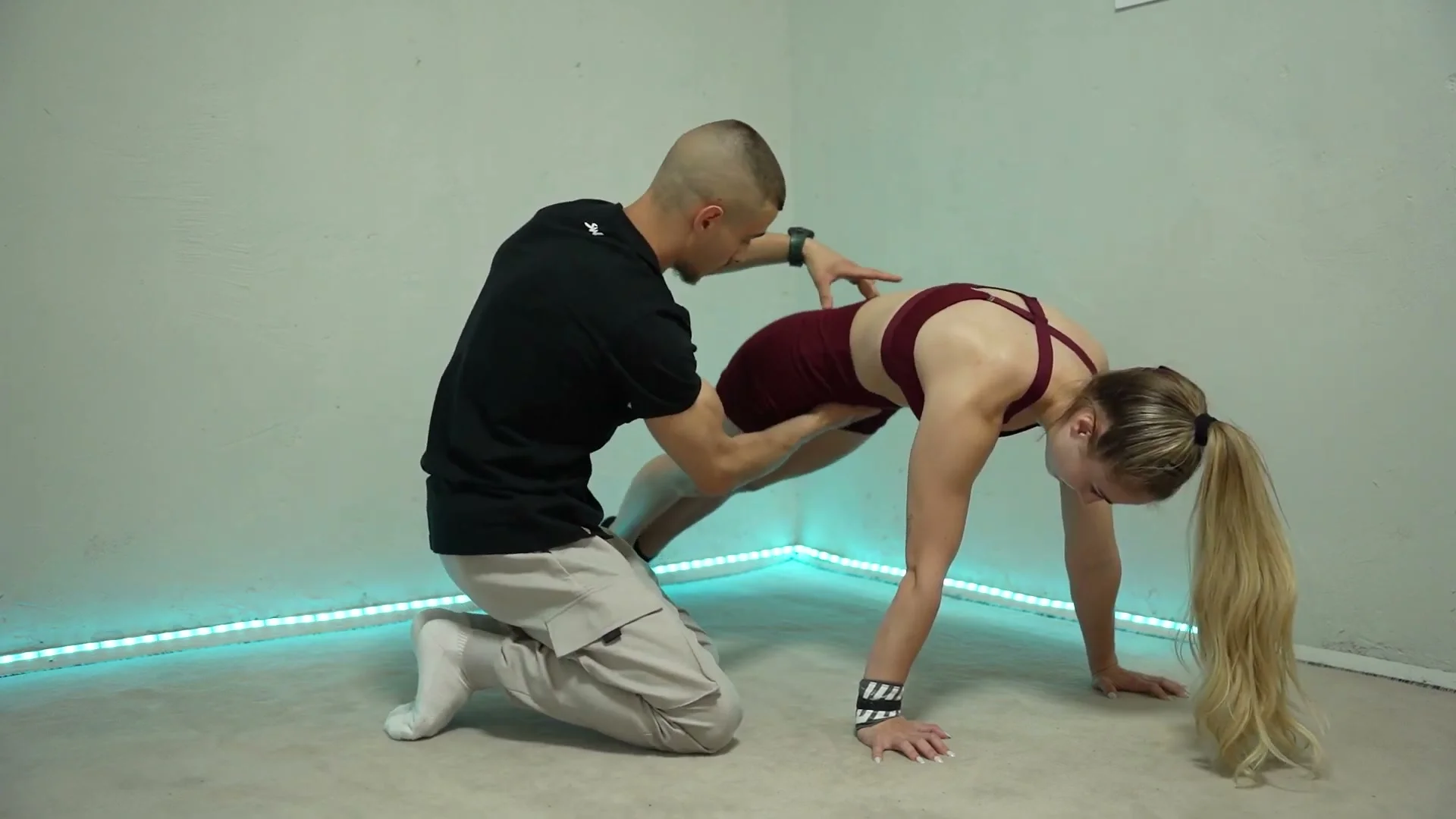
Mistake: Letting the Lower Back Rotate in Straddle Planche
In the straddle position, especially for women, the lower back can rotate under load, which is where the biggest injury risk sits. Lean forward with support until you trust your position, and do not force the hold before your back is ready to control it.
Training Tips
Train the planche exercises early in your session, while your shoulders and wrists are fresh. This is a skill built on precise positioning, and fatigue is the fastest way to slide back into the retraction and grip mistakes above.
Spend more time on the planche lean than feels necessary. Most people rush to the tuck before their shoulders and wrists have actually adapted to the forward lean, and that is where the wrist pain and bad habits start.
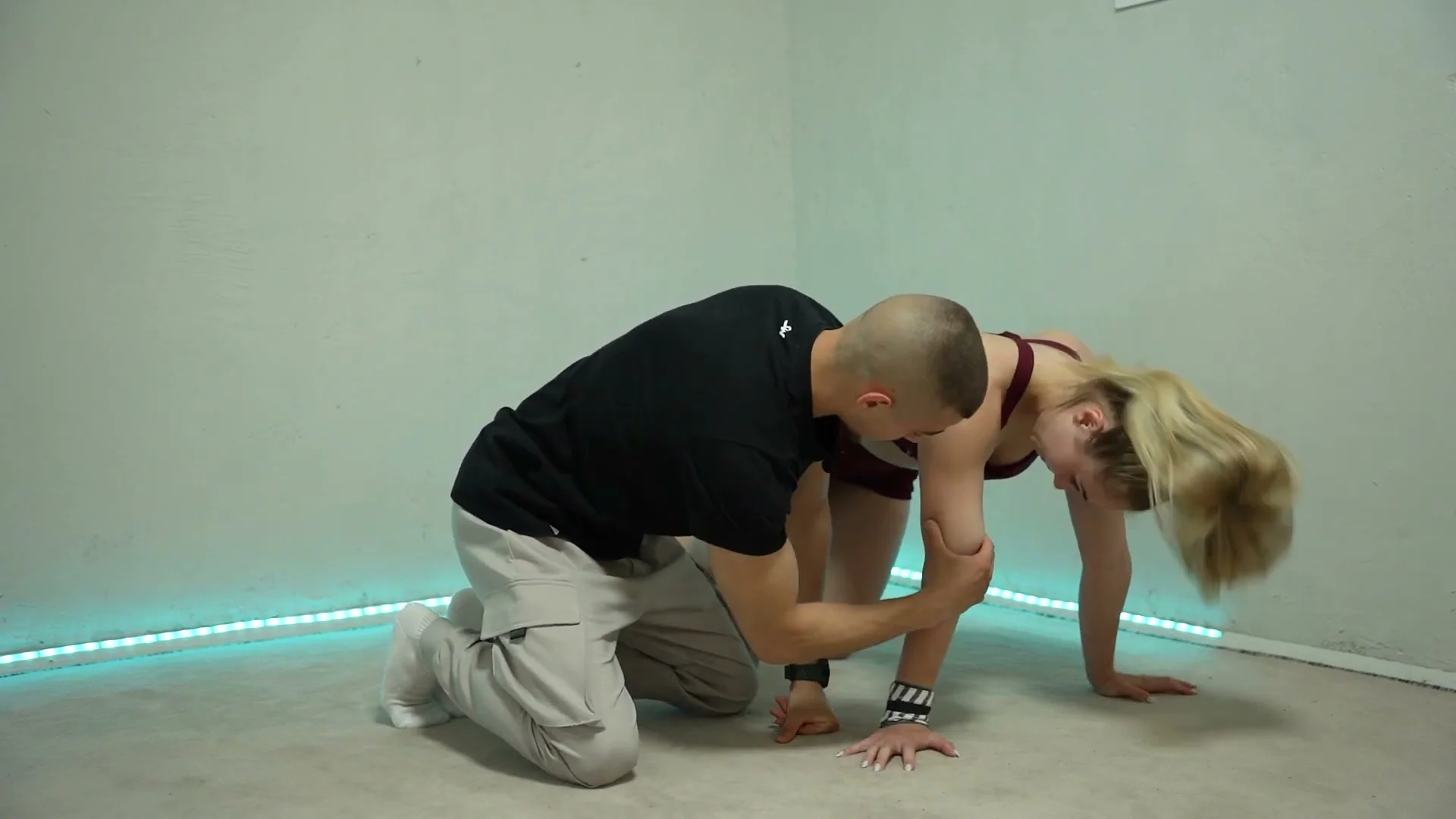
Use a partner or coach for the straddle planche whenever you can. A hand on the hip, like I use with Andrea, gives you real-time feedback on lower back rotation before it turns into an injury, and it lets you push the lean a little further than you would trust on your own.
Film yourself from the side. The straight body line is hard to feel accurately from the inside, and a side-on video will show you immediately if your hips are drifting up or down.
Frequently Asked Questions About the Planche
How long does it take to learn the planche?
It takes time, there is no shortcut around that. It rewards consistent, clean form far more than rushing the harder variations before you are ready.
Can beginners start training the planche?
Yes. Start with the planche lean to build the shoulder and wrist position, then move into the tuck once that lean feels controlled. You do not need advanced strength to begin, just patience with the basics.
Is the straddle planche harder than the tuck planche?
Yes. The straddle is the hardest of the three exercises in this progression, for men and women. The wide leg position pulls harder on your lower back than the tuck does.
Why do my wrists hurt when I train the planche?
Usually it comes down to grip and wrist position. Fingers pointed straight forward, or a wrist rolled too far to one side, both put extra stress on the wrist. Keep your wrist position in the middle and your fingers forward without overextending.
Should I retract or protract my shoulders in the planche?
Protract. Push your shoulder blades apart and round your upper back forward. Retraction, pulling your shoulder blades together, is the position for a front lever, not a planche.
Do I need equipment like parallettes to train the planche?
No, you can train all three exercises in this progression on the floor with just your hands. Parallettes can make the wrist angle more comfortable for some people, but they are not required to start.
If you want a training plan built around where your planche actually is right now, that is the kind of thing I work through with people inside online coaching.

Daniel Hristov is a four-time calisthenics world champion and coach. He shares the exact methods he uses to train his own athletes.
More about Daniel →