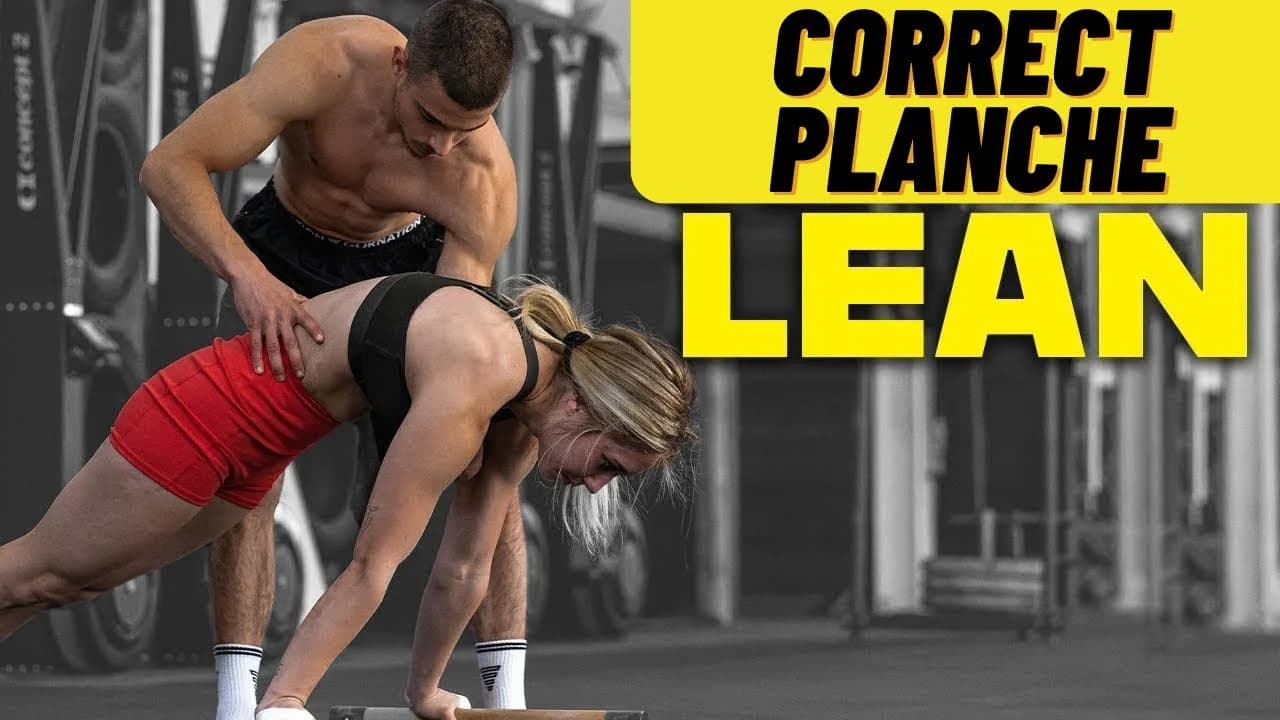
The planche lean is the drill that decides whether your planche training builds correctly or builds around bad habits. It looks simple, a straight arm support with a forward lean, but wrist position, elbow lock, and shoulder protraction all have to line up or you end up training the wrong thing. It works for beginners through advanced athletes, because whatever technique you groove here carries straight into your harder planche variations later. In this tutorial I cover full body positioning from head to feet, a tuck-to-full progression, and the mistakes I see most often. By the end you will know how to start training the planche lean with correct technique.
Watch the Full Tutorial
What Is the Planche Lean
The planche lean is the drill everyone in planche training starts with. You get into a straight arm support position, on the floor, on push-up bars, or on parallettes, then lean your shoulders forward over your hands while keeping your body straight and your elbows locked.
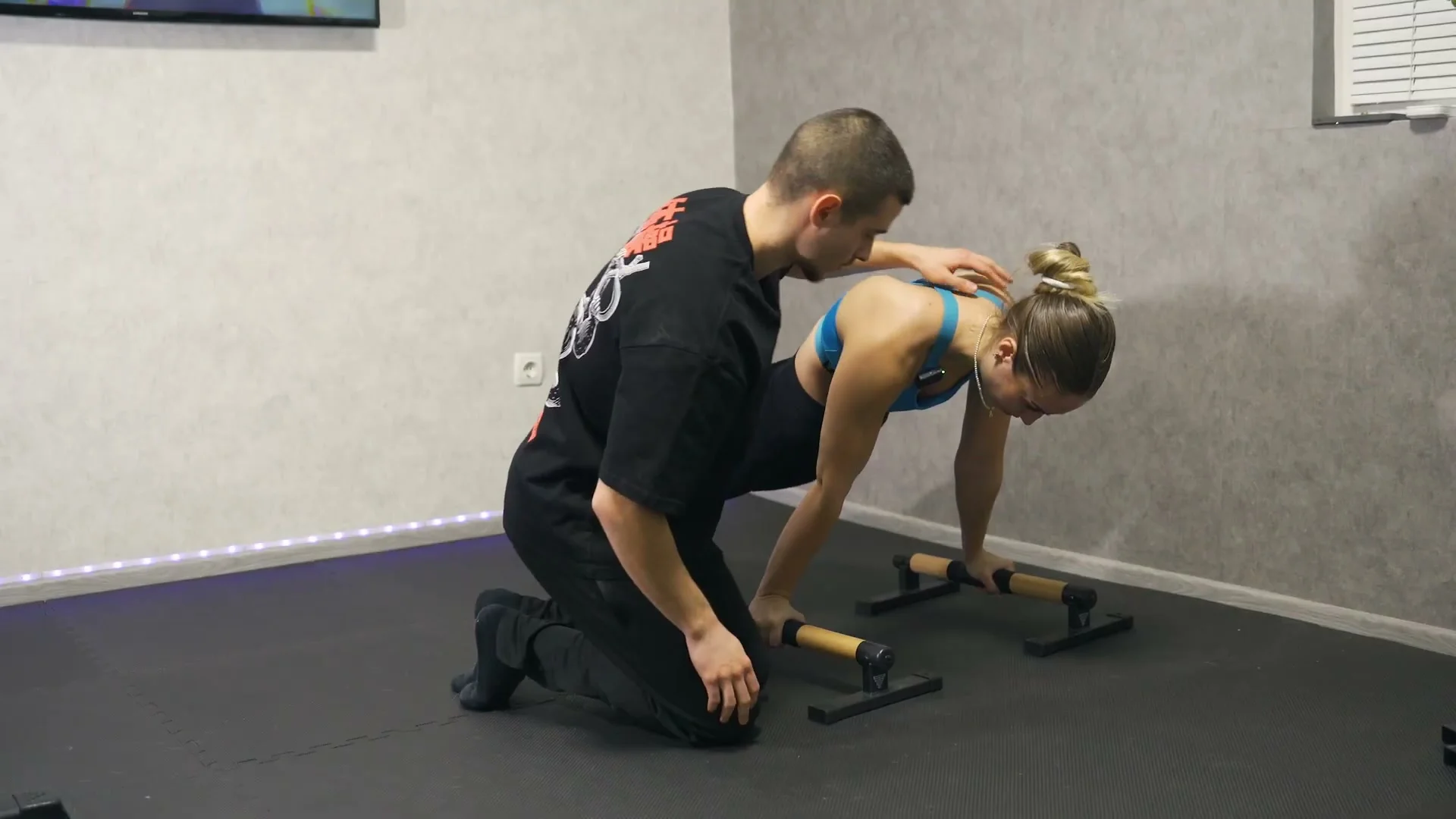
It looks small next to a full planche, but it teaches the exact things a planche needs: locked elbows, forward shoulder rotation, a protracted upper back, and a core that stays tight under load. Skip it or rush it, and you carry bad habits into every harder variation you try later.
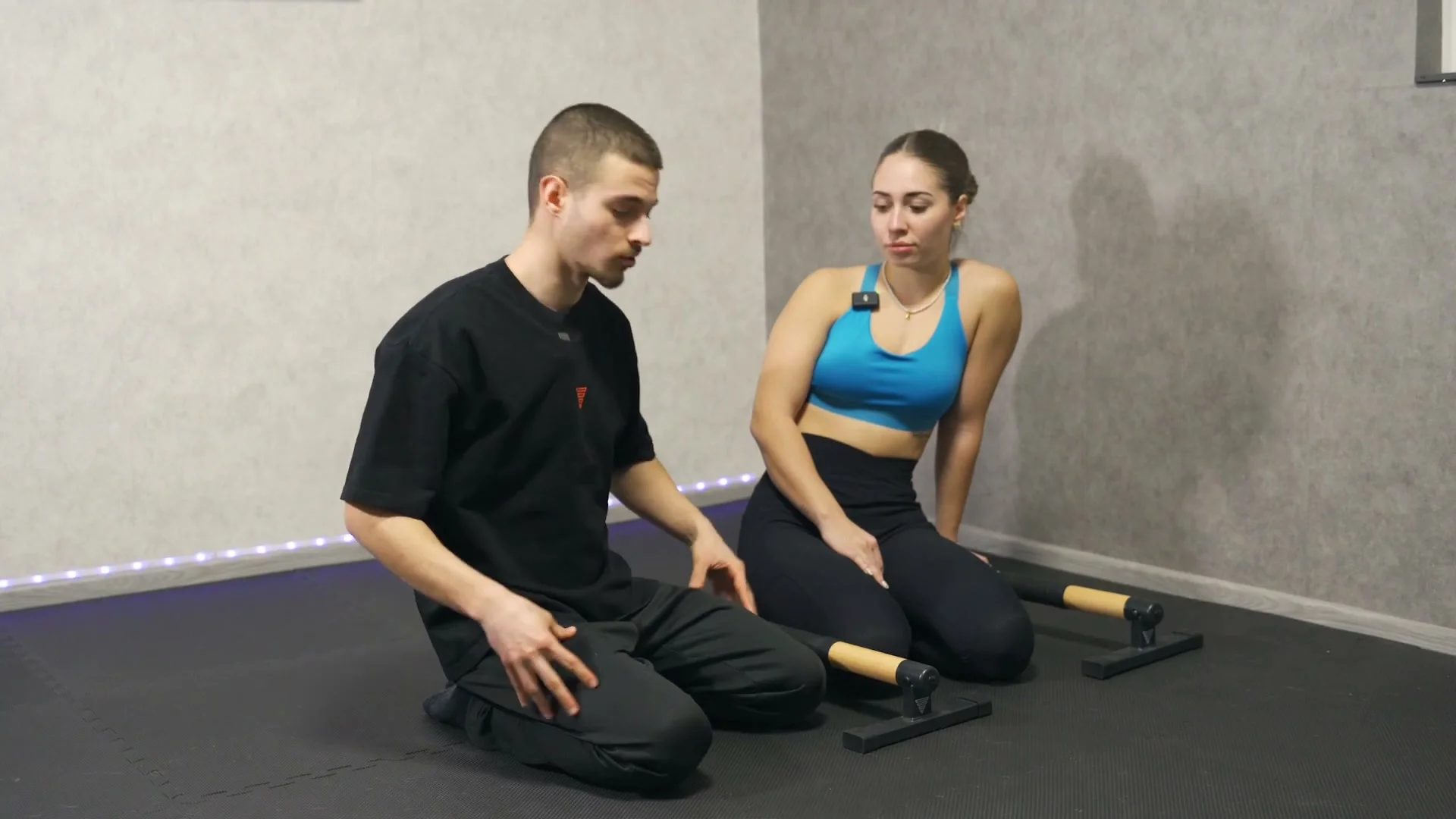
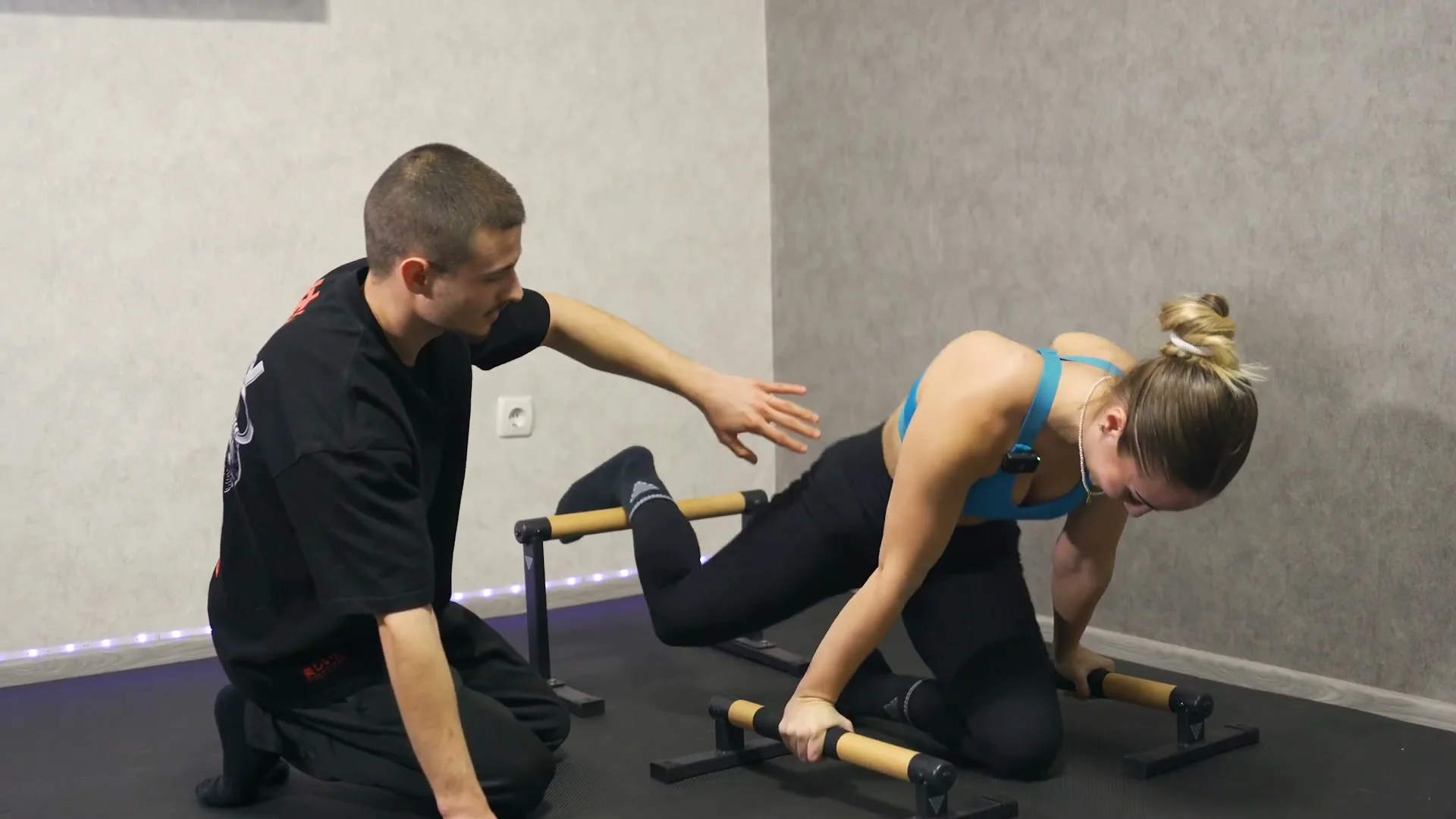
I made a video teaching this to my girlfriend from scratch, and the reason I keep coming back to this drill with new athletes is simple. Fix the lean early and the technique carries straight into your press work. Learn it wrong and you end up fighting the same wrist and shoulder problems for years.
Prerequisites
You do not need to be advanced to start the planche lean, but you do need a few things in place first, or the drill will just teach you bad positioning faster.
- A straight arm support position you can hold with your elbows fully locked, on the floor, push-up bars, or parallettes.
- Wrist mobility that lets you lean forward without sharp pain in the middle of your palm.
- Enough shoulder control to protract, meaning you can push your chest in and your shoulder blades apart without shrugging up.
- Basic body awareness so you can feel your core tighten when you exhale.
If any of these are missing, work on them first. Leaning into a locked support with a painful wrist or a support you cannot even hold still does not build the skill, it just reinforces the mistake.
How to Do the Planche Lean
I go through the body from head to feet, because every part affects the next.
Head position. Keep it neutral and look down, not up. Watching the floor in front of your hands gives you a better sense of where your body actually is. Lifting the head, which I see constantly, throws off your sense of the lean line and costs you balance.
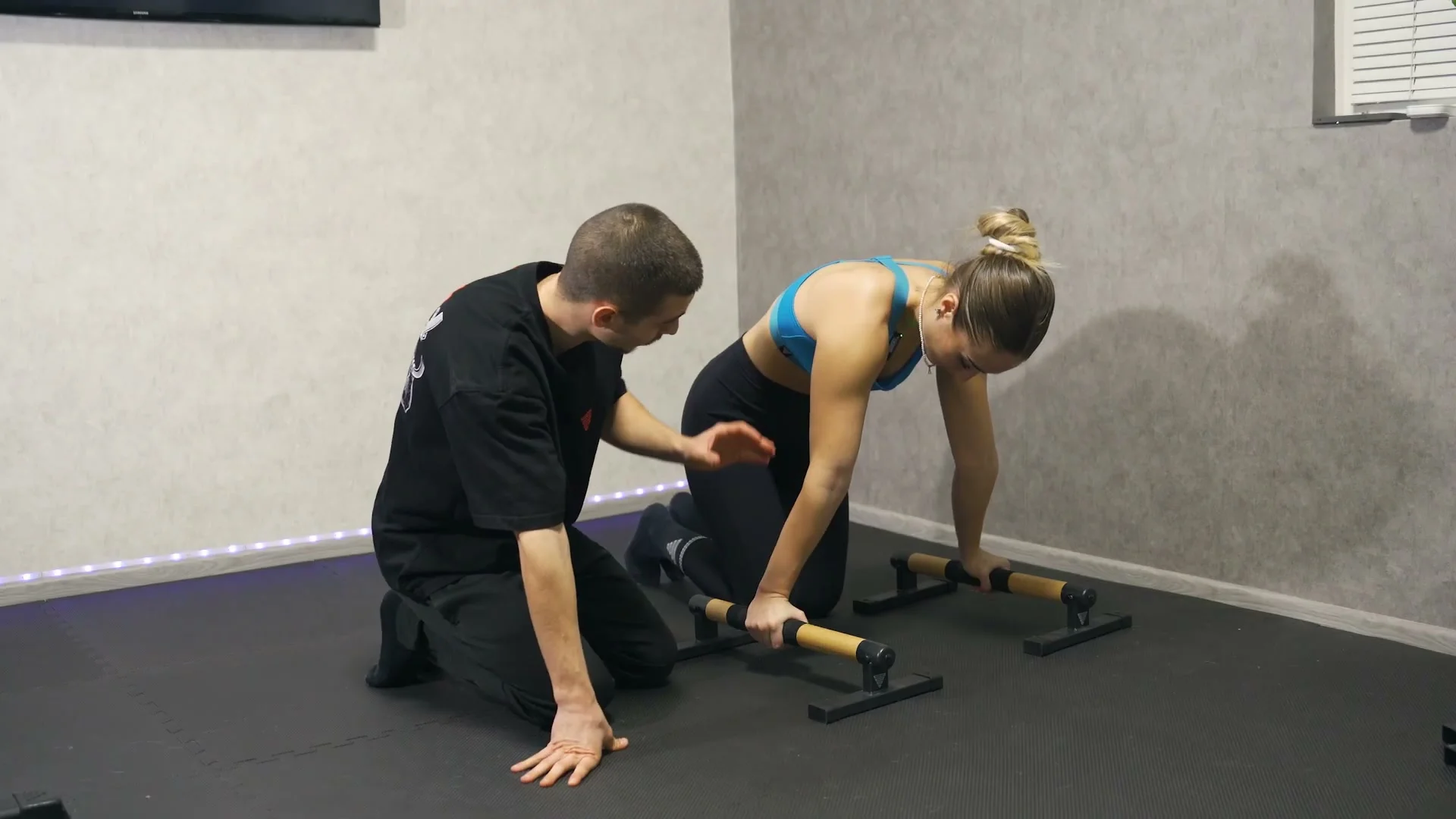
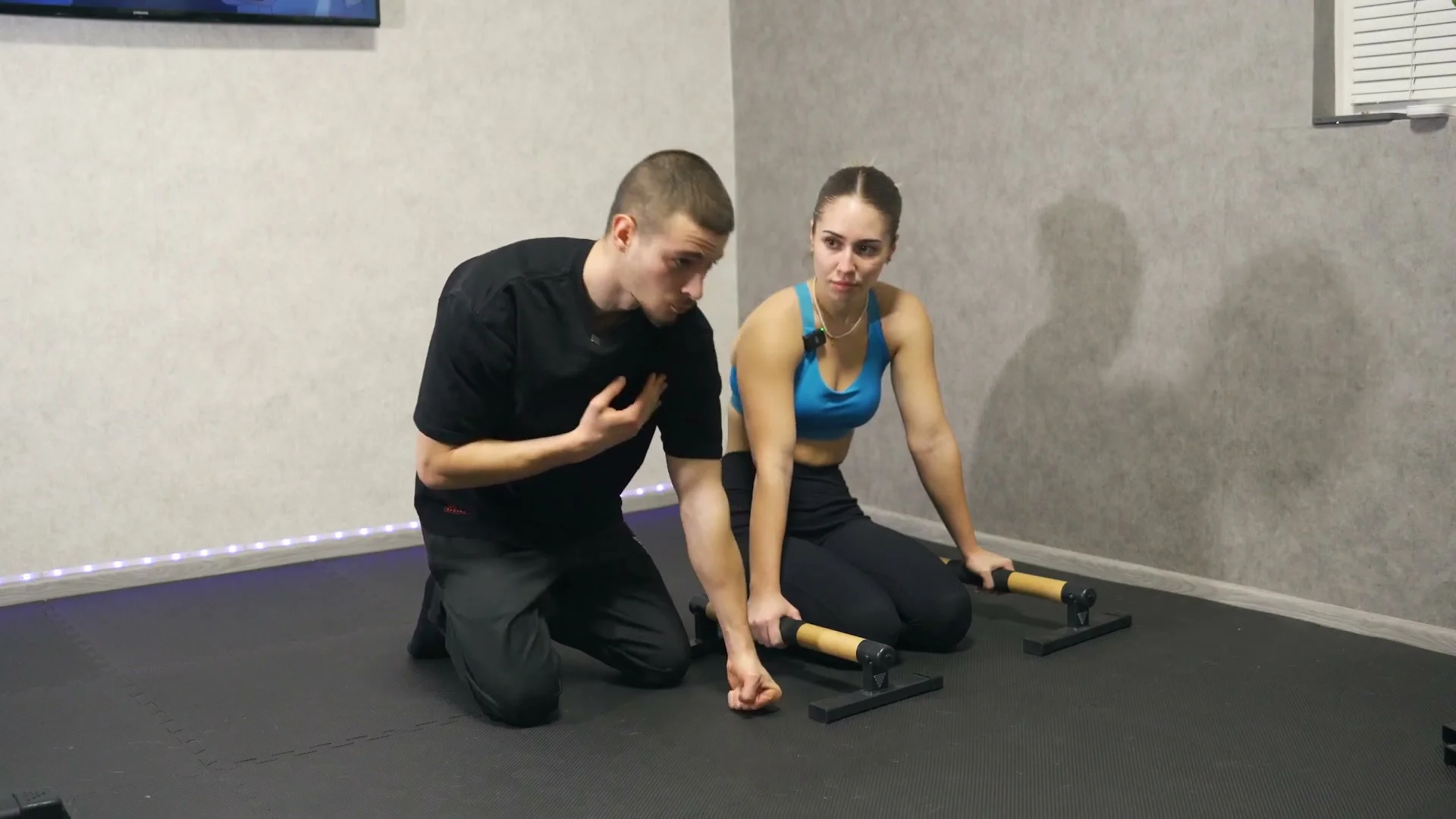
Wrist position. This is the most common mistake I see. Your wrist should sit in the middle, not rolled toward the thumb side and not rolled toward the outside. Roll it inside and you get pressure and pain right in the wrist. Roll it outside and your grip gets blocked, which limits how far you can actually lean, and no lean means no planche.
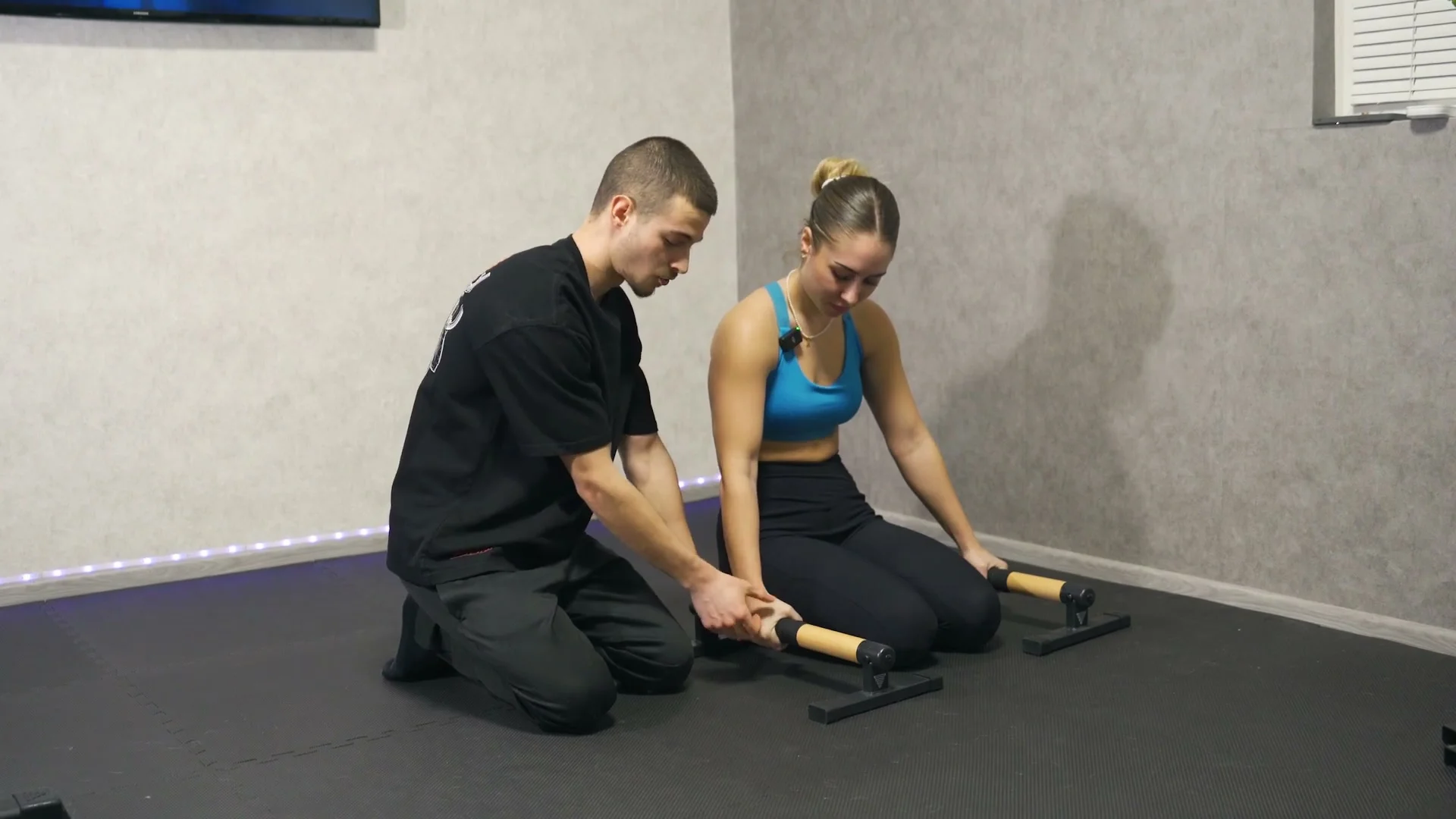
Elbows. Lock them and keep them locked. Around 80 to 90 percent of athletes bend the elbows without realizing it. The moment the elbow bends, the balance and activation shift away from the shoulder, you lose the position you are trying to train, and it puts unnecessary stress on the joint.
Biceps and shoulder rotation. Turn your biceps forward instead of letting them roll inward. Rolling inward limits how far you can extend the shoulder, and that limitation shows up later as a stuck press, where athletes tell me they cannot finish the movement. Rotating the biceps forward frees up that range from the start.
Protraction. This is where most people get it backwards. Do not just push your shoulders forward, lean and push down into the ground, and let the shoulder extend naturally. At the same time pull your chest in slightly with a touch of hollow back, then push the chest forward into the shoulders. Chest in, shoulder out, that combination is what correct protraction feels like.
Key Takeaway
Most planche lean mistakes trace back to two joints, the wrist and the elbow. Set the wrist in the middle, lock the elbow, and the shoulder protraction and stabilization work covered next actually has something solid to sit on.
Breathing and the core. Breathe steadily through the lean. A lot of people cannot feel their core activate on command, and slow breathing fixes that faster than trying to force a brace. You will feel the activation most on the exhale. Just do not breathe so heavily that it shifts your protraction, stay in position and let the breath stay controlled.
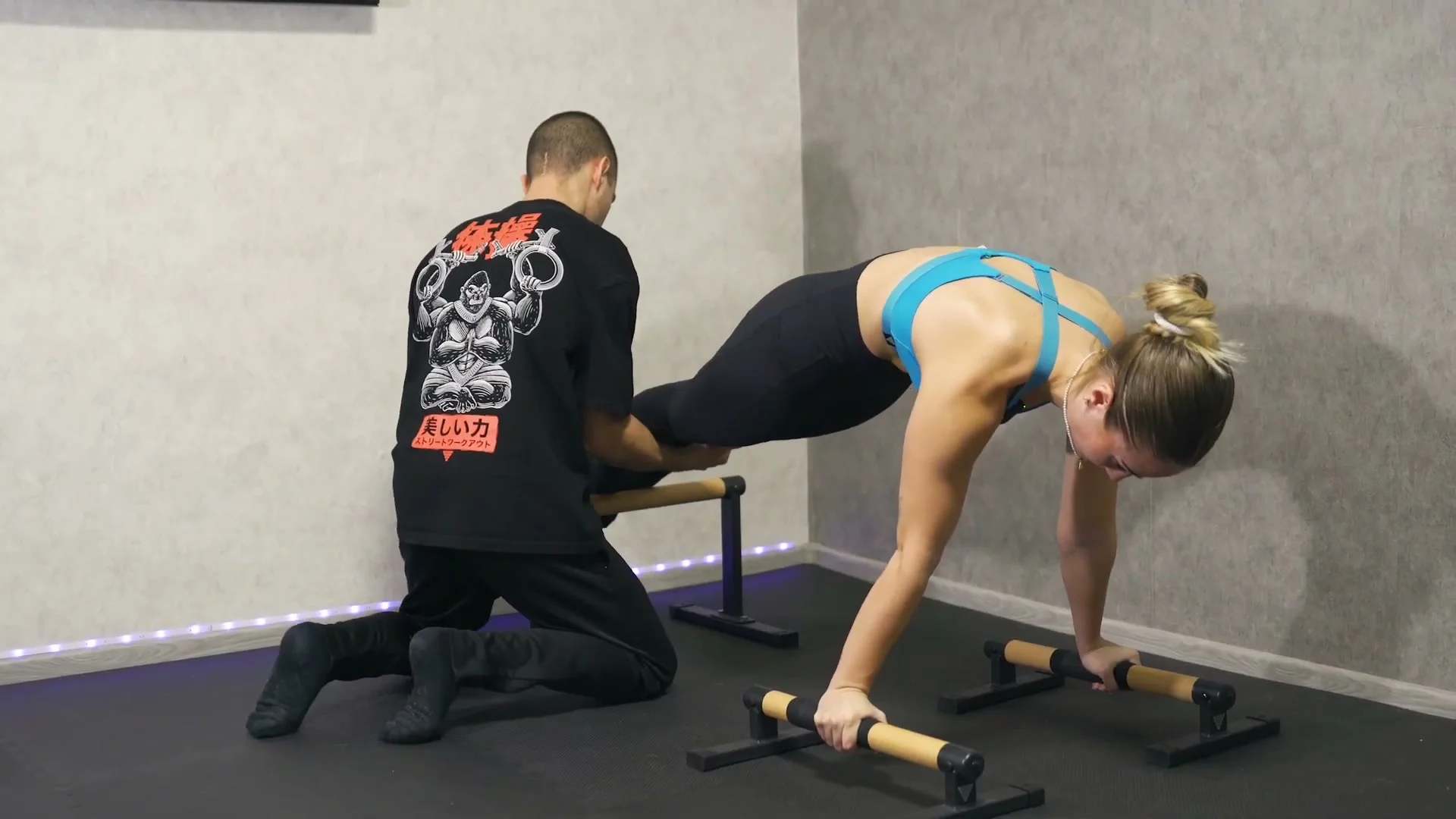
Legs and glutes. Keep the legs fully straight and squeeze your glutes. That combination gives you the stabilization from the lower body that the upper body cannot provide on its own.
If you want someone watching your positioning in real time and correcting it before it turns into a habit, that is exactly what my online coaching is built for.
Progression: From Tuck to Full Planche Lean
You do not need to jump straight into a full straight leg lean. Shortening the lever with your legs lets you build the same technique cues under less load first.
Stage 1: Tuck Planche Lean
Bring your knees toward your chest to shorten the lever as much as possible. Run through every cue above, head neutral, wrist in the middle, elbows locked, chest in and shoulder out, steady breathing. This is where you groove the position before adding leg length back in.
Stage 2: Straddle Planche Lean
Open your legs into a straddle. It reduces the resistance compared to a straight body lean while still asking for real lean angle and shoulder work. Keep the same head, wrist, elbow, and protraction cues, the straddle should not change your technique, only the load.
Stage 3: Full Planche Lean
Legs together and fully straight, glutes squeezed. This is the hardest lever of the three and the version that carries directly into planche and press training. Only move here once the tuck and straddle versions feel controlled, not shaky.
Common Mistakes
Mistake: Head Position Up
Lifting the head to look forward instead of down is one of the most common errors I see, and it is not limited to the lean, it shows up in planche combinations too. It throws off your sense of your own body line and makes balance harder than it needs to be.
Mistake: Wrist Rolled Inside or Outside
Rolling the wrist inward causes pain right in the wrist joint. Rolling it outward blocks your grip and caps how far you can lean. I have had people try one lean with a broken wrist position and immediately feel pain in the wrist and elbow, that is how fast this mistake punishes you.
Mistake: Bent Elbows
The majority of athletes bend the elbows without noticing. It shifts the balance and activation away from the shoulder, adds unwanted movement at the elbow joint, and is not healthy for the joint over time. Elbows stay locked, full stop.
Mistake: Chasing Volume Over Position
I get messages from people asking how to fix their planche form, and when I check their videos they are doing straddle planches with no protraction, just grinding out reps hoping volume fixes it. It does not. If the position is wrong, doing more of it only reinforces the wrong pattern. Fix the position first, then add volume.
Training Tips
Train the lean before every planche or press session, not just as an afterthought. A minute or two spent resetting the wrist, elbow, and protraction cues carries directly into whatever harder variation you train next.
For intermediate and advanced athletes, raising the feet onto a bar or box adds real difficulty to the same lean without changing the technique. It shifts more of your body weight onto the hands, so only add it once your regular lean is fully controlled.
Keep 3 to 5 sets of 10 to 20 seconds of hold in your program, around a minute of total hold time per workout. That is enough to reinforce the position without turning the drill into a grind.
Do not underestimate the drill because it looks basic. I have coached an athlete who trained through pain for a year with bad positioning in her lean before fixing it, and once she did, her planche improved roughly three times faster than before. Train it smart from the start and you skip that entire detour.
Frequently Asked Questions About the Planche Lean
What is the planche lean actually training?
It trains the specific shoulder rotation, wrist position, and protraction you need for a planche, using a straight arm support and a forward lean instead of the full horizontal hold. It is the foundation drill nearly every planche progression starts with.
Do I need parallettes to do the planche lean?
No. You can do it on the floor, on push-up bars, or on parallettes. Parallettes and push-up bars simply keep your wrist in a more neutral position, which can make the wrist cue easier to hold while you are learning.
Why do my wrists hurt during the planche lean?
Almost always it is wrist position. If your wrist rolls toward the thumb side you will feel pressure and pain directly in the wrist. Reset to the middle of the wrist before you lean any further, and stop if the pain does not go away with correct positioning.
How do I know if my elbows are actually locked?
Check before you lean, not during. Most athletes bend the elbows without feeling it happen, so build the habit of locking them fully before you start the lean and keeping tension there throughout, rather than trying to notice a bend mid-rep.
Why does my planche lean feel unstable?
Unstable leans usually come from one of two places, elbows that are not locked or breathing that is too heavy and shifts your protraction. Slow your breathing down and check your elbow lock before adding more lean angle.
Can a complete beginner start training the planche lean?
Yes, the lean itself works at any level, beginner through advanced, but a beginner should start in the tuck position rather than jumping to a straddle or full lean. The technique cues stay the same, you are just reducing the lever until your positioning is solid.
If you want a training plan built around fixing your planche lean and carrying that technique into your harder variations, that is exactly what I work through with people inside online coaching.

Daniel Hristov is a four-time calisthenics world champion and coach. He shares the exact methods he uses to train his own athletes.
More about Daniel →