
The muscle-up is the moment your pull-up turns into a dip without letting go of the bar, and it is one of the clearest strength markers in calisthenics. It is honestly not for beginners: you need a real pulling and pushing base before any of this clicks. It sits right after you have built solid pull-ups and dips, and right before you start playing with rings or strict reps without a band. In this tutorial I cover the five exercises I use to build the muscle-up, in the order I use them, plus the false grip detail that makes or breaks the transition. By the end you will know how to start training it, even if you cannot do one yet.
Watch the Full Tutorial
What Is the Muscle-Up
The muscle-up is the move that takes you from below the bar to above it in one continuous motion. You pull like a pull-up, then push like a dip, without letting go and without a kip that swings you up.
It looks like one movement, but it is really two movements joined by a technical piece in the middle: the false grip and the transition over the bar. Most lifters who fail the muscle-up are not weak, they just have not trained that middle part.
I put together five exercises that isolate the parts of the muscle-up people usually get stuck on. You do not need anything exotic, just a bar, a resistance band, and a bit of patience.
Prerequisites
Before you touch these drills, you need a base level of pulling and pushing strength. If you skip this and go straight for band-assisted muscle-ups, you will build bad habits instead of the movement.
- At least 5 to 10 strict pull-ups
- At least 5 to 10 straight bar dips
- A resistance band you can use for assistance work
If you are not there yet, spend a few weeks building your pull-ups and dips first. Everything below gets much harder without that foundation.
How to Do the Muscle-Up
The single most important detail in the whole movement is the false grip. That is where the bar sits low across your palm, near your wrist, instead of in your fingers like a normal pull-up grip. Without it, you cannot get your body over the bar cleanly, you will fight the transition every single time.
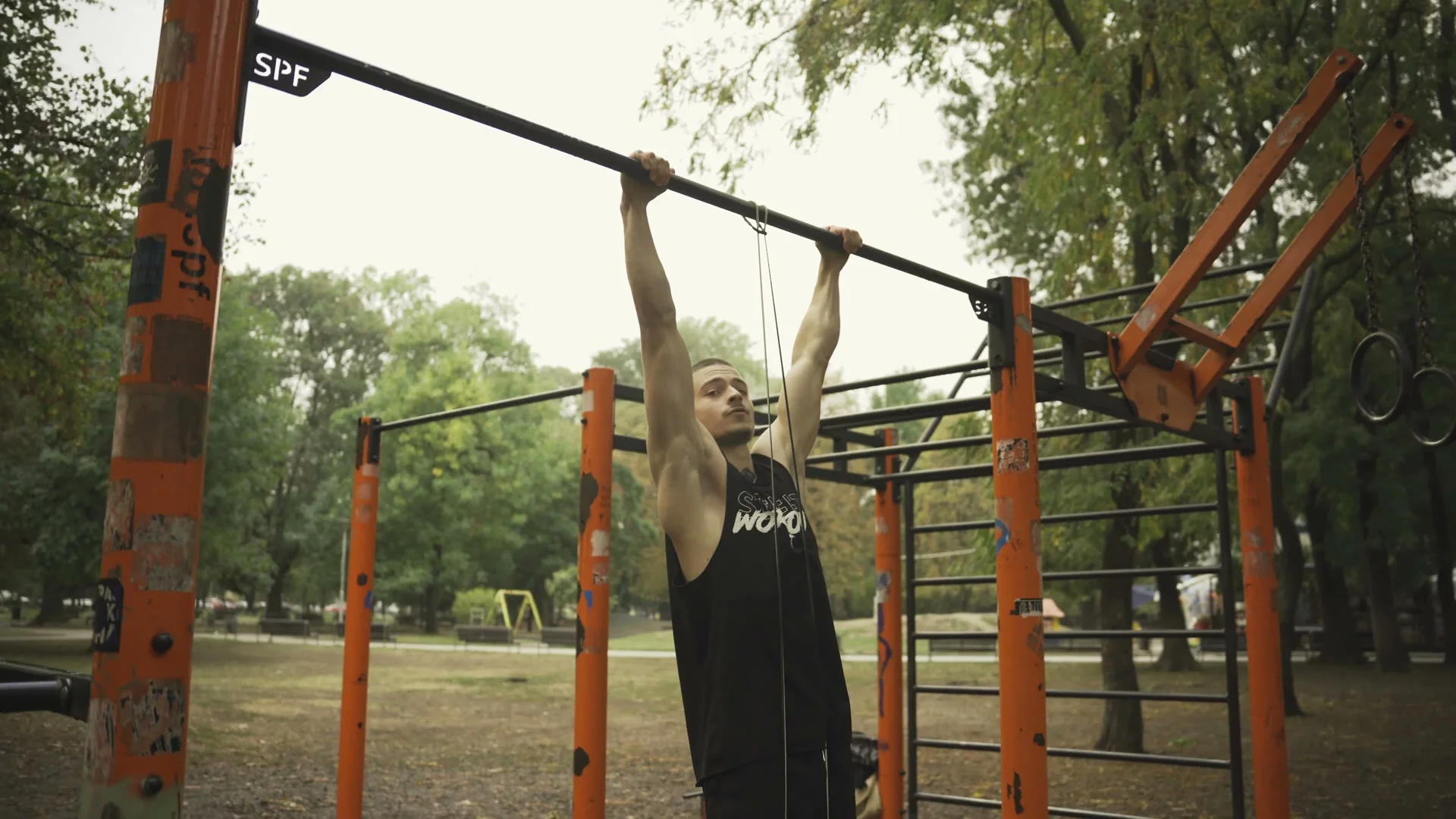
Set the false grip before you pull, not halfway up. Pull with control, do not rush the first half of the movement. As your chest reaches bar height, drive your body forward and over the bar rather than just up. Keep the swing small, a big kip covers up weaknesses instead of fixing them. Once you are over the bar, finish with the dip like you would on parallel bars.
If you want a coach checking your false grip and your transition timing directly, that is exactly the kind of detail I work on in online coaching.
Progression: From Zero to Muscle-Up
Key Takeaway
These five exercises run in a fixed order because each one isolates a piece of the muscle-up the last one did not touch: the grip, the transition, the control, and finally the full movement under assistance. Do not skip ahead to the banded muscle-up before the earlier stages feel solid.
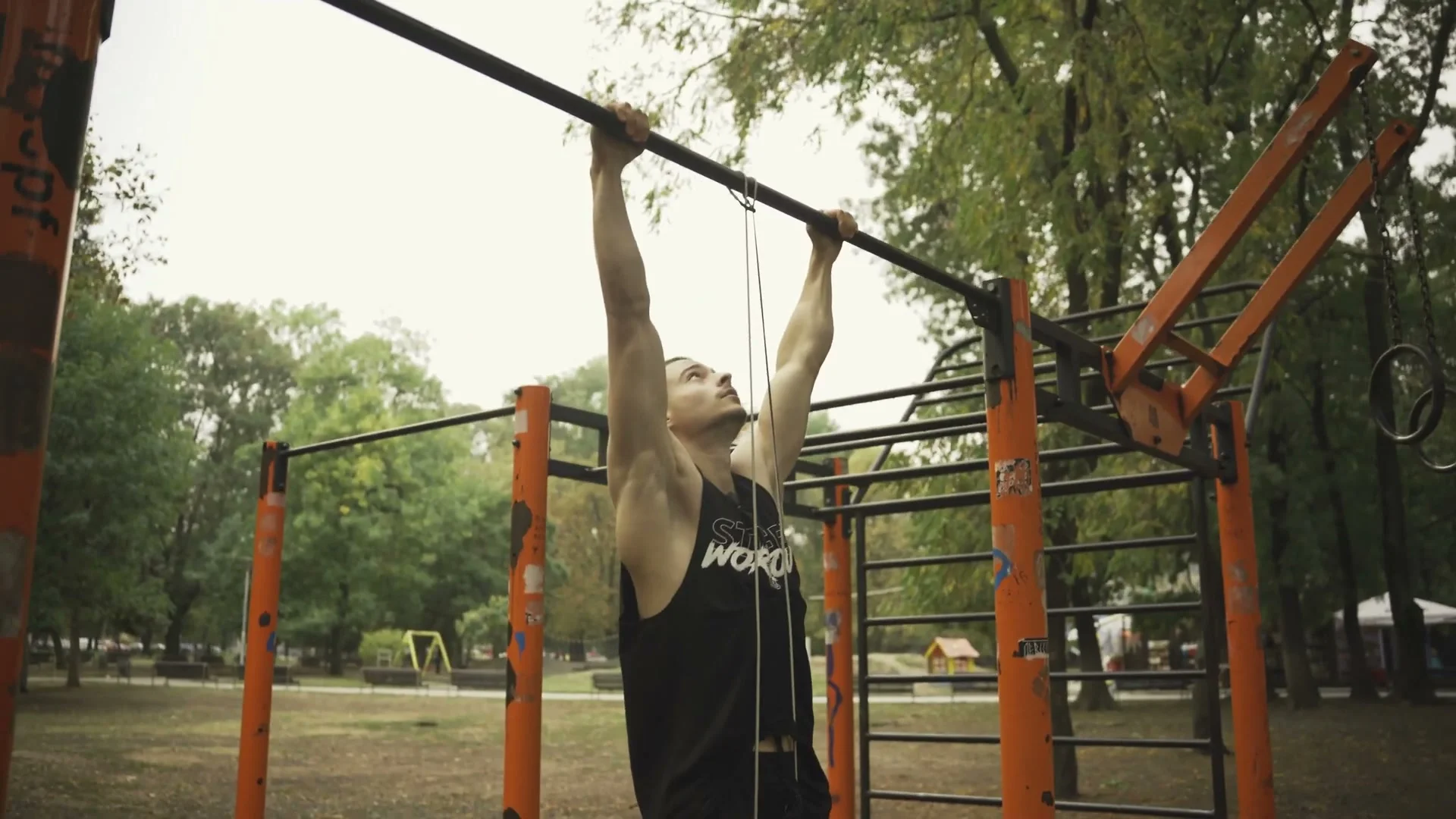
Stage 1: High Pull-Ups With a Band
Loop a resistance band for assistance and pull up with a good false grip. Start with 2 to 6 reps. This teaches your hands to hold the false grip under load before you ask them to do anything else.
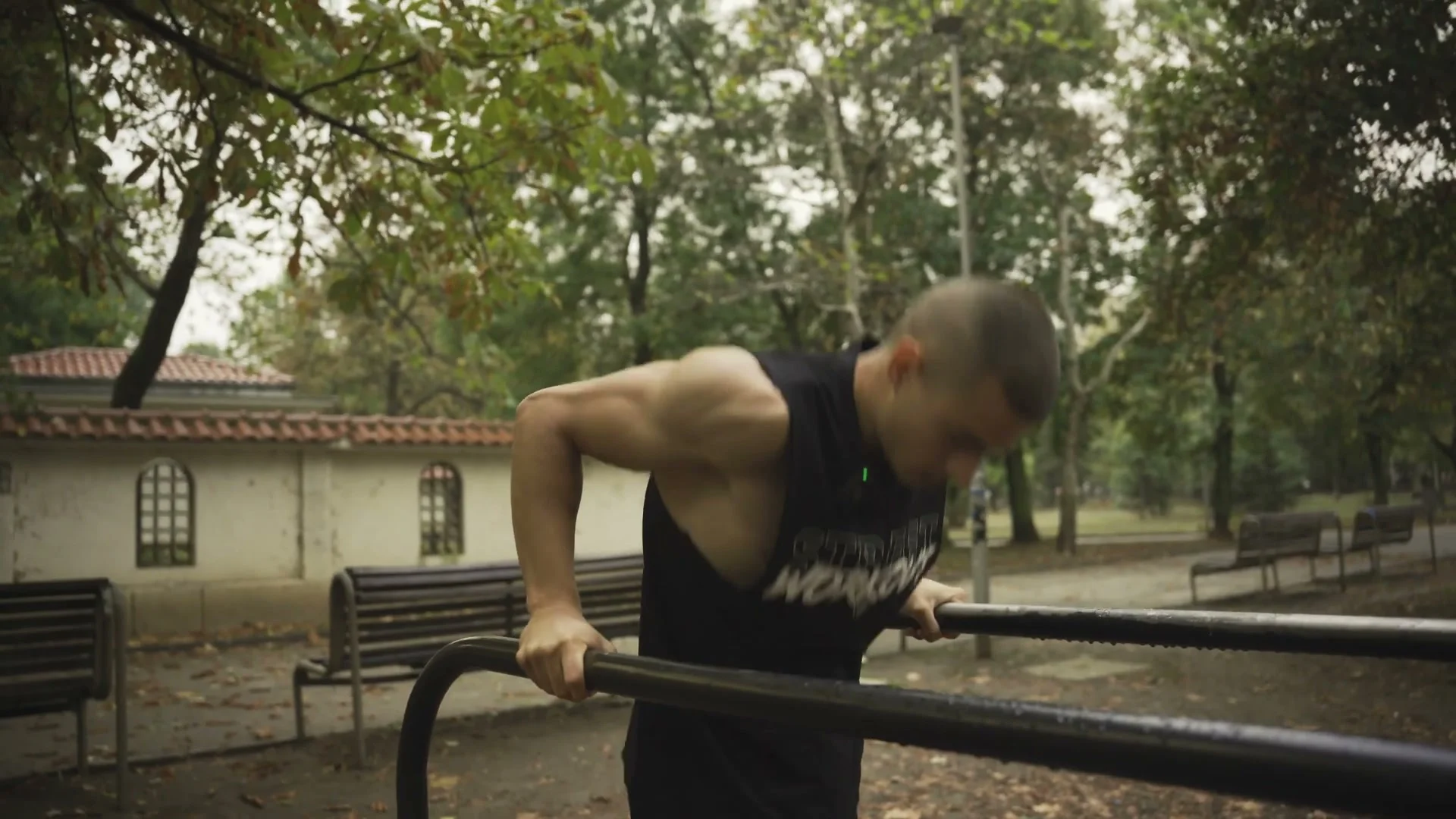
Stage 2: Russian Dips
Russian dips train the specific pressing pattern you need for the transition, the part where your body rotates from above the bar into the dip position. Do 5 to 7 reps, or fewer if that is what your level allows.
Stage 3: High Pull-Ups With Holds
Same false grip pull-up, but this time you hold at the top for 3 seconds before lowering. Pull up, hold, and go back down under control, no fast pulling. 3 to 6 reps is enough. Quality here matters more than reps.
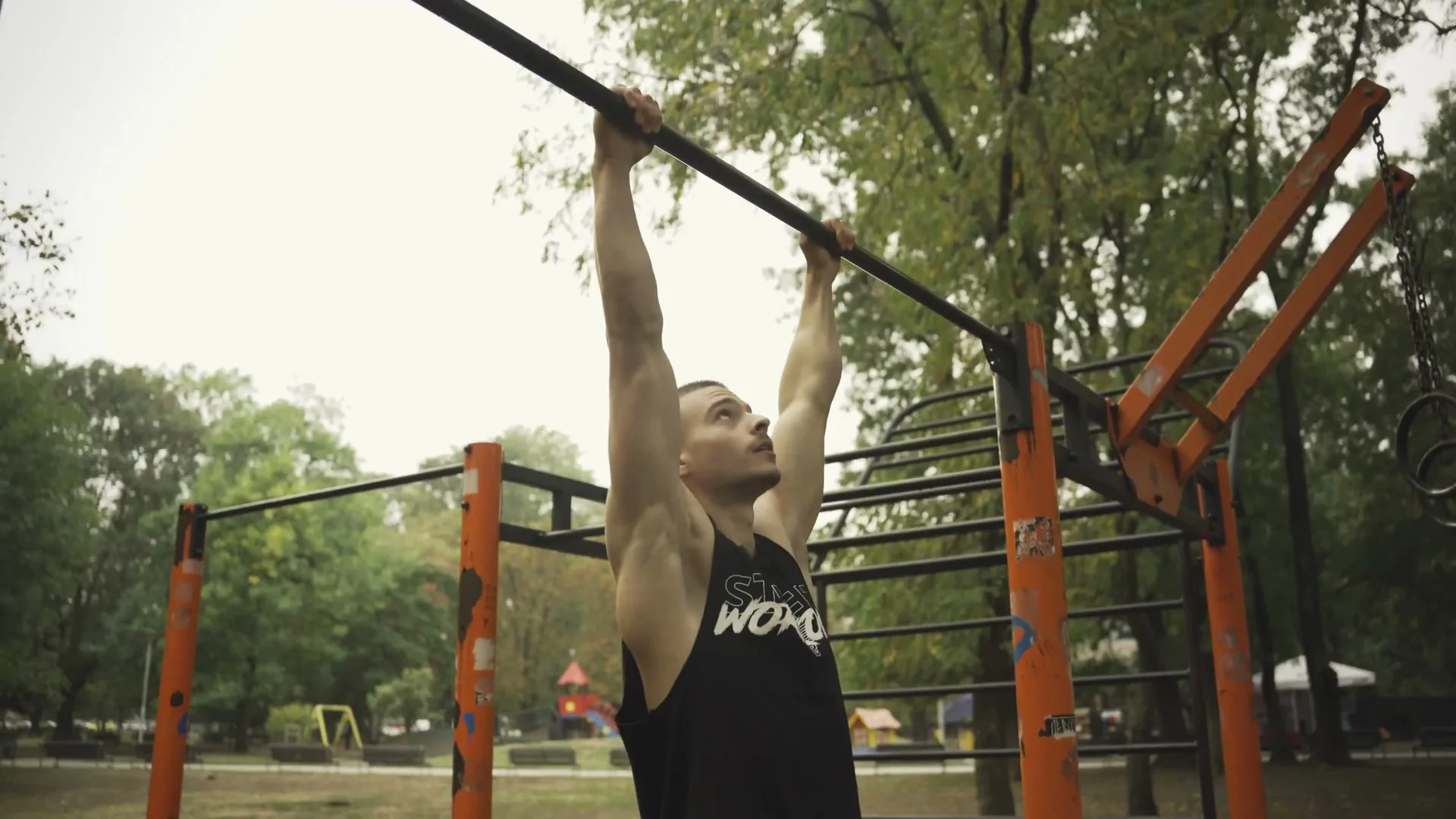
Stage 4: Negative Muscle-Ups
Start at the top of the movement, in the dip position over the bar, and lower yourself down as slowly as you can. Keep the false grip locked in the entire way, that is the detail that carries over to the real thing. Do not lose the false grip halfway down, that defeats the point of the drill.
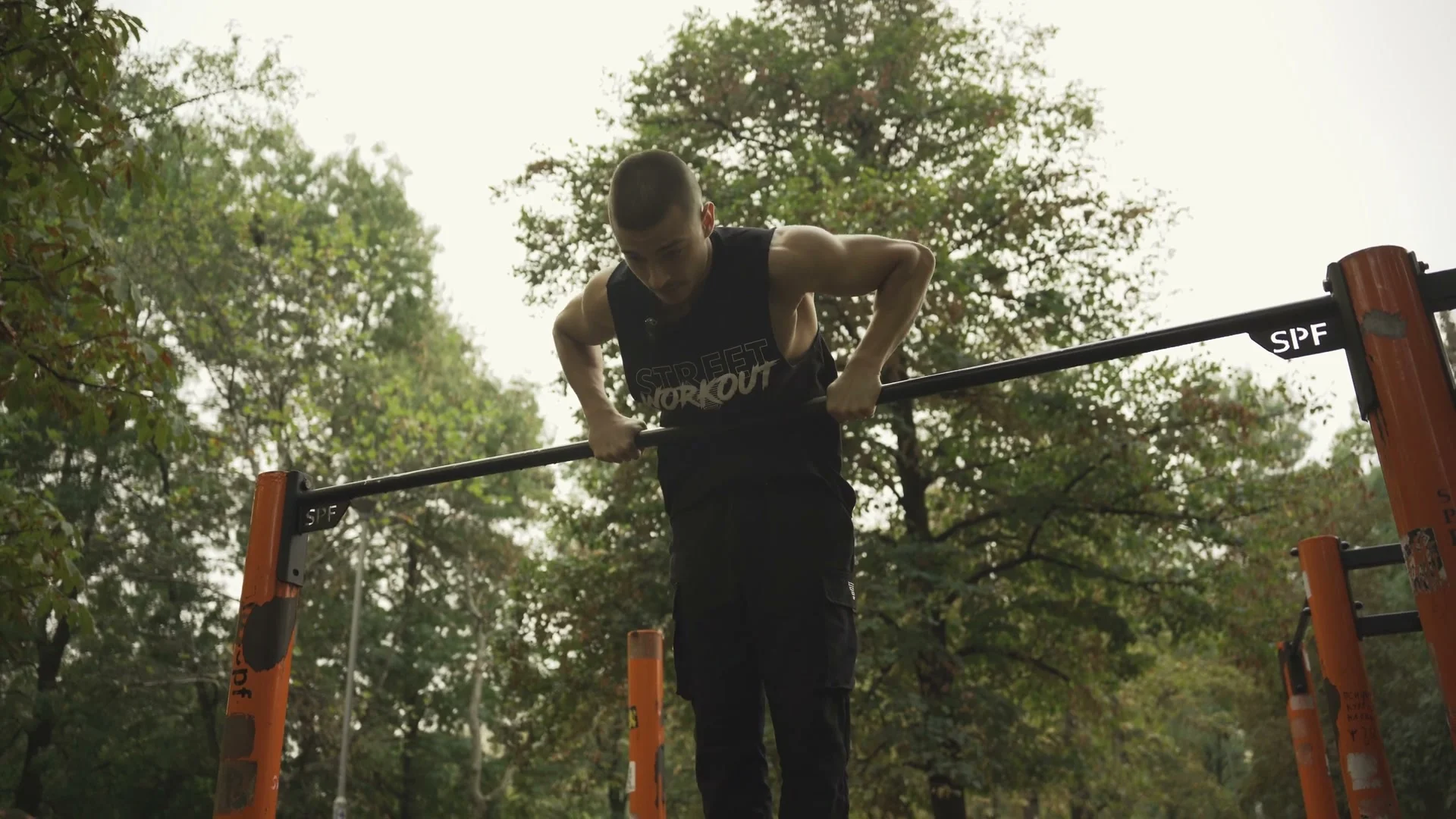
Stage 5: Muscle-Ups With a Resistance Band
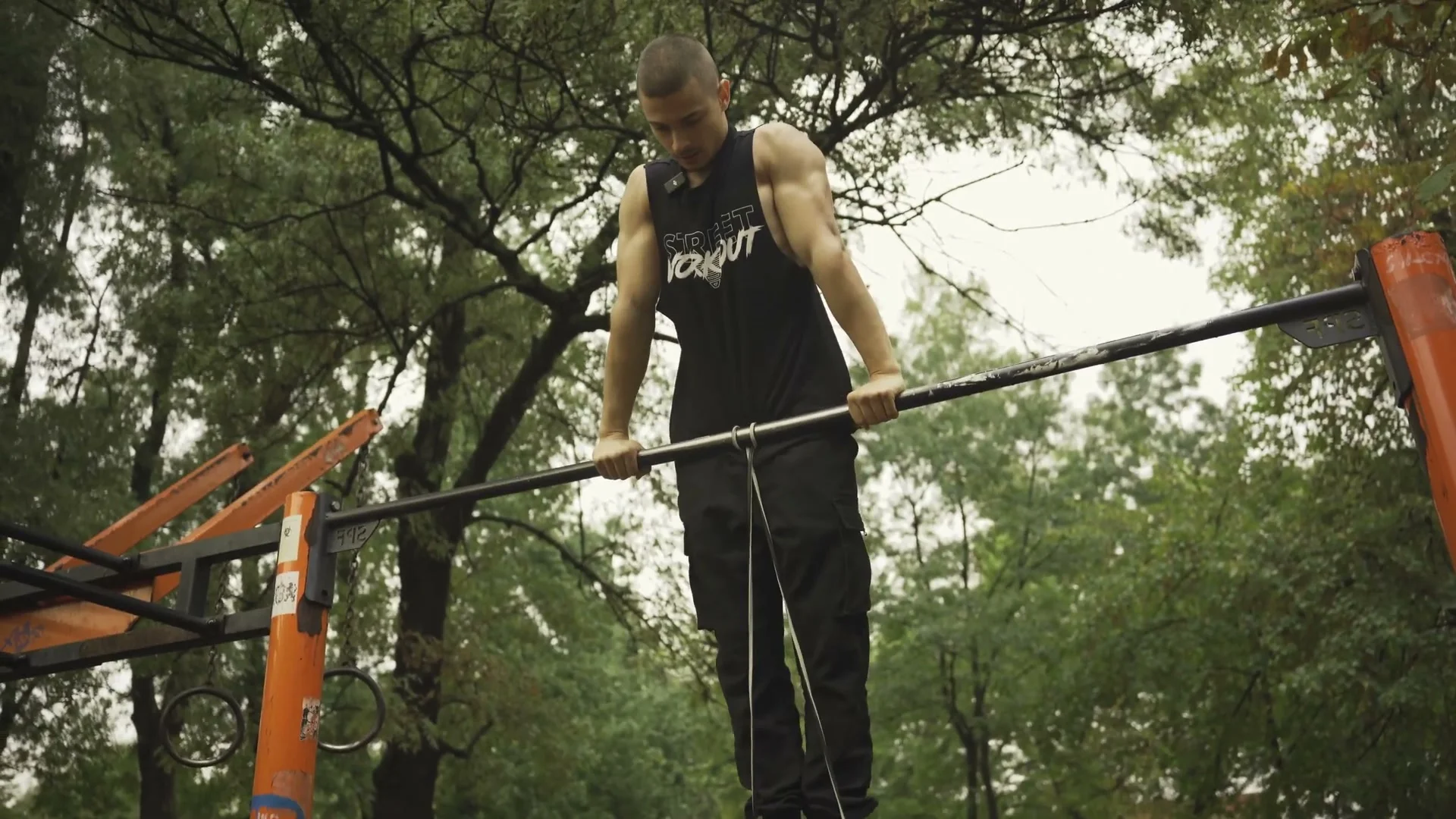
Now put it together with a band for assistance. Choose a band that matches your level, a lighter band gives you less help, a heavier band gives you more. Keep the false grip, keep the swing small, and pull up and over. As you get stronger, drop down to a lighter band until you do not need one.
Common Mistakes
Mistake: Losing the False Grip
If your grip rolls from false to a normal grip during the pull, you will get stuck at the bar and have to fight or bail. Reset the false grip before every rep until it becomes automatic.
Mistake: Pulling Too Fast
Rushing the pull skips the control you need for the transition. Pull with intent, not speed, especially during the hold variation and the negatives.
Mistake: Relying on a Big Swing
A large kip can get you over the bar without real strength, but it will not hold up as you try to remove the band. Keep the swing small and let your pull and transition do the work.
Mistake: Skipping Straight to the Banded Muscle-Up
Jumping to Stage 5 without building the false grip and the transition pattern first just teaches your body to muscle through with momentum. Work the earlier stages until they feel controlled, not just possible.
Training Tips
Train the false grip on its own before you ever add it to a full rep. Hang from the bar with the false grip set for time, this builds the wrist position and the grip strength together without the fatigue of a full pull.
Do not chase reps on the negatives. One slow, controlled negative with the false grip locked in the whole way teaches your body more than five fast ones where you lose the grip halfway down.
Match the band to your level honestly. A band that is too light for you turns every rep into a fight with your form, and a band that is too heavy teaches you nothing about the strength you actually need to build. Drop to a lighter band only once the current one feels controlled, not just doable.
Frequently Asked Questions About the Muscle-Up
How many pull-ups do I need before training the muscle-up?
Aim for at least 5 to 10 strict pull-ups before you start these drills. You also want 5 to 10 straight bar dips, since the muscle-up ends in a dip position.
What is a false grip and why does it matter?
The false grip is holding the bar low across your palm instead of with your fingers. It lets your wrist rotate over the bar during the transition, without it the movement stalls at chest height.
Can I learn the muscle-up without a resistance band?
A band is not required, but it makes the assisted drills and the assisted muscle-up itself more manageable while you build the pattern. If you do not have one, spend more time on the negatives and the pull-up holds instead.
How long does it take to get a first muscle-up?
The transcript does not give a fixed timeline, and I would not trust anyone who gives you an exact number without seeing your training. It depends on your starting pull-up and dip strength and how consistently you drill the false grip.
Should I train on rings or on a bar?
These five exercises work on a straight bar. Rings add an extra layer of instability once you have the bar version down, but get the pattern working on the bar first.
Why do I keep failing at the top of the pull?
That is almost always the false grip slipping or the transition being too vertical. Focus on driving your body forward over the bar rather than straight up, and keep checking your grip before each rep.
If you want a training plan built around where your muscle-up actually is right now, that is the kind of thing I work through with people inside online coaching.

Daniel Hristov is a four-time calisthenics world champion and coach. He shares the exact methods he uses to train his own athletes.
More about Daniel →