
A proper warm-up is one of the most overlooked parts of calisthenics training, and skipping it is how a lot of people get hurt. I get asked constantly how I warm up before my own sessions, so here I'm breaking down the exact routine I use. It doesn't need an hour, but it does need to hit the right areas, especially the shoulders, wrists, and lower back that carry most of the load in statics and dynamic elements. In this tutorial I cover the equipment I use, the order I move through, and why each part matters. By the end you will know how to build a warm-up that actually prepares your body instead of just going through the motions.
Watch the Full Tutorial
What Is a Calisthenics Warm-Up
A calisthenics warm-up is not stretching for its own sake. Its job is to raise the temperature of the muscles you are about to use, get blood moving into them, and prepare your joints for the positions you will load. I build mine around the muscles I am about to train, not a generic routine.
For me that means real attention on the shoulders, wrists, and lower back, since those take the most strain in statics and dynamic elements. The rotator cuffs get skipped by a lot of people, and that is exactly where shoulder pain starts.
Prerequisites
You do not need a gym for this, just two cheap pieces of equipment and some floor space.
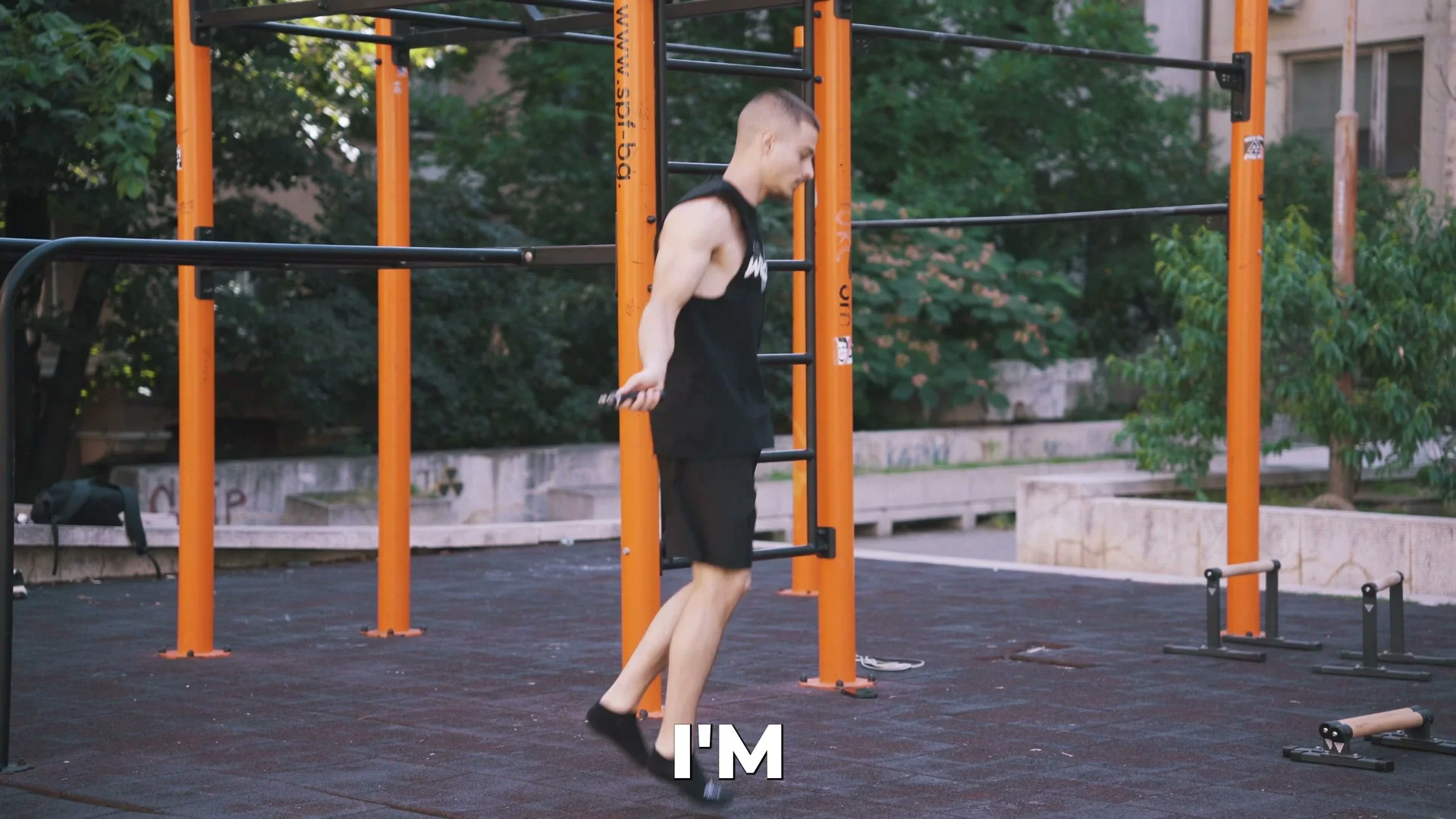
- A jump rope
- A light resistance band, not a heavy one
- About 10 to 20 minutes
- Floor space to sit for the wrist and leg work
If you are not sure how a warm-up should fit around specific skills like front lever or planche, that is something I go through with people in online coaching.
How to Do My Calisthenics Warm-Up
Start light and build, do not jump straight into your hardest stretches or fastest movements.
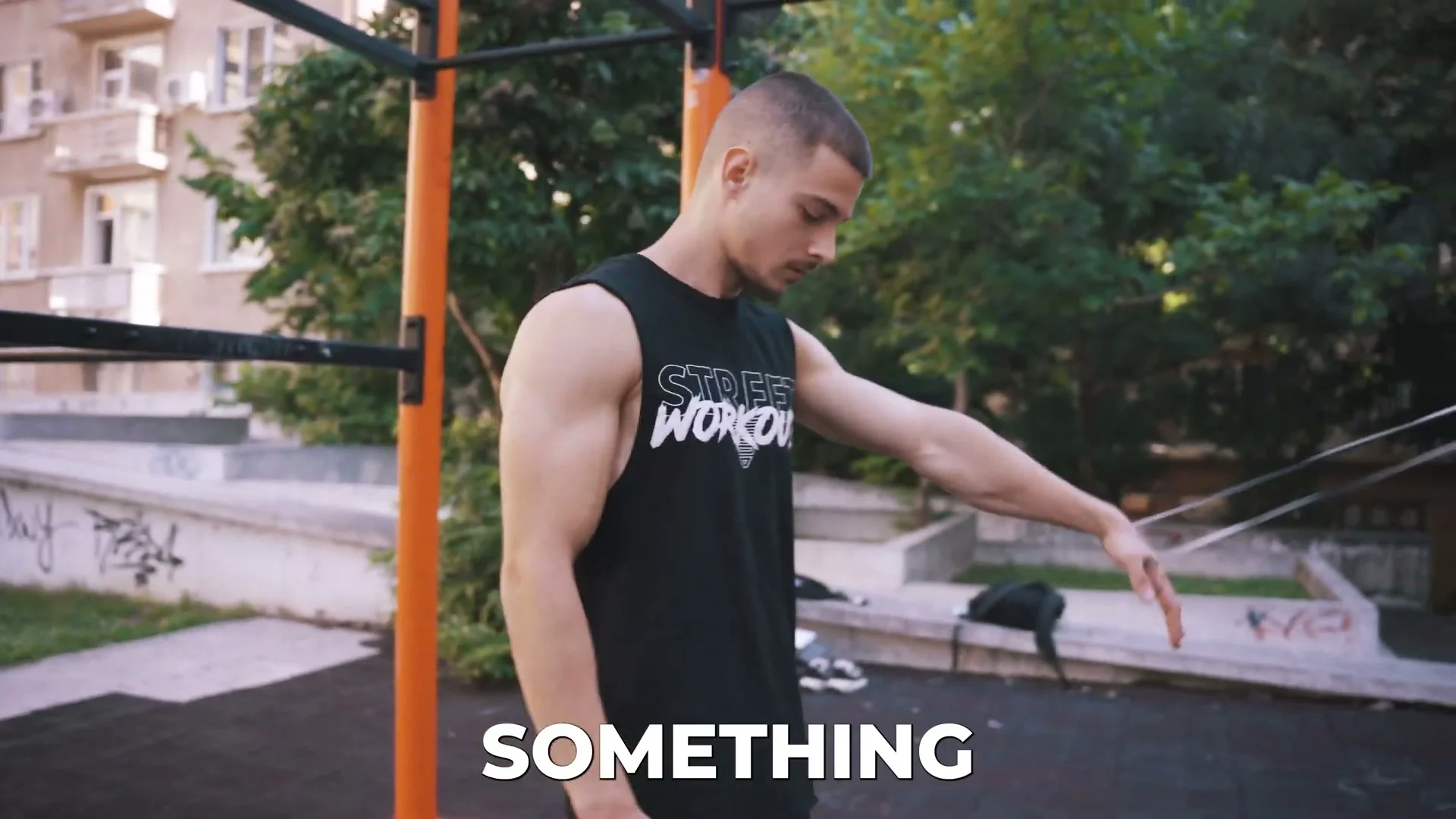
On the band work, keep the band in the middle of your grip and pull with your whole upper body, not just your arms. For the rotator cuff rotations, keep your elbow close to your body, moving faster out and slower back in.
For the leg stretches, do not bend your knees reaching for your toes, it makes the stretch far less effective. Hold each position around 10 seconds rather than bouncing.
For the wrists, go easy. If you feel real pain, back off, you are warming the joint, not testing it. Hold 2 to 3 seconds for 5 to 10 reps per direction.
Progression: My Warm-Up Routine From Start to Finish
Key Takeaway
I move through this in one direction, upper body to lower body, raising my heart rate first and finishing on the wrists right before my hardest elements. Skipping stages, especially the hip and lower back work, is how I ended up with real lower back pain last month.
This is the order I go through, from raising my heart rate to being ready for my hardest elements.
Stage 1: Jump Rope
3 to 5 minutes, slow at the start, faster in the last minute.
Stage 2: Resistance Band for Shoulders
5 to 10 reps pulling apart at chest height, switching hands, then rotator cuff rotations on each side. Important if you train front lever, planche, or dynamic elements, since the shoulders carry the load in all of them.
Stage 3: Band Work for Front Lever and Planche
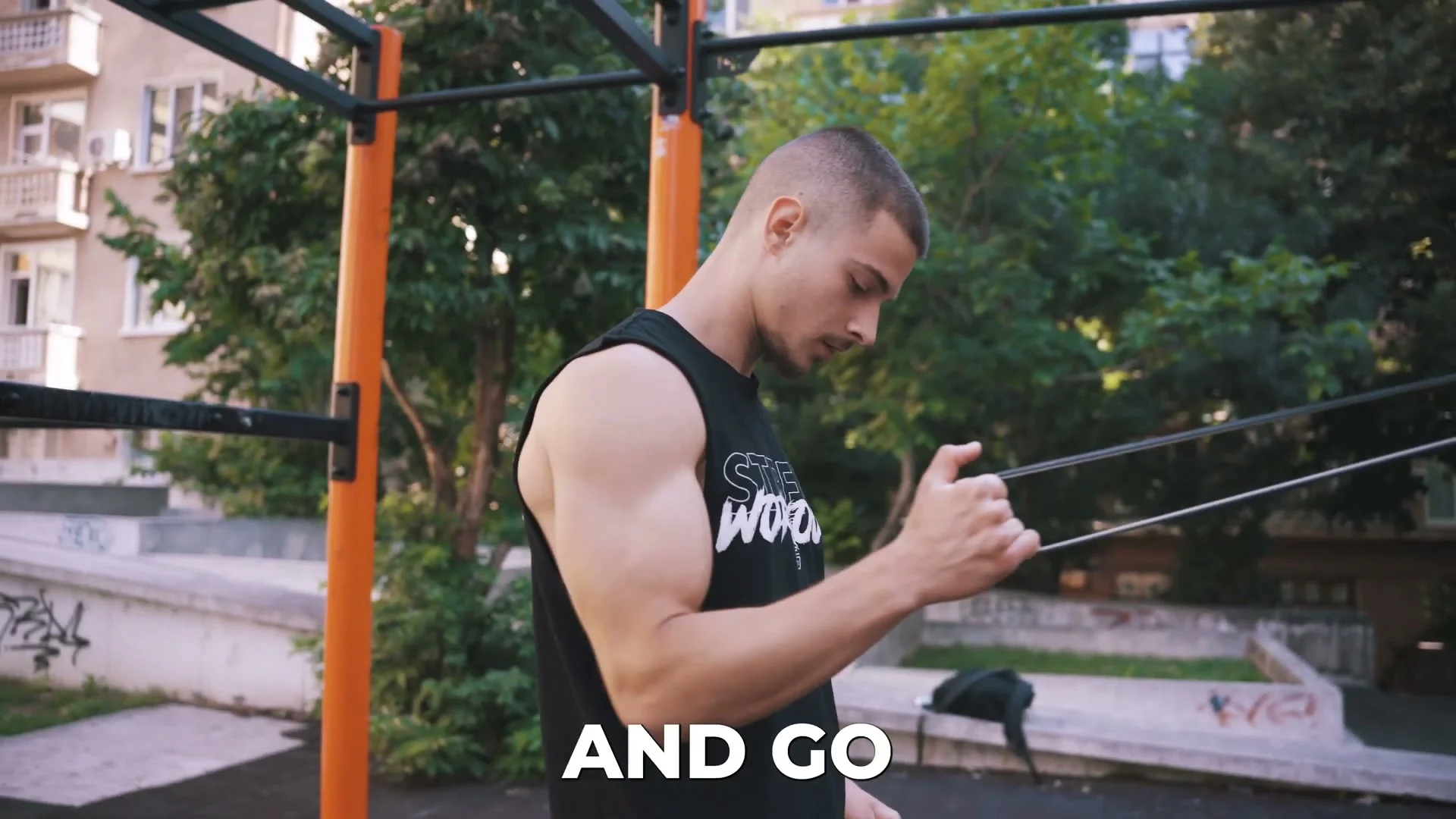
A scapular retraction, leaning back and holding, then a forward push focused on protraction. I am not doing this for reps, I am doing it for quality.
Stage 4: Neck, Shoulder, and Hip Circles
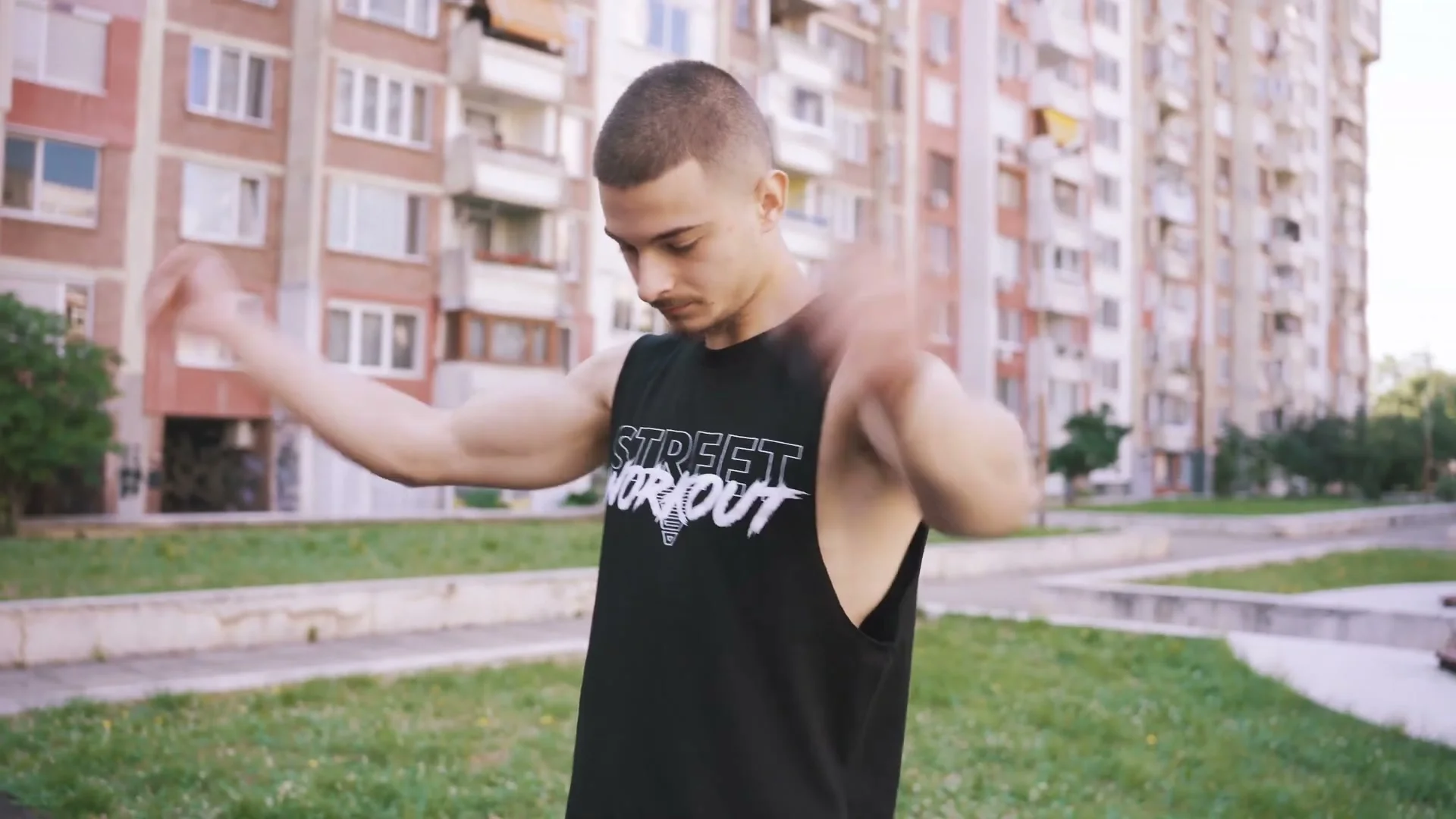
Neck circles, 10 each direction. Shoulder circles, 10 forward and back. Arm circles, small then bigger. Hip circles, 5 left, 5 right, 2 forward, 2 backward. I do not skip these, I had real lower back pain last month when I did.
Stage 5: Leg Stretches
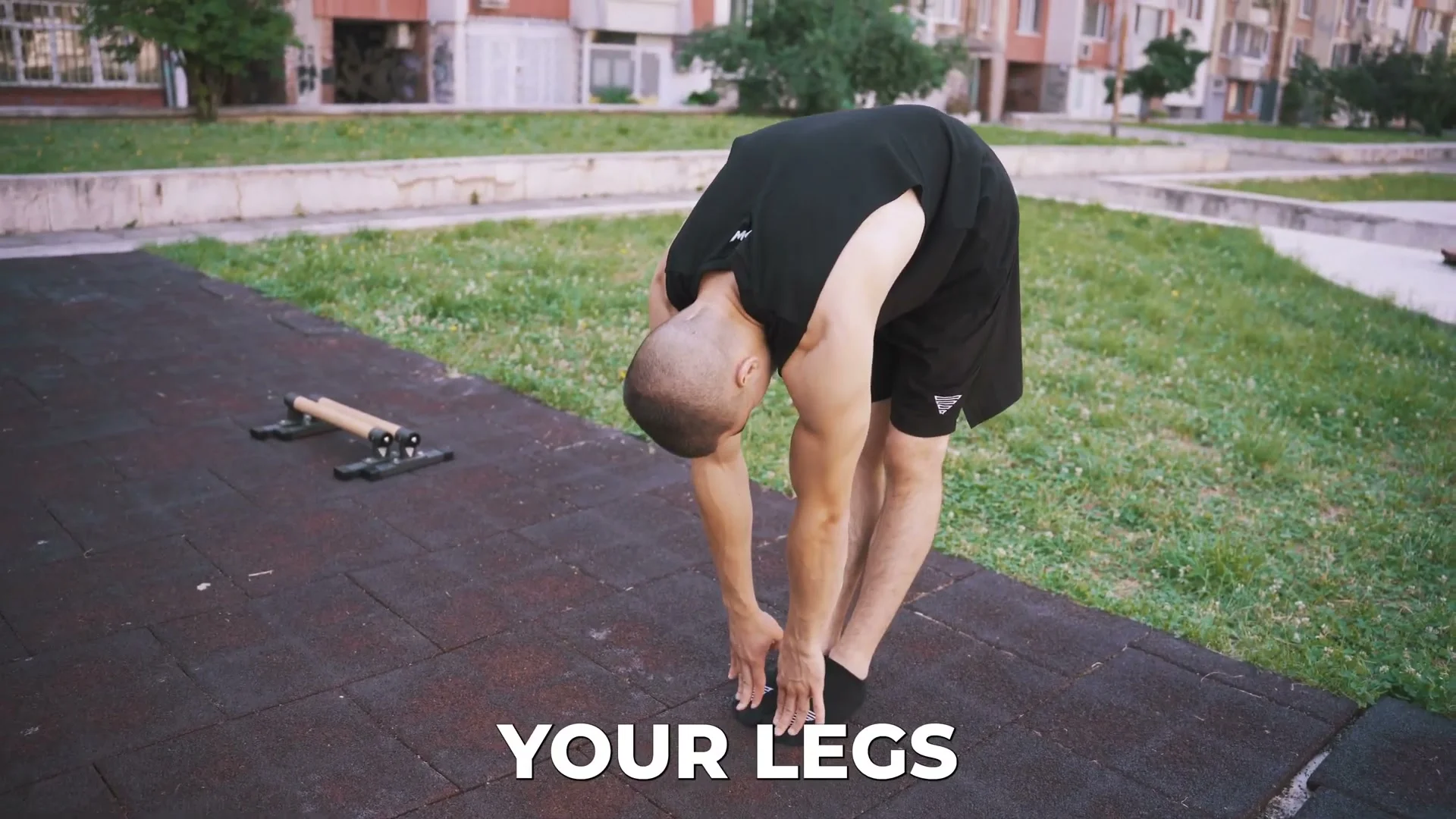
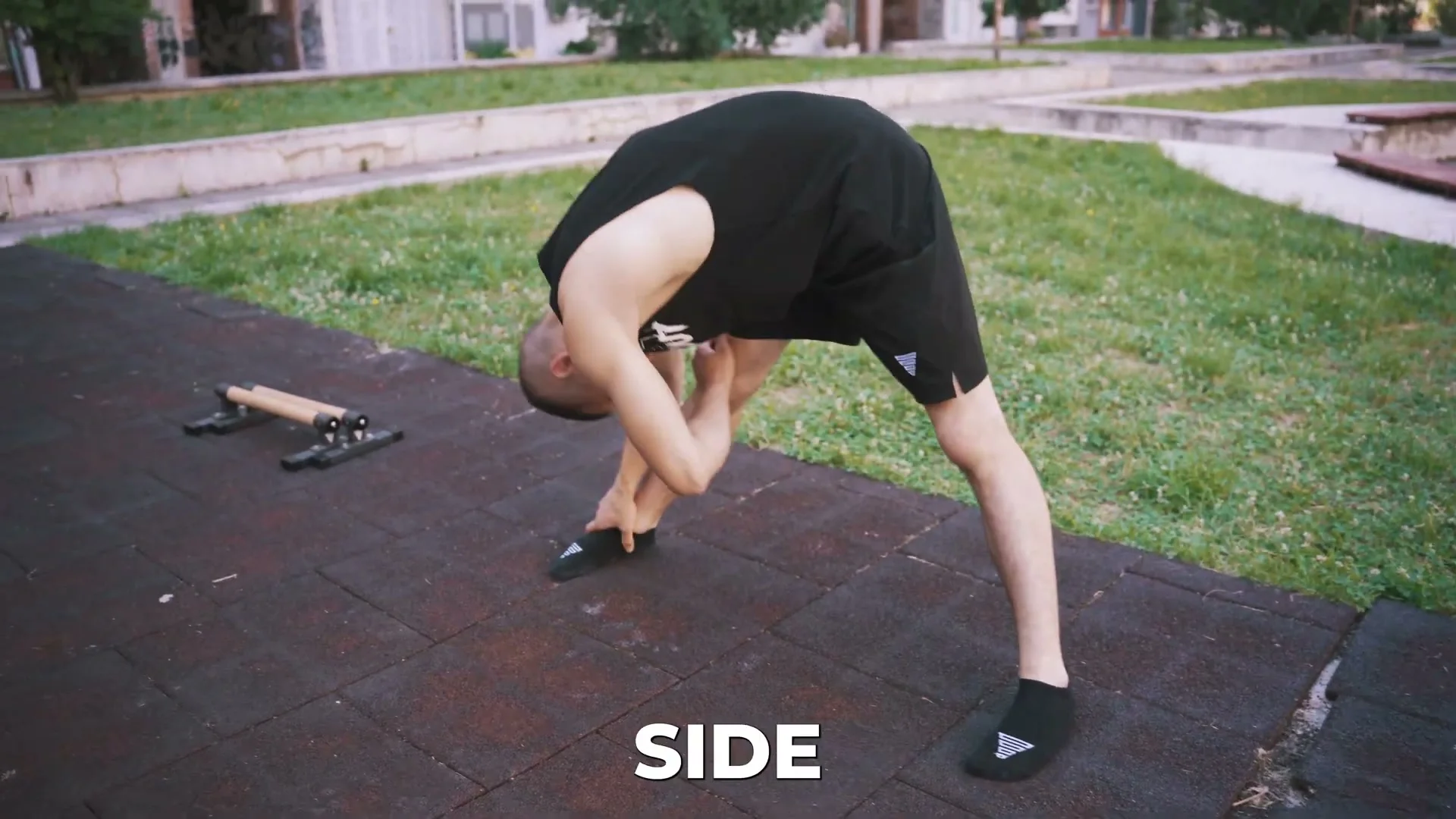
Toe touches without bending the knees, held 10 seconds, then side lunges left and right. Legs are not loaded much in statics, but dynamic elements still need them warm.
Stage 6: Wrist Warm-Up and Activation
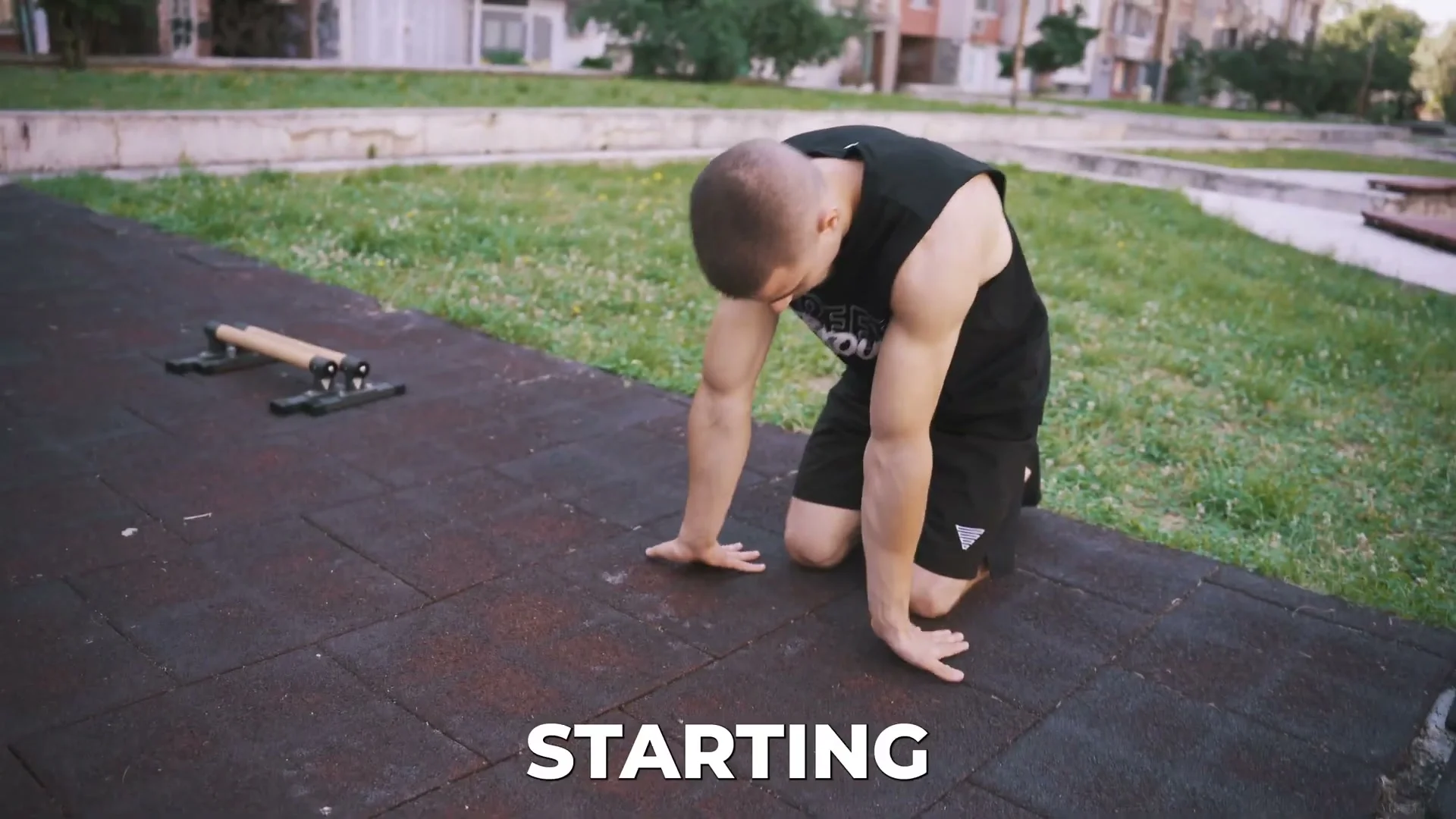
On the ground, rocking my wrists forward and back, then side to side, then circles, all light and controlled. I finish with a few planche leans and 10 push-ups.
Common Mistakes
Skipping the Warm-Up Entirely
This is the mistake I get asked about most. Skipping it raises your injury risk and limits how hard you can push once you start training.
Bending Your Knees on Leg Stretches
This takes the stretch out of the hamstrings and lower back, which is the whole point of doing it.
Making the Warm-Up Too Long
I keep mine to 10 to 20 minutes. I do not do hour-long warm-ups, because by the time I reach my actual combos I am already tired.
Skipping the Rotator Cuff Work
The rotator cuffs are one of the most commonly overlooked muscle groups, and they take a lot of strain in statics and dynamic elements. Skip them and shoulder pain is usually what shows up next.
Training Tips
I prefer a faster warm-up, 10 to 15 minutes, maybe 20. I do not like one-hour warm-ups because I get tired from them, and then I am not fresh for my combos.
Pay attention to what your body tells you during the warm-up itself. If one shoulder or wrist feels more tired or tighter than the other, that is useful information before you load anything heavier.
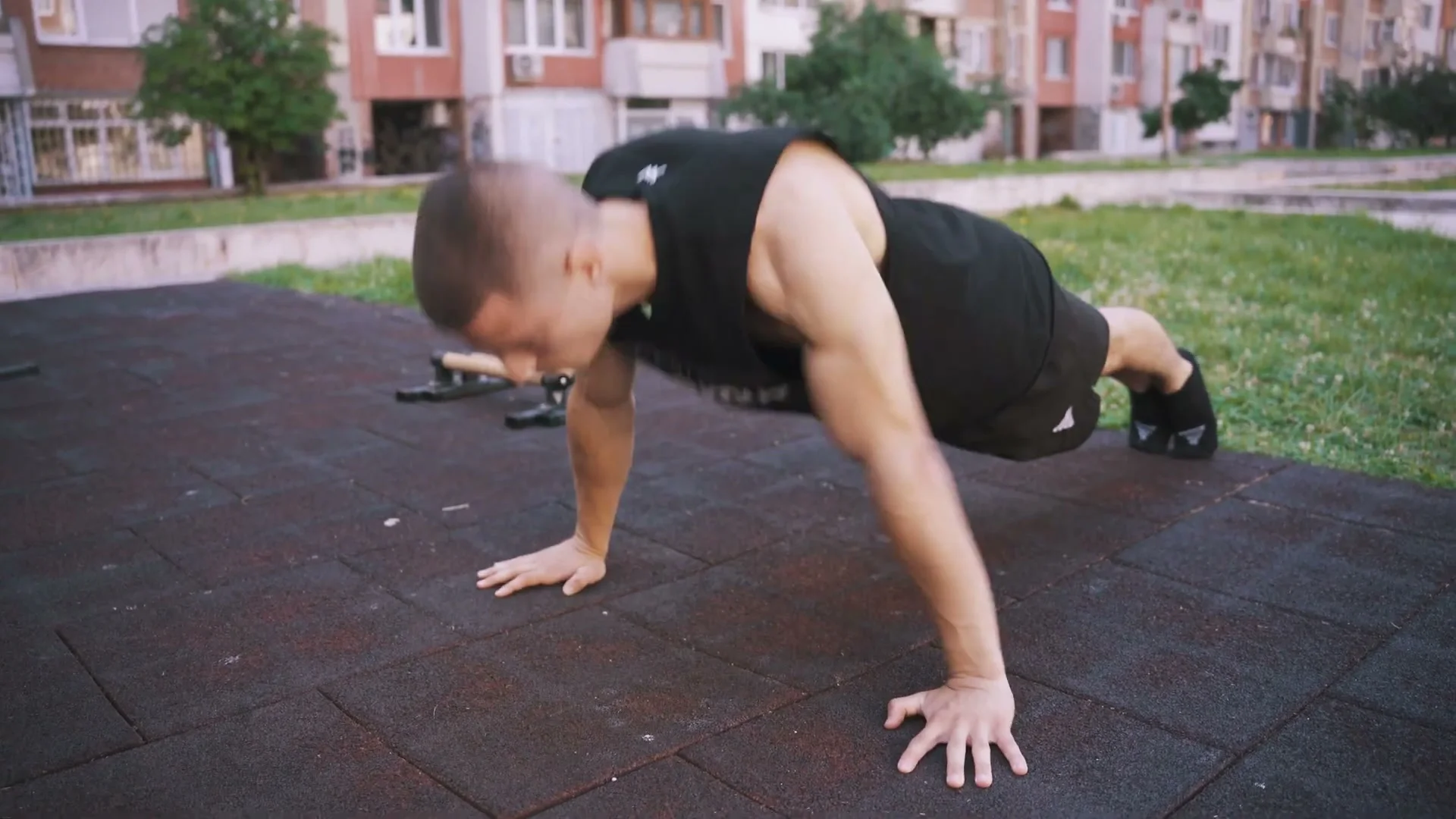
Do the wrist and rotator cuff work every single time, even on days you feel good. Those are the two areas that cause the most repeat injuries in calisthenics, and they are the two areas people skip first when they are in a hurry.
Frequently Asked Questions About the Calisthenics Warm-Up
How long should a calisthenics warm-up take?
Around 10 to 20 minutes, enough to raise your body temperature and prepare your joints without leaving you tired before your main sets.
Do I need equipment to warm up for calisthenics?
I use a jump rope and a light resistance band, mainly for shoulder and rotator cuff work. Without one, slow controlled shoulder circles and arm rotations are a fine substitute.
Should I stretch before or after my workout?
I do light stretching before training and save deeper stretching for after. Stretching hard on cold muscles before you train is not as effective.
Why do the rotator cuffs matter so much in a warm-up?
They are one of the most commonly overlooked muscle groups, and they take a lot of strain in calisthenics, especially in static holds and dynamic elements.
Should I still warm up my legs if I mainly train statics?
Yes. You are not loading your legs directly in a front lever or planche, but if your session includes dynamic movement, your legs need to be ready too.
Why is the wrist warm-up so important?
Wrist pain is common in calisthenics because so much training happens on flat or gripped hands, and statics put steady load through the wrists. I spend real time on mine because I have dealt with wrist pain myself.
If you want your warm-up built around the specific skills you are training, that is exactly what I work through with people inside online coaching.

Daniel Hristov is a four-time calisthenics world champion and coach. He shares the exact methods he uses to train his own athletes.
More about Daniel →