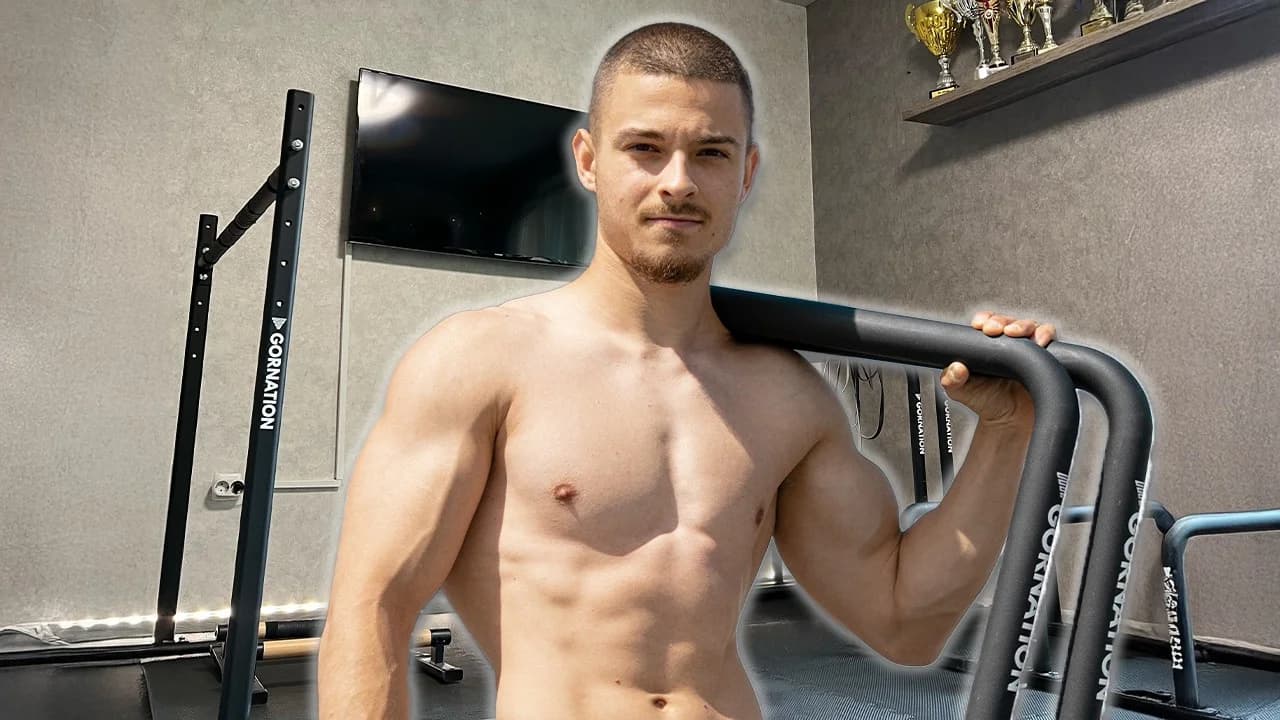
A home gym does not need to be complicated to work. I built mine in one room, and the whole setup, floor, pull-up bar, static bar, dip bars, and two sets of parallettes, came in under €1000. Does a budget like that actually cover what a calisthenics athlete needs, or do you end up cutting corners? In this review I cover every piece I bought and exactly what I use it for. By the end you will know which pieces to prioritize if you are building your own space from scratch.
Watch the Full Review
The Foundation: Floor and Pull-Up Bar
I started with the floor. Thin rubber mats, the interlocking puzzle kind, went down first. They protect the floor, they stop the equipment from sliding around, and they make the whole space more comfortable to train on. The corners took the longest, I had to cut pieces to get them to fit properly, but once that was done the base of the gym was set.
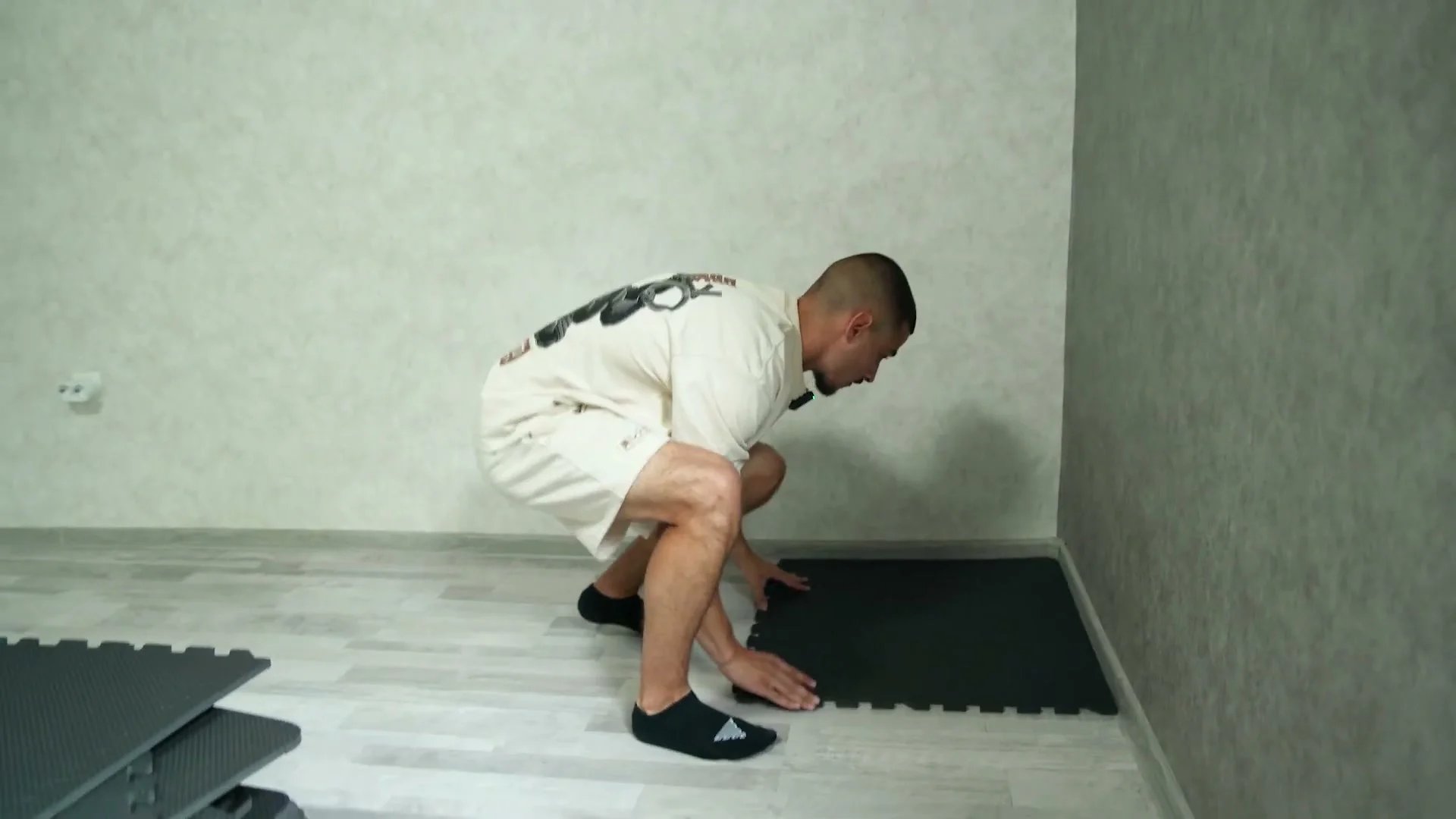
| Spec | Value |
|---|---|
| Brand | GORNATION |
| Type | Home Gym Mats, interlocking EVA tiles |
| Material | 100% EVA foam |
| Tile size | 60 x 60 cm, 1.2 cm thick |
| Pack sizes | Set of 6, 12, or 18 tiles, 12 corner pieces included |
| Price | From €49.90 |
Next was the pull-up bar. I had already marked where it would go, so it was mostly a matter of mounting it. The one tricky part was reaching the top mounting point, I needed a second pair of hands for that. Once it was up I did my first pull-up on it, then tested a front lever. Both felt solid.
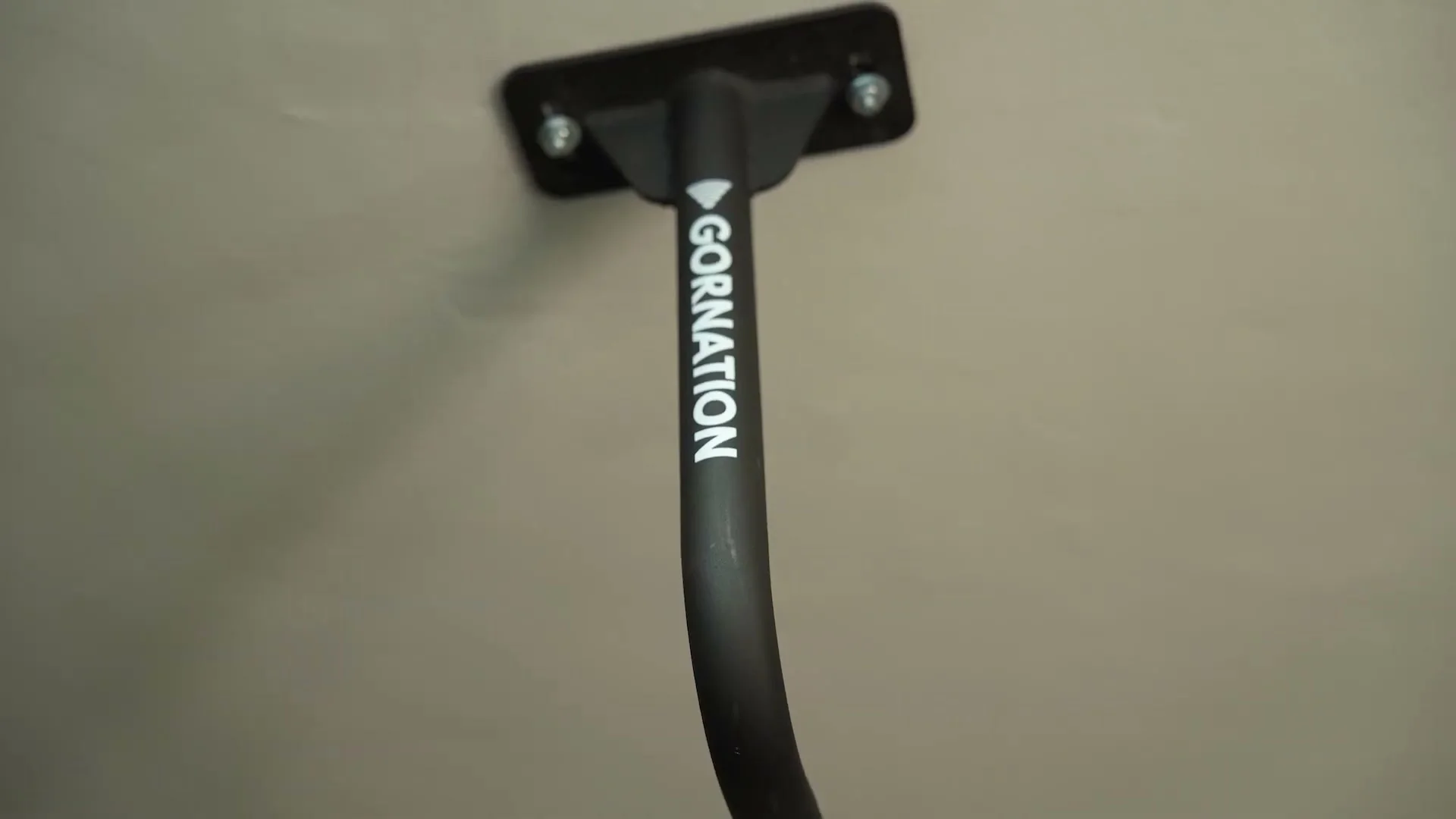
| Spec | Value |
|---|---|
| Brand | GORNATION |
| Model | Ceiling Pull Up Bar Multi |
| Material | Steel, black powder-coated |
| Dimensions | 96.4 cm length, 32 mm diameter, 30 cm clearance |
| Weight capacity | 200 kg ceiling mount, 120 kg wall mount |
| Price | €79.90 |
Who it is for: anyone starting from zero who needs a safe floor and a dependable bar before adding anything else.
Static Bar
This one is still my favorite piece in the room. I use the static bar mostly for front lever variations, and I like it specifically for straddle front lever work. I also do straight bar combinations on it, which matters a lot when I am preparing for competition. Beyond the high level skills, it is also good for basics like Australian pull-ups, so it is not just for advanced training.
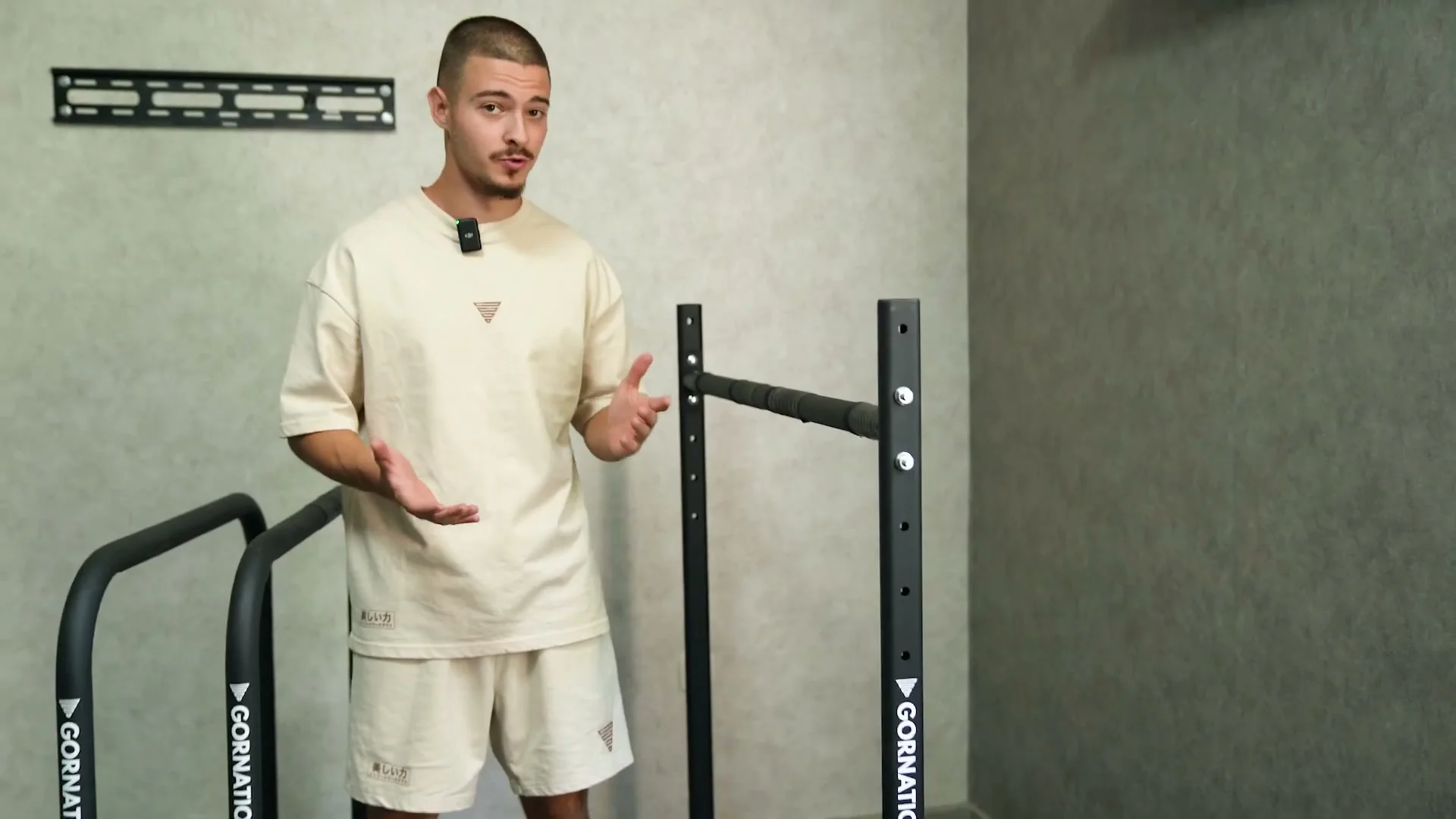
| Spec | Value |
|---|---|
| Brand | GORNATION |
| Model | Static Bar |
| Material | Powder-coated black steel |
| Dimensions | 116 cm bar length, 38 mm diameter, 100 cm footprint |
| Height range | 85 to 115 cm, 5 settings, 7.5 cm apart |
| Weight | 9.5 kg |
| Weight capacity | 200 kg |
| Price | €149.90 |
Who it is for: lifters who already have a front lever base and want to build toward straddle and full lever, or anyone who competes and needs to drill bar combinations.
Dip Bars
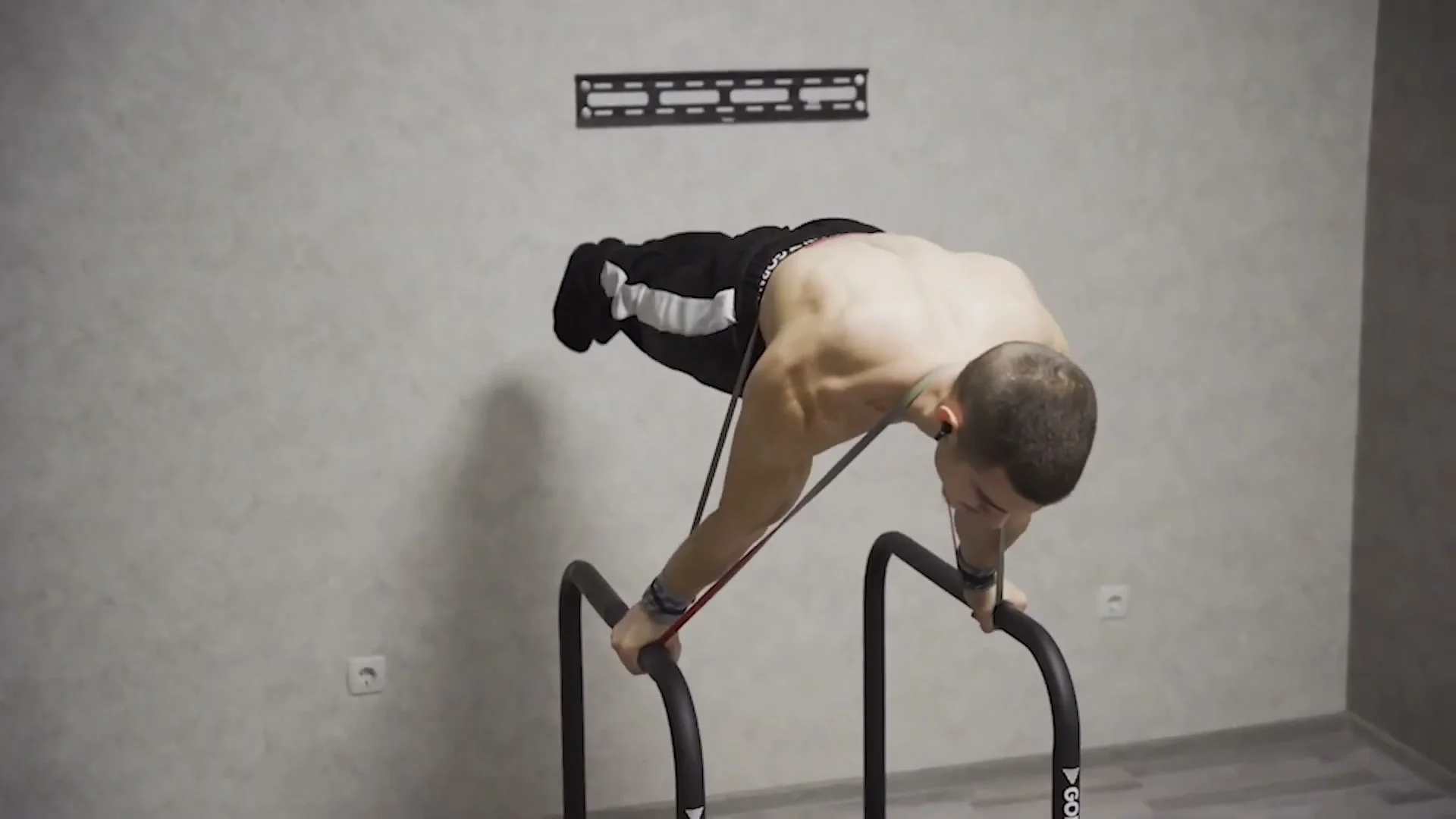
I would call this the best piece of equipment for beginners. With dip bars you have the potential to learn almost everything you need. You can do straight dips, you can add weight once bodyweight dips feel easy, and I use them a lot for front lever training too. When you connect two sets together they stay put, so you can move through combos without the bars sliding out from under you. Lately I have been leaning on these constantly, I am genuinely in love with dip training right now.
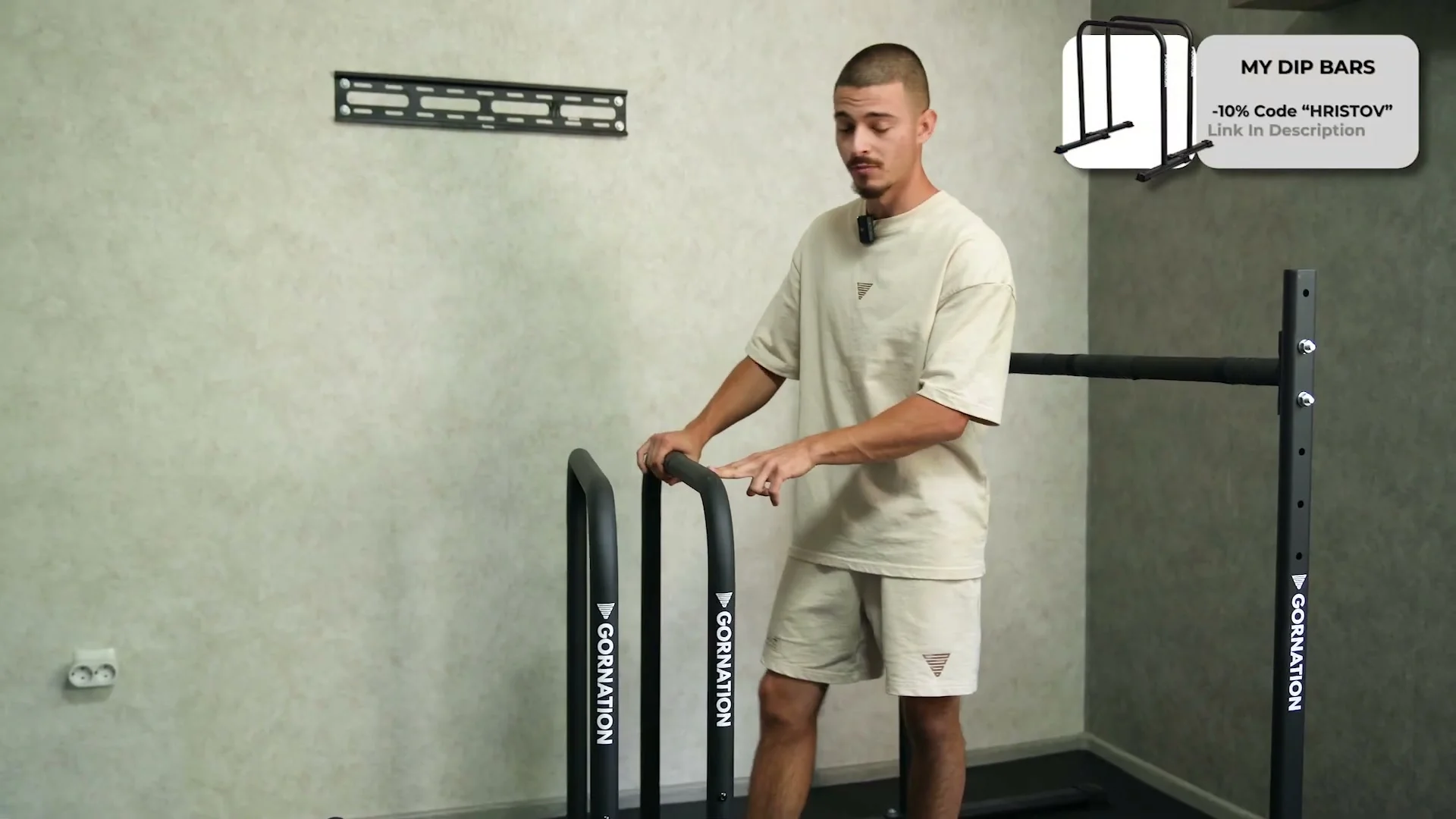
| Spec | Value |
|---|---|
| Brand | GORNATION |
| Model | Premium Dip Bars |
| Material | Powder-coated black steel |
| Dimensions | 90 cm height, 80 cm length, 50 cm feet length |
| Grip diameter | 40 mm |
| Weight | 5.7 kg per bar, 13.2 kg connected pair |
| Weight capacity | 400 kg per bar |
| Price | €149.90 |
Key Takeaway
If I had to pick one piece to start with beyond a bar and mats, it would be the dip bars. They cover straight dips, weighted dips, and front lever training in a single connectable piece, which is exactly why I lean on them the most right now.
Who it is for: beginners who want one piece of equipment that covers pushing, pulling assistance, and skill work, and anyone who wants to build strength for dips specifically.
Metal Parallettes
I chose the taller metal set for a simple reason, I like having more height under me when I go for advanced combos. Handstands and handstand push-ups are what I use them for most, along with one-arm handstand balance work. They also work well for planche variations. The extra height gives room to move, and they are comfortable enough that I reach for them regularly at home.
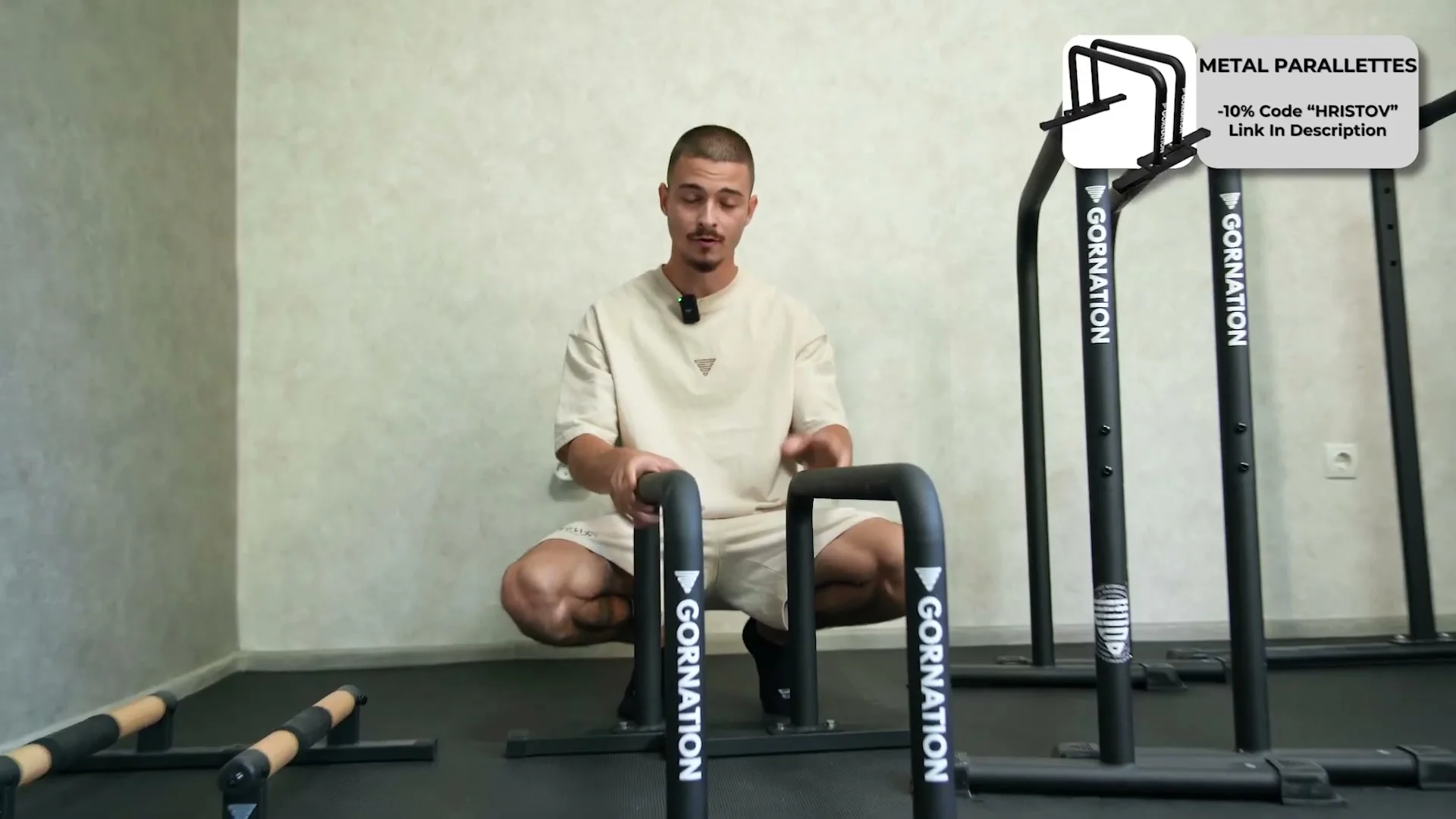
| Spec | Value |
|---|---|
| Brand | GORNATION |
| Model | Metal Parallettes |
| Material | Steel, matte black powder coating |
| Dimensions | 40 cm height, 65 cm length |
| Grip diameter | 40 mm |
| Weight | 7.7 kg per pair |
| Weight capacity | 500 kg per pair |
| Price | €99.90 |
Who it is for: athletes already comfortable on the floor who are ready to add height for handstand and planche progressions.
Wooden Parallettes (Low, Taped Grip)
The last piece is the low wooden set, and I taped the grips myself. Out of every pair of parallettes I have used, this taped combination is the most comfortable I have trained on. They sit lower to the ground, so you cannot do front lever on them, but for planche work they are excellent. I also take them outside sometimes since they are light and easy to carry, so they double as my travel set.
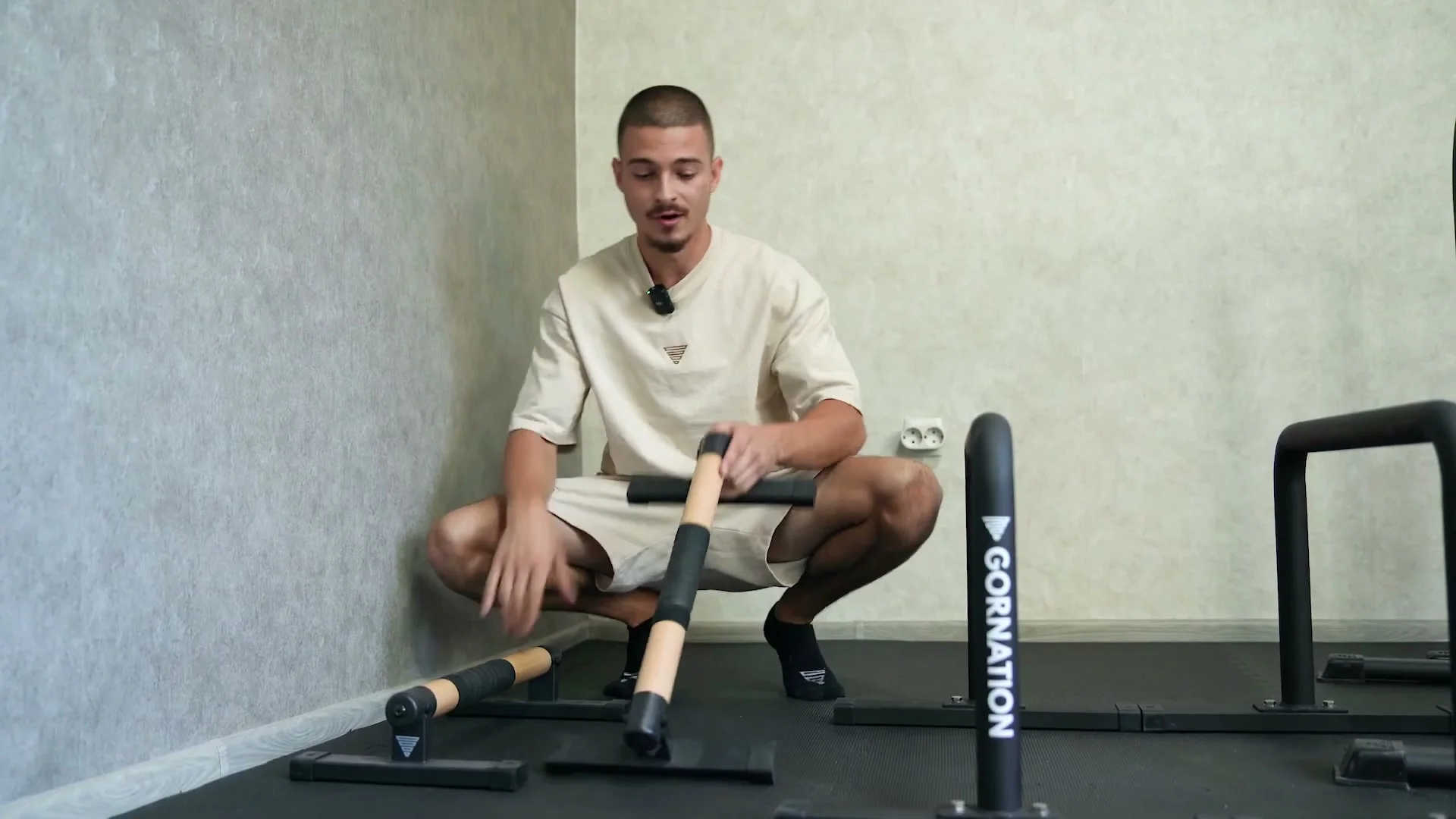
| Spec | Value |
|---|---|
| Brand | GORNATION |
| Model | Wooden Parallettes |
| Material | Red beech wood |
| Dimensions | 30 cm length, 11.5 cm height, 8 to 16 cm width |
| Grip diameter | 40 mm |
| Weight | 1.5 kg per pair |
| Weight capacity | 300 kg per pair |
| Price | €59.90 |
Who it is for: planche-focused athletes who want a low, grippy setup, and anyone who wants parallettes light enough to bring outside.
Which One Should You Buy
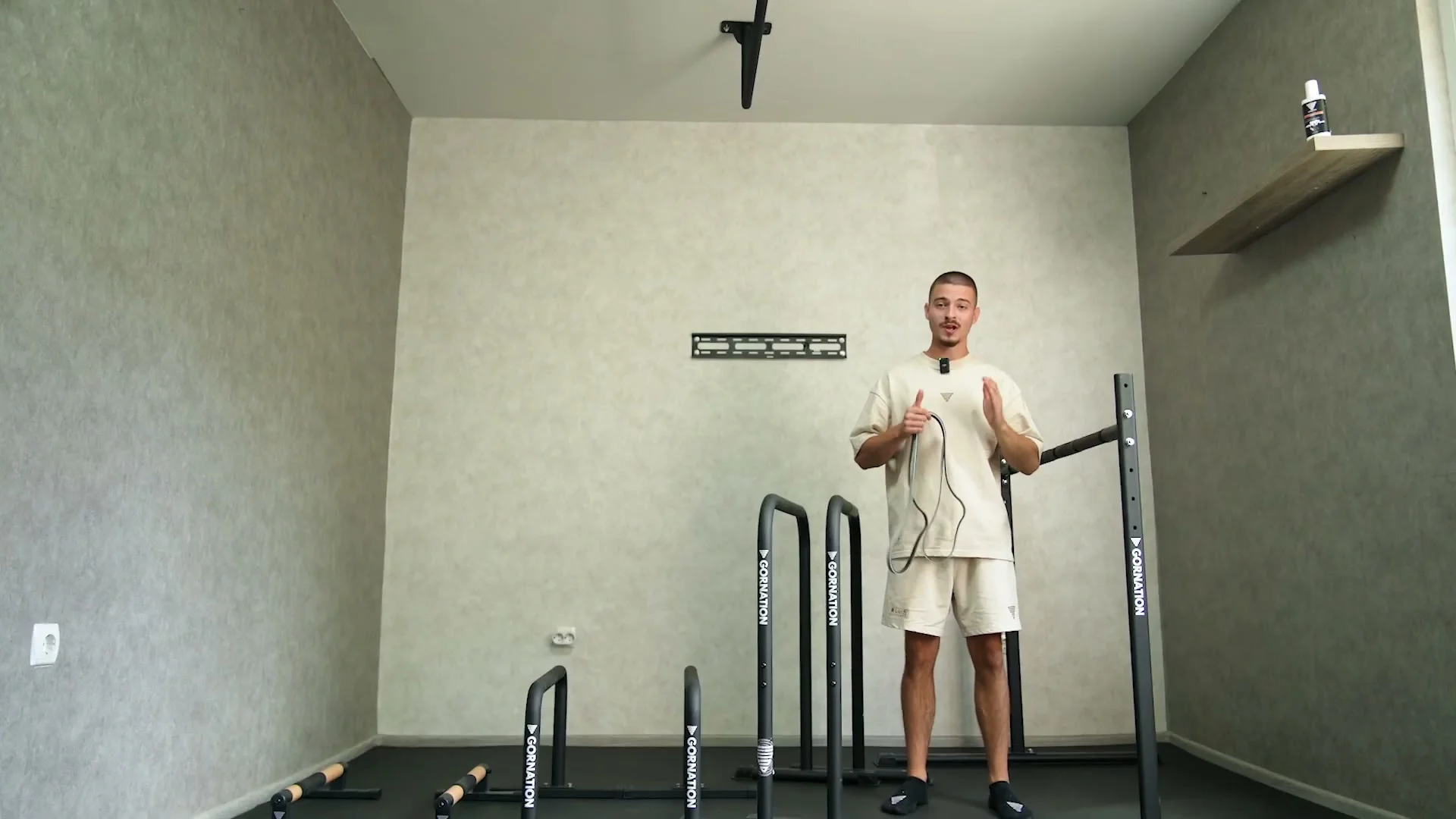
The whole setup, floor mats, pull-up bar, static bar, dip bars, metal parallettes, wooden parallettes, plus chalk and resistance bands, came in under €1000 total, all from GORNATION. If I had to build this room again from nothing, I would not buy everything on day one. Start with the mats and the pull-up bar, those two alone let you train pulling and skill basics safely, and together they run under €130. Add the dip bars next, since they cover dips, weighted work, and front lever training in one piece for around €150. The static bar and the two sets of parallettes are worth adding once you actually need the extra range they offer, not before, and together they add roughly €310 more. GORNATION also runs a 10 percent discount code, HRISTOV, if you decide to buy directly from them. If you are not sure which pieces match where you currently are in your training, that is exactly the kind of thing I help people figure out through online coaching.
Frequently Asked Questions About a Calisthenics Home Gym
How much does a full calisthenics home gym cost?
My complete setup, floor mats, pull-up bar, static bar, dip bars, two sets of parallettes, chalk, and resistance bands, cost under €1000 total. You can start much cheaper with just a bar and parallettes and add pieces over time.
Do I need parallettes if I already have a dip bar?
No, but they serve different purposes. Dip bars are better for dips and connected combos, while parallettes are lower and let you work handstands, planche, and floor-based skills that need a narrower base.
Why use taped grips on wooden parallettes?
Taping the grip changes the feel under your hands and can make the hold more secure during planche work. I tested plain wood against taped grips and the taped version is the one I keep coming back to.
Can I do front lever on low wooden parallettes?
No. Low parallettes sit too close to the ground for front lever, they are built for planche and floor-level pressing work. Use a static bar or pull-up bar for front lever training instead.
What floor protection should I use for a home gym?
Interlocking rubber mats work well. They protect the floor underneath, stop equipment from sliding during training, and make holds and floor work more comfortable than training directly on hard flooring.
Is a home gym enough to build advanced calisthenics skills?
It can be, but the equipment only gets you access to the movements. Progress still depends on structured training. If you want a plan built around the equipment you already have, online coaching is where I help with that directly.

Daniel Hristov is a four-time calisthenics world champion and coach. He shares the exact methods he uses to train his own athletes.
More about Daniel →